
Compression Gloves for Knitting: 4 Options Compared

For knitting, Coopay Fingerless Craft Gloves, Medium is the most directly craft-focused option, with open fingertips and silicone grip dots for handling needles and yarn. Choose Copper Compression Arthritis Gloves, Medium or DRNAIETY Arthritis Compression Gloves, Medium instead if you want general-purpose hand compression for daily tasks, or Dritz Crafters Comfort Glove, Small if cotton-spandex fabric is your priority.
We earn a commission if you buy through links on this page. As an Amazon Associate I earn from qualifying purchases. Products are compared on manufacturer specifications, not hands-on testing.
- Best overall: Coopay Fingerless Craft Gloves, Medium – Its silicone grip dots and open fingertips are aimed at maintaining control while knitting and crocheting.
- Best for cotton fabric: Dritz Crafters Comfort Glove, Small – The gloves use a 92% cotton and 8% spandex blend and are sold as a pair.
- Best for daily tasks: DRNAIETY Arthritis Compression Gloves, Medium – The fingerless design is intended to leave fingers and thumbs free for typing, cooking and other tasks.
| Product | Best for | Fabric | Grip | Pack | Shop |
|---|---|---|---|---|---|
| Coopay Fingerless Craft Gloves, Medium | Knitting and crochet | — | Silicone grip dots | — | Check Price on Amazon |
| Dritz Crafters Comfort Glove, Small | Cotton blend | 92% cotton, 8% spandex | — | 1 pair | Check Price on Amazon |
| Copper Compression Arthritis Gloves, Medium | General hand support | Copper-infused fibers | Non-slip palm grips | 1 pair | Check Price on Amazon |
| DRNAIETY Arthritis Compression Gloves, Medium | Daily task mobility | Breathable fabric | — | 2 pairs | Check Price on Amazon |
Compression Gloves for Knitting Compared
Compare how each pair handles fingertip access, grip and fabric before choosing for your craft routine.
Coopay Fingerless Craft Gloves, Medium
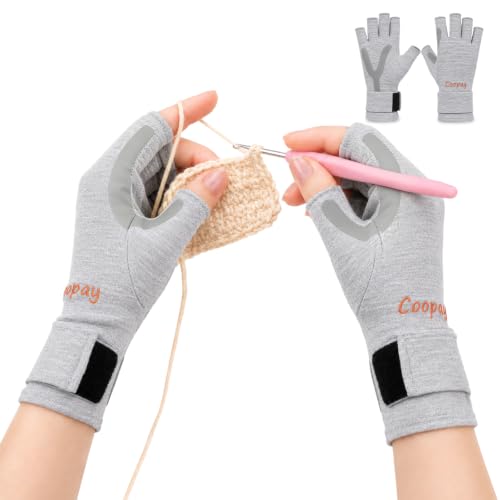
Unlike general arthritis gloves, these are specifically aimed at knitting and crochet, with silicone grip dots across the palm and fingers. The open-finger design leaves fingertips free for needle control and yarn tension, while the maker says the compression support is intended to help reduce strain during long sessions. The medium size is the available fit in the product name. This pair suits crafters who want extra traction on tools; the grip texture may be less appealing if you prefer a smooth palm or often need to slide yarn through your hand.
Bottom line: Choose this pair if grip and fingertip control are your main priorities.
Dritz Crafters Comfort Glove, Small

The Dritz pair differs with a cotton-rich fabric blend: 92% cotton and 8% spandex, rather than a grip treatment. The maker positions the gloves for knitting, crochet, quilting and sewing, and the product is sold as one pair. Small is the size in this option; the specifications gives a fit guide of up to 3⅛ inches. It suits crafters who want cotton-spandex construction and a dedicated craft glove. Buyers needing a medium or large should select a size intended for their hand instead.
Bottom line: Pick this pair if a cotton-spandex blend matters more than a textured grip.
Copper Compression Arthritis Gloves, Medium

The Copper Compression pair is framed as general arthritis and hand-support wear rather than a knitting-specific glove. Its medium fingerless design combines four-way stretch construction with non-slip palm grips, leaving the fingertips open for tasks such as crocheting and typing. Copper-infused fibers are part of the material, and the maker describes compression as support for swelling and soreness. This option may suit someone who also wants hand support beyond craft sessions. The medical-condition claims are not a substitute for clinical guidance, and the product name specifies medium.
Bottom line: Choose this if you want a general-purpose fingerless glove with palm grips.
DRNAIETY Arthritis Compression Gloves, Medium
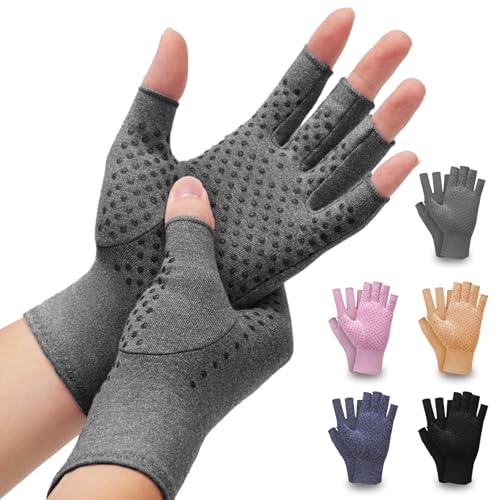
The DRNAIETY option stands out for including two pairs, while its breathable, dehumidifying fabric and fingerless cut are aimed at everyday wear. The maker says the opening balances compression support with thumb and finger mobility for tasks such as typing, phone use and cooking. That design can leave the fingertips accessible for knitting, though this glove is not presented specifically for craft-tool grip. It may suit people who want a spare pair or broader day-to-day use; choose another option if silicone traction while handling needles is essential.
Bottom line: Pick this for two pairs of breathable, fingerless gloves for varied daily tasks.
How to choose compression gloves for knitting
For knitting, prioritize finger openings that leave the fingertips clear and a fit that stays in place without pinching. Knitting relies on small movements at the fingertips to guide needles and control yarn; gloves that cover those areas can interfere with tension. A grip texture can help a tool stay in hand, while a smooth palm may allow yarn to move more freely. Compression should feel evenly snug, not painful or numb. If you feel tingling, discoloration or increased discomfort, take the gloves off and reassess the fit; persistent symptoms warrant advice from a clinician.
Use the task to decide
| Need | Feature to prioritize |
|---|---|
| Needle control | Open fingertips |
| Tool traction | Textured or silicone grip |
| Yarn movement | Smooth palm |
With knitting needles thinner than 4 mm, check whether grip pads land where your fingers hold the needle, since bulky texture can change the feel.
Getting the right glove fit
A compression glove should fit close to the hand without restricting circulation or bending the fingers. For a reliable size choice, measure the hand circumference at the widest part of the palm, excluding the thumb, and compare it with the maker’s sizing chart; size labels alone are not consistent across brands. A glove that bunches at the palm can catch yarn, while one that is too tight can make prolonged knitting uncomfortable. Because only one option here gives a specific hand measurement, confirm the fit range before ordering any glove whose size guide is not supplied.
Check before a long session
Try the gloves briefly while holding your usual needles and yarn. The fingertips should remain free enough to manipulate stitches, and seams or grip dots should not press uncomfortably against the fingers.
Fingerless gloves and craft gloves
Fingerless gloves expose the fingertips for dexterity, but they differ in purpose and palm treatment. General arthritis styles emphasize compression and daily mobility, while craft-oriented styles may add traction to help with tools; a cotton-spandex craft glove may instead prioritize its fabric blend. Grip is not automatically helpful for every knitting style: some knitters need a secure needle hold, while others want yarn to slide with minimal resistance. Choose based on where the glove touches your needles and yarn, not just the word compression.
For extended sessions, take short breaks and move your fingers and wrists. Gloves should not be treated as a fix for persistent pain, weakness or numbness; stop if symptoms worsen and seek medical advice when symptoms continue.
Frequently Asked Questions
Can I knit while wearing compression gloves?
Yes, fingerless gloves leave the fingertips available for handling needles and yarn. Choose a pair whose palm treatment does not interfere with your preferred yarn movement.
Should compression gloves feel tight while knitting?
They should feel snug but not painful or restrictive. Remove them if your fingers tingle, change color or feel increasingly uncomfortable.
Do silicone grip dots help with knitting needles?
Grip dots can add traction where they contact a needle, which may help if tools slip in your hand. If yarn needs to slide across your palm, extra grip may be inconvenient.
How do I measure my hand for compression gloves?
Measure around the widest part of your palm, excluding the thumb, then use the maker’s size chart. A size label such as medium does not establish the same fit across different gloves.
Can compression gloves replace treatment for hand pain?
No, gloves are not a substitute for evaluation or treatment of ongoing pain. Stop wearing them if discomfort worsens, and seek clinical advice for persistent numbness, swelling or weakness.