
Cooper Evolution Tires: 5 Models Compared by Fit

For a Cooper Evolution mud-terrain tire, Cooper Evolution M/T 31X10.50R15LT is the direct match because its 31X10.50R15LT size and mud-focused tread suit off-road use. The other options are different Cooper tire lines, so choose them only if their size and road or trail purpose fit your vehicle better.
We earn a commission if you buy through links on this page. As an Amazon Associate I earn from qualifying purchases. Products are compared on manufacturer specifications, not hands-on testing.
- Best overall: Cooper Evolution M/T 31X10.50R15LT – The only Cooper Evolution model here, with mud-terrain tread and studdable construction.
- Best for all-season road use: Cooper ProControl 225/65R17 – Its 70,000-mile limited treadwear warranty and wet-traction features distinguish it.
- Best for classic styling: Cooper Cobra Radial G/T P225/70R15 – Raised white lettering and a classic-muscle-car look set it apart.
- Best for heavy-duty all-terrain use: Cooper Discoverer Stronghold AT LT265/70R18 – LT265/70R18 construction carries a 124/121S load index and E rating.
| Product | Best for | Tire size | Tread type | Shop |
|---|---|---|---|---|
| Cooper Evolution M/T 31X10.50R15LT | Mud terrain | 31X10.50R15LT | Mud terrain | Check Price on Amazon |
| Cooper ProControl 225/65R17 | Wet-road driving | 225/65R17 | All-season | Check Price on Amazon |
| Cooper Cobra Radial G/T P225/70R15 | Classic-car styling | P225/70R15 | All-season | Check Price on Amazon |
| Cooper Discoverer Stronghold AT LT265/70R18 | Heavy-duty terrain | LT265/70R18 | All-terrain | Check Price on Amazon |
| Cooper Discoverer Road + Trail AT 225/65R17 | Light trail use | 225/65R17 | All-terrain | Check Price on Amazon |
Cooper Evolution tires and Cooper alternatives
Compare the exact Evolution match with related Cooper tires by size, rating, and intended terrain.
Cooper Evolution M/T 31X10.50R15LT

Cooper Evolution M/T 31X10.50R15LT is the direct Evolution match in this group, with a mud-terrain tread designed for mud and a 31X10.50R15LT size. It has a 109Q load/speed rating, a C load range, 6-ply radial construction, and outlined white letters. Cooper says the tread is designed to withstand gravel and debris, and the tire can be studded for additional winter traction. This fits drivers seeking an off-road-oriented tire in this size. Its specialized tread is less suited to someone shopping for a standard all-season road tire.
Bottom line: Choose this if your vehicle takes the size and mud traction is the priority.
Cooper ProControl 225/65R17

Cooper ProControl 225/65R17 is an all-season SUV and truck tire rather than an Evolution mud tire, and its 225/65R17 size makes it relevant only to vehicles that accept that size. Cooper says its sipes widen as the tread wears and its sweeping grooves help clear water; Cooper also provides a 70,000-mile limited treadwear warranty. The 102H standard-load rating distinguishes it from the light-truck choices here. It suits buyers focused on road use and wet traction, but not someone who needs an off-road mud pattern or a different fitment.
Bottom line: Pick this for a compatible 225/65R17 vehicle when all-season road use is the goal.
Cooper Cobra Radial G/T P225/70R15
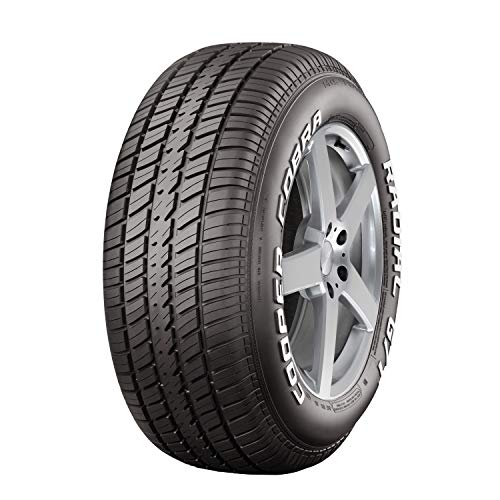
Cooper Cobra Radial G/T P225/70R15 is a classic-style all-season tire, not an Evolution model or a mud-terrain tire. Its P225/70R15 size and raised white lettering suit a vehicle where that period-inspired appearance is part of the choice. Cooper specifies a 40,000-mile treadwear warranty and an even-wearing design. This is the distinct option for a classic muscle-car look; the 15-inch fitment differs from the other tire sizes here, so it belongs only on a vehicle approved for that exact size. It is not the pick for a buyer seeking aggressive trail tread.
Bottom line: Choose this for a vehicle needing P225/70R15 and classic raised-white-letter styling.
Cooper Discoverer Stronghold AT LT265/70R18

Cooper Discoverer Stronghold AT LT265/70R18 is the heavy-duty all-terrain option here, with LT265/70R18 sizing, 10-ply radial construction, and a 124/121S rating. Cooper describes wide-open grooves for releasing soft surfaces and 3D sipes for stability, with tread designed to resist cracking, tearing, and rounding. The all-terrain pattern is a better match for mixed surfaces than a dedicated mud-terrain tire. Its light-truck size and E rating mean buyers must confirm the vehicle’s approved tire size and load requirements; it is not interchangeable with the smaller passenger sizes in this group.
Bottom line: Choose this for an approved LT265/70R18 fit and heavier-duty all-terrain use.
Cooper Discoverer Road + Trail AT 225/65R17

Cooper Discoverer Road + Trail AT 225/65R17 combines a 225/65R17 standard-load fit with an all-terrain tread, making it a different type of choice from the Evolution mud tire. Cooper describes a sidewall-reaching tread pattern and interlocking blocks intended to provide grip on uneven surfaces, plus resistance to trail-related cutting, cracking, and tearing. The 102H rating is shared with the road-focused ProControl, but this tire emphasizes trail capability instead. It suits a compatible SUV or truck that sees occasional uneven terrain; it is not the heavy-duty LT choice for the 18-inch fitment.
Bottom line: Pick this for an approved 225/65R17 fit with light trail use in the mix.
How to choose a Cooper tire by use
Choose by the surface you drive most and by the tire size and load rating your vehicle requires. Mud-terrain patterns use large, open tread voids to clear soft ground, while all-terrain patterns balance open grooves with more connected blocks for mixed pavement and trail use. All-season road tires prioritize road handling and water evacuation. A tire’s sidewall size, load index, and speed symbol must remain compatible with the vehicle placard; matching the brand alone is not enough. If the vehicle spends most miles on pavement, favor a road-oriented pattern rather than selecting an aggressive tread solely for occasional dirt roads. For frequent soft terrain, the more open tread is the meaningful distinction.
What tire size and load rating mean
Read a size such as 225/65R17 as a 225-mm section width, a sidewall height equal to 65% of that width, radial construction, and a 17-inch wheel diameter. The LT prefix marks a light-truck tire format; P denotes a passenger tire. Load index and speed symbol are separate: 102H and 109Q do not describe the same capacity or speed category. Use the size and load requirements on the vehicle placard or in its manual, and do not choose a lower load capacity than the vehicle requires. A measurable decision rule is to reject any tire whose size or load index fails the placard requirement, even if the tread type seems suitable.
All-season, all-terrain, and mud-terrain compared
All-season road tires, all-terrain tires, and mud-terrain tires trade pavement manners for increasing off-road focus. All-season tread is suited to ordinary paved driving and wet-road drainage. All-terrain blocks and grooves add grip for maintained dirt roads and mixed surfaces. Mud-terrain tread uses wider voids to shed mud but can be a compromise for primarily paved commuting. Winter traction is a separate question: the M+S marking on a tire is not the same as the Three-Peak Mountain Snowflake severe-snow symbol. Check for that symbol if your route regularly includes substantial snow, and use dedicated winter tires where conditions demand them.
| Primary use | Tread direction | Tradeoff to consider |
|---|---|---|
| Mostly paved roads | All-season | Less focused on loose terrain |
| Mixed road and trail | All-terrain | Still requires exact fitment |
| Frequent mud or soft ground | Mud-terrain | More specialized than a road tire |
When to replace tires and inspect tread
Most passenger tires have tread-wear bars at 2/32 inch, the common legal replacement threshold in many states; wet stopping ability can decline before tread reaches that limit. Check tread depth with a gauge across inner, center, and outer grooves, because uneven wear may indicate alignment, inflation, or suspension issues. Inspect pressure monthly when the tires are cold and use the vehicle placard pressure rather than the maximum molded on the sidewall. Rotate tires at the vehicle maker’s interval, often around 5,000 to 8,000 miles, but consult its schedule because drivetrain and tire design affect the interval. Replace a tire with a bulge or exposed cord promptly; those signs can indicate structural damage.
Frequently Asked Questions
Can I replace one tire with a different tread type?
A different tread type may change handling, especially when mixed across an axle or on all-wheel-drive vehicles. Keep the same tire type and closely matched tread depth across an axle unless the vehicle maker permits another arrangement.
What does the M plus S marking mean on a tire?
M+S means mud and snow in the tread designation, but it does not certify severe-snow performance. Look for the Three-Peak Mountain Snowflake symbol when you need a tire rated for severe snow conditions.
How much tread is legally worn out?
The common minimum legal tread depth for passenger tires is 2/32 inch, though state rules can vary. Replace sooner when wet traction is a concern or the tire shows damage or uneven wear.
How often should I rotate my tires?
Many vehicles call for rotation about every 5,000 to 8,000 miles, while the exact interval depends on drivetrain and tire setup. Use the vehicle maintenance schedule, and rotate sooner if wear is visibly uneven.
Can LT and P-metric tires be swapped freely?
No, LT and P-metric tires are different formats and may have different load characteristics. Match the vehicle’s specified size and load requirements, and do not substitute a lower load capacity.