
Best Fish Eye Car Mirrors: 5 Options by Fit

For most drivers seeking a fish-eye car mirror, United Pacific 8.5-Inch Stainless Fisheye Mirror is the closest match because its 8.5-inch stainless-steel convex surface is larger than the compact stick-on spotters. Choose a 2-inch pair instead if you want auxiliary mirrors attached to factory side mirrors.
Convex mirrors widen the view but make vehicles appear smaller and farther away, so use them as aids—not substitutes for checking blind spots directly before changing lanes.
We earn a commission if you buy through links on this page. As an Amazon Associate I earn from qualifying purchases. Products are compared on manufacturer specifications, not hands-on testing.
- Best overall: United Pacific 8.5-Inch Stainless Fisheye Mirror – Its 8.5-inch stainless-steel convex mirror is the closest match for a larger fish-eye mirror.
- Best for adjustable spotters: LivTee Round 2-Inch Adjustable Mirrors – The two 2-inch round glass mirrors have adjustable swivel mounts.
- Best for fixed placement: Performore Fixed 2-Inch Spotter Mirrors – The two 2-inch spotters use a fixed, non-adjustable design.
| Product | Best for | Size | Shape | Adjustability | Shop |
|---|---|---|---|---|---|
| United Pacific 8.5-Inch Stainless Fisheye Mirror | Larger viewing surface | 8.5 in | Round convex | — | Check Price on Amazon |
| LivTee Round 2-Inch Adjustable Mirrors | Adjustable spotters | 2 in | Round | 360-degree swivel | Check Price on Amazon |
| Performore Fixed 2-Inch Spotter Mirrors | Fixed spotters | 2 in | Round | Fixed | Check Price on Amazon |
| LivTee Rounded-Trapezoid Adjustable Mirrors | Trapezoid spotters | — | Rounded trapezoid | 360-degree swivel | Check Price on Amazon |
| 2-Inch Aluminum-Frame Convex Spotter Pair | Framed spotters | 2 in | Round | — | Check Price on Amazon |
Fish Eye Car Mirrors Compared
Choose between a larger convex mirror and compact spotters that attach to factory side mirrors.
United Pacific 8.5-Inch Stainless Fisheye Mirror
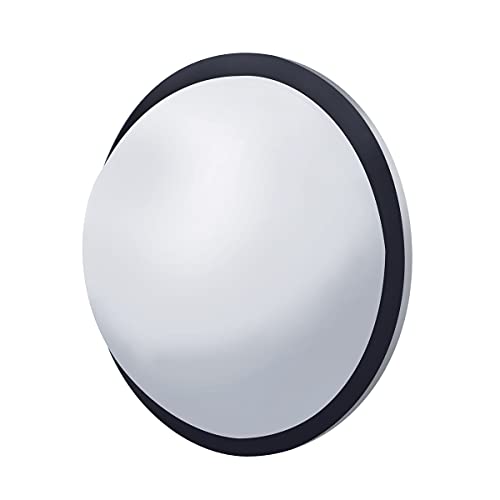
Unlike the compact stick-on spotters, this United Pacific mirror has an 8.5-inch stainless-steel convex surface for a larger viewing area. Its silver finish and dimensions make it a distinct choice for drivers looking for a standalone fish-eye-style mirror rather than a small auxiliary spotter. The maker says it helps improve visibility and reduce accidents. The size is the main tradeoff: drivers who want a discreet add-on for a factory side mirror may prefer a 2-inch pair instead. Confirm the mounting arrangement suits your vehicle before ordering.
Bottom line: Pick this if you want a larger convex mirror rather than compact stick-on spotters.
LivTee Round 2-Inch Adjustable Mirrors
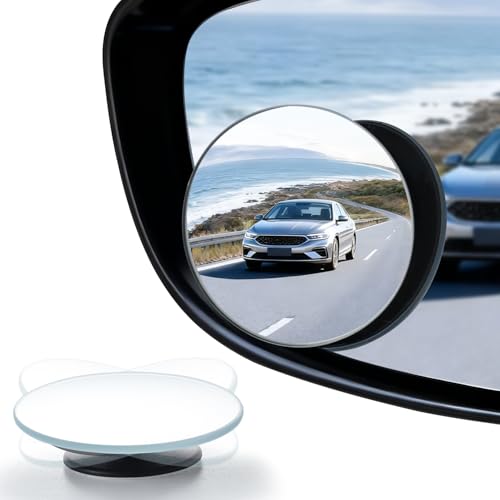
These two round mirrors stand out among the compact options for their adjustable swivel brackets, which let you aim each spotter after mounting. They use curved HD glass and a frameless design, and the maker says the mirrors are intended to widen the view for cars, vans, SUVs, and trucks. Their 2-inch diameter keeps them compact, but that also means a smaller viewing surface than the 8.5-inch mirror. They suit drivers who want to fine-tune auxiliary mirror angles; carefully position them before driving.
Bottom line: Choose these if you want two compact mirrors with adjustable swivel mounts.
Performore Fixed 2-Inch Spotter Mirrors

Unlike adjustable spotters, this two-pack uses a fixed viewing angle, so placement is set when the mirrors are attached. Each mirror has a 2-inch convex glass surface and adhesive mounting; the maker recommends cleaning the mounting area with alcohol and allowing one hour after pressing the mirror into place before driving. This format suits drivers who prefer a simple fixed position, but it offers no swivel adjustment if the initial angle needs changing. Take time to position each mirror before bonding it to the factory mirror.
Bottom line: Pick these if you prefer fixed-angle adhesive spotters and can position them carefully.
LivTee Rounded-Trapezoid Adjustable Mirrors
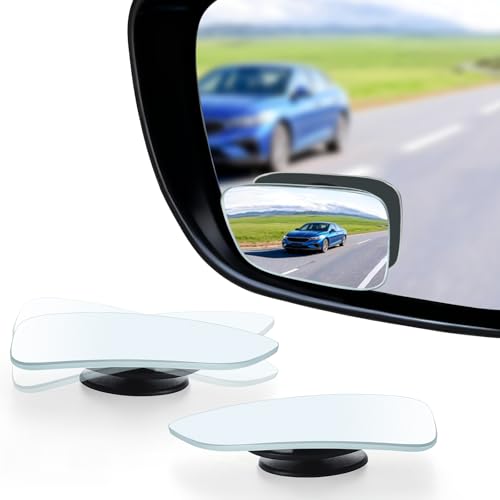
The rounded-trapezoid shape distinguishes this LivTee pair from the round spotters, while its swivel bracket allows adjustment after mounting. The mirrors use curved HD glass and a frameless design; the maker says they are IP65 waterproof and intended for cars, SUVs, trucks, and RVs. A different outline can change how the mirror sits against the factory mirror, so check the available surface and preferred placement before attaching it.
Bottom line: Choose this pair if the rounded-trapezoid outline and adjustable mount fit your setup.
2-Inch Aluminum-Frame Convex Spotter Pair

These two 2-inch spotters use real reflective glass with a rust-resistant aluminum frame, unlike the frameless options. Their adhesive backing is intended for a clean, dry mirror surface, and the maker says they provide an additional view alongside the vehicle to complement factory mirrors and shoulder checks. The metal frame gives the pair a visibly different construction, while its compact size keeps it in the auxiliary-spotter category rather than the larger fish-eye format. The mounting angle is not adjustable, so careful placement matters before pressing the adhesive into place.
Bottom line: Pick this pair if you want compact glass spotters with aluminum frames.
How to Choose a Fish Eye Car Mirror
Choose by mounting style first: a larger convex mirror and a small adhesive spotter serve different setups. A full-size auxiliary mirror is for drivers seeking a broader mirror surface; stick-on spotters attach to an existing side mirror and add a small viewing angle. Convex mirrors bend reflected light outward, allowing a wider field of view than a flat mirror, but objects look smaller and seem farther away. Use a convex view to detect nearby traffic, then judge distance with your regular mirrors and a direct shoulder check. If you need to reposition the view after installation, an adjustable swivel is more practical than a fixed-angle model.
Mirror Placement and Fit
Place a side-mirror spotter where it expands the view without blocking the factory mirror’s main field. A 2-inch round mirror needs a clear, flat area at least 2 inches across, while a larger mirror requires a suitable mount and more space. Clean and dry adhesive surfaces before attachment; water, dust, or wax can weaken contact. Aim the spotter to show the adjacent lane or area beside the vehicle, not merely duplicate the factory mirror’s view. Test the position while parked, and avoid placing any auxiliary mirror where it obstructs the main mirror or the driver’s view through the window.
Convex Mirrors and Blind-Spot Spotters Compared
A large convex mirror offers more surface area, while compact spotters add a secondary view to an existing side mirror. Use this comparison to choose the arrangement that fits your vehicle and mounting preference.
| Type | Typical setup | Useful when |
|---|---|---|
| Large convex mirror | Separate, larger mirror surface | You want a broad fish-eye-style view |
| Fixed spotter | Small adhesive mirror on factory mirror | You can set the angle once |
| Adjustable spotter | Small mirror on swivel bracket | You want to aim it after mounting |
Do not treat a wider view as a reliable distance measurement. Convex curvature changes apparent size, so check the adjacent lane directly before moving across it.
Safe Use and Common Mistakes
A fish-eye mirror is an aid, not a replacement for properly adjusted factory mirrors or a shoulder check. Convex reflections make cars look smaller and farther away than they may be, so avoid judging closing speed or safe gaps from the spotter alone. Set the driver’s seat and factory mirrors before aiming an auxiliary mirror; otherwise, the added view may shift when the seating position changes. Adhesive spotters should be placed on a clean, dry surface and pressed into position carefully, since fixed models cannot be swiveled later. Recheck adhesion and aim periodically, especially after cleaning or a mirror adjustment.
Frequently Asked Questions
Do convex car mirrors make vehicles look farther away?
Yes. Convex curvature widens the reflected field but makes objects appear smaller and farther away, so use the view to detect traffic rather than judge distance. Check the adjacent lane directly before changing lanes.
Where should a blind-spot mirror go on a side mirror?
Place the spotter near an outer edge of the factory mirror where it shows the adjacent lane without blocking the main view. A 2-inch round spotter needs a clear area at least 2 inches across.
Can I use a fish-eye mirror instead of checking over my shoulder?
No. A convex mirror can help reveal nearby traffic, but distorted apparent distance and remaining blind areas mean it cannot replace a shoulder check. Confirm the lane is clear directly before moving over.
Should I choose an adjustable or fixed spotter mirror?
Choose an adjustable model if you need to aim the view after mounting; a fixed model has no swivel adjustment. For a fixed mirror, decide on the angle while parked before pressing it into place.
How should I prepare a mirror for an adhesive spotter?
Clean and dry the mounting surface before attaching the spotter so dirt and moisture do not interfere with adhesion. One product maker recommends cleaning with alcohol and waiting one hour after pressing its mirror into place before driving.