
Copper Fit Arch Support: 4 Wraps Compared by Fit

Copper Fit Arch Relief PLUS suits most people seeking Copper Fit arch support because its adjustable band lets you customize compression. Choose another style if you want a copper-infused wrap or a sleeve that fits under or over socks.
Arch support wraps and sleeves add compression around the midfoot; they are not substitutes for an insole when you need support across the whole foot.
We earn a commission if you buy through links on this page. As an Amazon Associate I earn from qualifying purchases. Products are compared on manufacturer specifications, not hands-on testing.
- Best overall: Copper Fit Arch Relief PLUS – Its adjustable band lets you customize compression and the design can be worn with or without shoes.
- Best for copper-infused wrap: Copper Fit CFACBP Arch Relief Plus – The package contains two wraps with built-in orthotic support and copper-infused fabric.
| Product | Best for | Support design | Fit | Pair count | Shop |
|---|---|---|---|---|---|
| Copper Fit Arch Relief PLUS | Adjustable compression | Orthotic support wrap | Adjustable fit | — | Check Price on Amazon |
| Copper Fit CFACBP Arch Relief Plus | Copper-infused fabric | Built-in orthotic wrap | One size | 2 wraps | Check Price on Amazon |
| Copper Fit Mobilizer Arch Flex Wrap | Breathable wrap | Built-in arch support | One size fits most | — | Check Price on Amazon |
| Copper Fit Health Arch Relief Bands | Simple support band | Compression bands | One size fits most adults | 2 bands | Check Price on Amazon |
Copper Fit Arch Support Wraps and Sleeves
Compare the support style and fit approach to choose a wrap or sleeve that matches how you plan to wear it.
Copper Fit Arch Relief PLUS

Copper Fit Arch Relief PLUS stands out for its adjustable compression band, which lets you change the snugness around the arch. Its low-profile wrap has built-in orthotic support and is designed for barefoot wear or use inside shoes. The adaptive design is intended for a range of foot widths, so it may suit someone who does not want a fixed-size sleeve. The tradeoff is that it requires adjustment each time you put it on; people who prefer a pull-on sleeve may find that less convenient.
Bottom line: Pick this if you want to adjust the wrap’s compression for your preferred fit.
Copper Fit CFACBP Arch Relief Plus

Copper Fit CFACBP Arch Relief Plus comes as a two-wrap set and combines built-in orthotic support with copper-infused fabric. The maker says the copper infusion helps reduce odor, and the wraps are intended for wear with or without shoes. That combination may suit someone who wants a pair of wraps with a low-profile format. Its sizing is one size, rather than an explicitly adjustable band, so buyers who need a more tailored compression fit should consider a product with adjustable closure instead.
Bottom line: Choose these if a two-wrap set and copper-infused fabric are your priorities.
Copper Fit Mobilizer Arch Flex Wrap
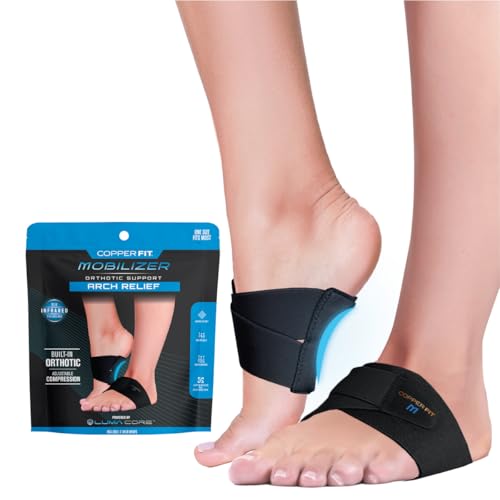
Copper Fit Mobilizer Arch Flex Wrap differs from the other wraps by using LumaCore Blu infrared fibers in a lightweight, breathable construction. The maker says the material emits far-infrared waves and that the wrap is designed to support mobility and help reduce swelling. It also has integrated arch support and moisture-wicking fabric, making it a possible fit for someone seeking a breathable compression wrap. The material and claims are specific to this model; shoppers looking for adjustable compression should compare its fit approach with an adjustable band.
Bottom line: Pick this if breathable fabric and the infrared-fiber construction matter to you.
Copper Fit Health Arch Relief Bands

Copper Fit Health Arch Relief Bands is the simplest option here: the package contains two arch relief compression bands. Unlike the wraps with built-in orthotic support, the product features identify this as a compression band, which may suit someone seeking a straightforward wraparound fit. It is one size fits most adults, so it offers less sizing choice than a sleeve with multiple size options. Choose a different design if built-in orthotic support is an essential part of what you want.
Bottom line: Choose these if you want a basic two-band compression set.
How to Choose Copper Fit Arch Support
Choose by the support style you want: an adjustable wrap changes snugness, while a sleeve or band offers a simpler pull-on fit. An arch support wrap surrounds the midfoot; it does not support the whole foot in the same way as an insole. If you need support inside a shoe, leave enough room for the shoe to close without pinching or changing your gait. A measurable rule: if the shoe feels tight or your toes lose room after adding a wrap, switch to a slimmer design or a roomier shoe. Use a wrap for a specific fit preference, not as a substitute for medical advice when pain is persistent, worsening, or affecting walking.
Wraps, Sleeves, and Compression Bands Compared
Wraps with built-in support offer a different structure from plain compression bands. Adjustable wraps can be tightened to preference, while a sleeve is pulled over the foot and depends on its size and stretch for fit. Check the distinction between arch support and an insole: a wrap surrounds the midfoot, whereas an insole extends under more of the foot. The table summarizes those practical differences; the exact fit still depends on shoe space and how snugly the support sits.
| Style | How it fits | Best fit consideration |
|---|---|---|
| Adjustable wrap | Band tightness can be changed | Position the band without pinching |
| Pull-on sleeve | Slides over the foot | Choose a size matched to your foot |
| Compression band | Wraps around the arch | Check for even, comfortable tension |
| Insole | Sits inside the shoe | Confirm shoe volume accommodates it |
How to Fit an Arch Support in Shoes
Fit an arch wrap so it lies flat around the midfoot and does not bunch beneath the shoe upper. Put it on before inserting your foot into the shoe, then check that the shoe still closes naturally and that the toes have room to spread. A wrap that slides, folds, or causes pressure points is a poor fit even if the shoe can be worn. For open footwear, confirm that the band remains secure during ordinary steps rather than relying on it to stabilize the foot. Break in a new support gradually: start with a short period of wear and stop if discomfort or numbness develops.
When to Get Foot Pain Assessed
Persistent or worsening foot pain deserves assessment rather than simply increasing compression. A wrap can change how snugly the midfoot feels, but it cannot identify the cause of pain. Seek a clinician’s guidance if pain follows an injury, affects normal walking, or comes with numbness, swelling, or skin changes. Avoid wearing a band so tightly that it causes tingling, discoloration, or increased pain; remove it and reassess the fit. People with diabetes or reduced sensation should take particular care with tight-fitting footwear and supports because pressure may be harder to detect. A comfortable fit should feel supportive without restricting circulation or creating a sharp pressure spot.
Frequently Asked Questions
Can an arch support wrap replace an insole?
No, an arch wrap surrounds the midfoot while an insole sits under a larger portion of the foot. If you need support across the sole, choose an insole designed for your shoe rather than assuming a wrap does the same job.
Should an arch support feel tight on my foot?
An arch support should feel snug without pinching, tingling, or causing numbness. Loosen or remove it if pressure increases or your skin changes color.
Can I wear arch wraps without shoes?
Some wrap designs are intended for barefoot wear, while others may be shaped primarily for footwear. Check the particular product’s wear options, and stop if the band slips or creates a pressure point.
How long should I wear a new arch wrap?
Start with a short period of wear, such as 30 to 60 minutes, then assess comfort before extending the time. Remove it sooner if you notice pain, numbness, tingling, or skin irritation.
When should foot arch pain be checked by a clinician?
Get clinical advice for pain that persists, worsens, follows an injury, or interferes with walking. Numbness, significant swelling, or skin changes also warrant prompt attention rather than tighter compression.