
Covers for Garden Boxes: 3 Frost Options Compared

Rectangular Frost Covers, 4.1 x 2 ft, 2 Pack suits most gardeners seeking covers for garden boxes because its 49.6-by-24-inch footprint is made for beds up to 4.1 by 2 feet. Choose Double-Layer Frost Covers for 4 x 2 ft Beds for a double-layer design, or 10 x 50 ft Frost Cloth and Garden Hoops Kit if you need a longer row-cover system supported by hoops rather than a fitted cover.
Frost cloth is a breathable fabric cover used to reduce exposure to cold and wind; measure the bed and tallest plants before choosing a size.
We earn a commission if you buy through links on this page. As an Amazon Associate I earn from qualifying purchases. Products are compared on manufacturer specifications, not hands-on testing.
- Best overall: Rectangular Frost Covers, 4.1 x 2 ft, 2 Pack – Its 49.6-by-24-inch footprint is sized for beds up to 4.1 by 2 feet.
- Best for insulation: Double-Layer Frost Covers for 4 x 2 ft Beds – Its cover uses a thermal aluminum liner and fits 4-by-2-foot beds.
- Best for long rows: 10 x 50 ft Frost Cloth and Garden Hoops Kit – The kit pairs 10-by-50-foot fabric with 36 hoops and clips.
| Product | Best for | Cover dimensions | Cover material | Support style | Shop |
|---|---|---|---|---|---|
| Rectangular Frost Covers, 4.1 x 2 ft, 2 Pack | Smaller raised beds | 49.6 x 24 x 19.6 in | 2.47 oz/yd² nonwoven fabric | Drawstring cover | Check Price on Amazon |
| Double-Layer Frost Covers for 4 x 2 ft Beds | Lined frost cover | 55.1 x 27.6 x 17.7 in | Nonwoven fabric with aluminum liner | Double drawstring | Check Price on Amazon |
| 10 x 50 ft Frost Cloth and Garden Hoops Kit | Long garden rows | 10 x 50 ft fabric | White plant-cover fabric; fiberglass hoops | 36 hoops, connectors, and clips | Check Price on Amazon |
Covers for Garden Boxes Compared
Compare fitted frost covers and a hoop-supported row-cover kit by footprint, fabric, and support.
Rectangular Frost Covers, 4.1 x 2 ft, 2 Pack

For a compact rectangular bed, these covers have a 49.6-by-24-inch footprint and come two to a pack. The nonwoven fabric weighs 2.47 ounces per square yard, and the covers have a drawstring for securing them around the bed. The maker says the fabric provides freeze protection to -4°F (-20°C) while allowing light and air through. This option suits gardeners covering beds no larger than 4.1 by 2 feet. Its 19.6-inch height may not clear taller plants, so measure their height as well as the bed.
Bottom line: Choose this pair for a bed up to 4.1 by 2 feet with plants below 19.6 inches.
Double-Layer Frost Covers for 4 x 2 ft Beds
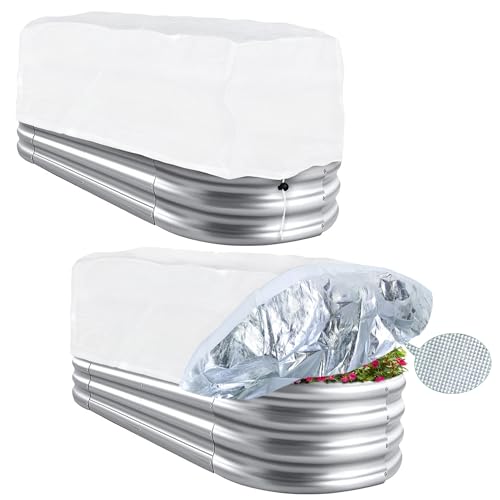
The aluminum-lined construction sets this pair apart from a single-layer frost cloth. Each cover measures 55.1 by 27.6 by 17.7 inches and is intended for a 4-by-2-foot garden bed; the double drawstring helps secure the cover around the bed. The maker describes the fabric as breathable and light-transmitting, with insulation for winter weather. This is a useful fit for a standard 4-by-2-foot bed when added lining is the priority. The 17.7-inch height is lower than Rectangular Frost Covers, 4.1 x 2 ft, 2 Pack, so check that mature plants will fit beneath it.
Bottom line: Pick this option for a 4-by-2-foot bed when the lined construction matters most.
10 x 50 ft Frost Cloth and Garden Hoops Kit

Unlike fitted covers, this kit lets you shape a longer tunnel over a garden row: it includes a 10-by-50-foot cloth, 36 fiberglass hoops, 36 connectors, and 24 clips. Each hoop is 1.4 feet long, and the flexible fiberglass can be bent to the bed’s contour. The kit suits gardeners who want to cover a custom-length row rather than slip a cover over one box. Its setup requires assembling and positioning the supports, and the 10-foot cloth width may not span a very wide bed with enough drape.
Bottom line: Choose this kit for a long or custom-shaped row that needs hoop support.
How to choose a garden box cover
Start with the cover’s job: frost cloth shelters plants, while a fitted solid cover protects the planter structure. For plant covers, compare the bed footprint and plant height with the cover dimensions; a cover that fits the box but presses on foliage can damage tender growth. Frost cloth is generally permeable, so it can admit some light and air, while heavier or lined cloth prioritizes insulation. A hoop system is useful when a single fitted cover cannot span a longer row. Choose a fitted cover when the box dimensions closely match its footprint; choose a hoop kit when you need a custom tunnel length and can secure its supports.
Measure garden boxes before choosing a cover
Measure the bed’s outside length and width, then measure from the soil surface to the tallest plant. Add clearance for a loose drape rather than stretching fabric tightly across leaves. The cover also needs enough material to reach the bed edge, where drawstrings, clips, or weights can hold it. A decision rule: if plant height exceeds the cover’s height, choose a taller system or support the fabric above the plants with hoops. For a fitted cover, compare the length and width to the bed’s actual outside measurements, not its nominal size. If the fit is close, confirm the bed dimensions before ordering.
Fitted frost covers and hoop row covers
Fitted covers slip over a box and are quickest when their footprint matches the bed. Hoop row covers use supports to hold fabric above plants, making them adaptable to long rows or changing plant height. Frost cloth works by limiting heat loss and buffering wind; protection depends on fabric weight, wind, and how tightly the edges are sealed. A tunnel can also trap heat on sunny days, so vent it or uncover plants when temperatures rise. The table summarizes which construction fits each need.
| Cover type | Useful for | Fit check |
|---|---|---|
| Fitted frost cloth | One compact bed | Bed footprint and plant height |
| Insulated fitted cover | Bed with lined cover preference | Bed footprint and clearance |
| Hoop row-cover kit | Long or custom row | Cloth width and support spacing |
Use frost covers without overheating plants
Frost covers are most useful when cold, wind, or frost threatens tender plants, but covered beds can warm quickly under direct sun. Open or remove the cover during warm daytime conditions, then secure it again before cold weather returns. Keep fabric from resting on delicate foliage when practical; hoops create an air gap and reduce contact. Check that edges are anchored, because wind can lift fabric and expose plants. A cover is not a substitute for checking local frost forecasts or selecting plants suited to the season. For a sudden freeze, secure every edge and avoid leaving gaps where cold air can enter.
Frequently Asked Questions
How much frost protection does garden cover fabric provide?
Protection varies with fabric weight, wind, and edge sealing. The maker says Rectangular Frost Covers, 4.1 x 2 ft, 2 Pack provides protection to -4°F (-20°C), but that claim should not be treated as a guarantee for every bed or weather condition.
Should frost cloth touch the garden plants?
Frost cloth can rest on sturdy plants, but contact may harm tender leaves under heavy frost or snow. Use hoops to hold cloth above delicate growth, especially when plants approach the cover’s height limit.
When should I remove a garden box frost cover?
Open or remove a frost cover on warm sunny days, when temperatures inside a covered tunnel can rise. Secure it again before cold conditions return.
How do I keep a garden cover from blowing away?
Secure the cover at its edges with its drawstrings, clips, or another suitable anchor, and check it after strong wind. A loose edge lets wind get under the fabric and can expose plants.
Can I use a solid planter cover over living plants?
A solid waterproof cover is intended to shield the planter, not to provide breathable frost protection for foliage. Use a permeable plant cover when living plants need light and air during cold weather.