
Culturelle Metabolism Weight Management Capsules Compared

Culturelle SlimBiotics 30 Capsules is the closest match for someone seeking Culturelle metabolism and weight management capsules, with a 12-billion-CFU probiotic blend and B6 and B12.
These are dietary supplements, not substitutes for a balanced diet or medical care. Ask a clinician or pharmacist before starting one if you take medication, are pregnant, or have a health condition.
We earn a commission if you buy through links on this page. As an Amazon Associate I earn from qualifying purchases. Products are compared on manufacturer specifications, not hands-on testing.
- Best overall: Culturelle SlimBiotics 30 Capsules – The Culturelle formula is the direct match and combines a multi-strain probiotic with B6 and B12.
- Best for stimulant-free formula: VitalForm GLP-1 Metabolic Support – Its features describe a caffeine-free formula with GlucoVantage, berberine, inulin and EGCG.
- Best for a larger capsule count: Berberine GLP-1 Support 90 Capsules – The 90-capsule package has a higher count than the other weight-management options.
| Product | Best for | Capsule count | Notable ingredients | Shop |
|---|---|---|---|---|
| Culturelle SlimBiotics 30 Capsules | Culturelle probiotic blend | 30 | SlimBiotics strains, B6, B12 | Check Price on Amazon |
| VitalForm GLP-1 Metabolic Support | Caffeine-free blend | 60 | GlucoVantage, berberine, inulin, EGCG | Check Price on Amazon |
| Berberine GLP-1 Support 90 Capsules | Higher capsule count | 90 | Berberine, chromium, Gymnema | Check Price on Amazon |
| GLP-1 Weight Loss Supplement 60 Capsules | Thermogenic ingredients | 60 | Green tea, chromium, caffeine | Check Price on Amazon |
Culturelle Metabolism Weight Management Capsules
Compare the closest match with related formulas by their ingredients and package counts.
Culturelle SlimBiotics 30 Capsules

Culturelle SlimBiotics 30 Capsules is the direct Culturelle match, pairing its SlimBiotics blend with Lactobacillus rhamnosus GG and vitamins B6 and B12. The 30-capsule bottle is intended as a once-daily supplement, and the formula is positioned for use alongside diet and exercise. It suits shoppers specifically seeking a Culturelle probiotic product rather than a stimulant-focused blend. Anyone expecting a medication-like weight loss effect should look elsewhere for medical guidance, not rely on a supplement.
Bottom line: Choose this if the Culturelle brand and its probiotic-plus-B-vitamin combination are your priorities.
VitalForm GLP-1 Metabolic Support
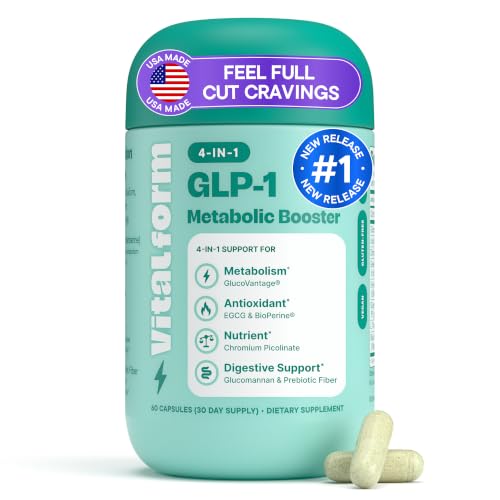
VitalForm GLP-1 Metabolic Support differs from the Culturelle option by emphasizing GlucoVantage, dihydroberberine, chromium picolinate, konjac root, inulin and EGCG rather than a named multi-strain probiotic blend. Its features call the formula caffeine-free and describe it as vegan, making it relevant to shoppers seeking a non-caffeinated combination of plant-derived ingredients and fiber. The package contains 60 capsules.
Bottom line: Choose this if you prefer its caffeine-free ingredient mix over a probiotic-led formula.
Berberine GLP-1 Support 90 Capsules

Berberine GLP-1 Support 90 Capsules stands apart with a 90-capsule package and a blend that includes berberine HCl, chromium, Gymnema sylvestre and Akkermansia muciniphila. Its features also name magnesium glycinate, lemon balm, L-theanine, rhodiola, green tea EGCG and saffron. That wider ingredient list may suit an adult comparing multi-ingredient appetite and metabolic support supplements rather than seeking Culturelle’s probiotic blend with B vitamins. Capsule count alone does not show how many days a bottle lasts: the serving size is not included here, so verify it before comparing package duration.
Bottom line: Choose this if a 90-capsule package and its broader ingredient combination suit your priorities.
GLP-1 Weight Loss Supplement 60 Capsules

GLP-1 Weight Loss Supplement 60 Capsules is a different kind of weight-management supplement from the Culturelle probiotic: its features name green tea extract, chromium picolinate, garcinia cambogia, apple cider vinegar, cinnamon, cayenne, glucomannan, caffeine and yohimbine. That makes it relevant to shoppers comparing a stimulant-containing blend, not to someone who specifically wants Culturelle’s probiotic strains. The bottle contains 60 capsules. The specifications give no amounts for the stimulants or other ingredients, so people sensitive to caffeine or taking medication should discuss the full label with a clinician or pharmacist before use.
Bottom line: Choose this only if you are specifically considering a stimulant-containing ingredient blend.
How to compare weight-management supplements
Start with the ingredient type and daily serving, not the weight loss language on a label. Probiotic products are identified by microorganisms and colony-forming units (CFUs); botanical and fiber blends use different ingredients and cannot be compared by CFU count. For a meaningful comparison, check the full Supplement Facts panel for each ingredient’s amount and the serving size. A bottle’s capsule count is not the number of days of use unless the serving is one capsule daily. FDA does not approve dietary supplements for safety and effectiveness before they are marketed, so claims on a label do not establish that a product will produce weight loss. If you take prescription drugs or have a medical condition, ask a pharmacist or clinician to check the complete ingredient panel first.
What probiotic CFU counts mean
CFU means colony-forming units, a measure of viable microorganisms; it does not tell you whether different products contain the same strains. Probiotic effects are strain- and use-specific, so compare the exact strain names as well as the count. CFU figures may refer to manufacture or the end of shelf life, depending on the label; check the Supplement Facts panel or package directions for that basis and storage instructions. A higher CFU number alone is not a sound reason to expect a better result. For this comparison, the Culturelle product gives a 12-billion-CFU count and names several strains, while the other included formulas do not provide a CFU figure in their specifications. Anyone seeking a probiotic for a diagnosed condition should ask a clinician rather than choose by CFU count.
How to judge capsule count and daily use
Capsule count only becomes useful when paired with serving size: divide the number of capsules by capsules per serving to estimate servings per bottle. Then use the package directions to determine how often a serving is taken; do not infer a schedule from bottle count. A 60-capsule bottle could represent 60 one-capsule servings or fewer servings if each requires multiple capsules. Check the current package for serving size, directions and warnings before using any supplement. Do not take extra capsules to compensate for a missed serving or to try to accelerate weight change.
Supplement safety and medication checks
Discuss a new supplement with a clinician or pharmacist if you take medication, are pregnant or nursing, or have a health condition. Multi-ingredient products can include substances with different safety considerations; caffeine and yohimbine, for example, are stimulants, so people who are sensitive to stimulants should be particularly cautious. Read the full label for amounts, warnings and other active ingredients rather than relying on a product name. Stop taking a supplement and seek medical advice if you experience a concerning reaction. Supplements are not a replacement for prescribed treatment, and the product claims do not establish a guaranteed amount of weight loss.
Frequently Asked Questions
Does a higher probiotic CFU count mean better weight support?
No; CFU count measures viable microorganisms, not the likelihood of weight change. Compare exact strains and the label’s serving and shelf-life basis, since probiotic effects are strain-specific.
How do I compare capsule bottles with different counts?
Divide the capsule count by capsules per serving to estimate servings per bottle. Confirm the package directions as well, because serving frequency can differ.
Can I take these supplements with prescription medicine?
Ask a pharmacist or clinician to review the full ingredient label first, especially for multi-ingredient formulas or products with stimulants. Do not change prescribed medicine to accommodate a supplement.
Are dietary supplements approved by the FDA before sale?
FDA does not approve dietary supplements for safety and effectiveness before they are marketed. Check the full label and discuss a product with a clinician if you have health concerns.
Should I use a weight-management supplement during pregnancy?
Ask your obstetric clinician before using any weight-management supplement during pregnancy. Ingredients and doses vary, and a product’s general-use claims do not establish pregnancy safety.