
D Mannose for Dogs UTI: 5 Options Compared

For D-mannose urinary support for dogs, UTI Pets Pure D-Mannose Powder is the most direct match because it is a 65-gram powder with D-mannose as its named ingredient. Choose another option if your dog needs a flavored powder, liquid or tablet format; urinary symptoms still need veterinary evaluation because a supplement cannot confirm or treat the cause.
We earn a commission if you buy through links on this page. As an Amazon Associate I earn from qualifying purchases. Products are compared on manufacturer specifications, not hands-on testing.
- Best overall: UTI Pets Pure D-Mannose Powder – A 65-gram powder with D-mannose as its named ingredient.
- Best for flavored powder: Chicken D-Mannose Powder, 115 g – A 115-gram D-mannose powder with real chicken.
- Best for chewable tablets: Cranberry D-Mannose Chewable Tablets – Each tablet combines 150 mg of D-mannose with 100 mg of cranberry extract.
| Product | Best for | Form | Size | Added ingredients | Shop |
|---|---|---|---|---|---|
| UTI Pets Pure D-Mannose Powder | Single-ingredient powder | Powder | 65 g | — | Check Price on Amazon |
| Chicken D-Mannose Powder, 115 g | Chicken-flavored powder | Powder | 115 g | Real chicken | Check Price on Amazon |
| Cranberry D-Mannose Chewable Tablets | Measured chewable format | Chewable tablets | 60 tablets | Cranberry extract, vitamin C | Check Price on Amazon |
| Cat & Dog Cranberry D-Mannose Drops | Liquid supplement format | Liquid drops | 60 ml | Cranberry | Check Price on Amazon |
| Mighty Petz MAX Cranberry Chews | Cranberry blend | Chews | — | D-mannose, probiotics | Check Price on Amazon |
D-Mannose for Dogs UTI Options
Compare the formats and ingredient combinations, then discuss suitability and dosing with your veterinarian.
UTI Pets Pure D-Mannose Powder
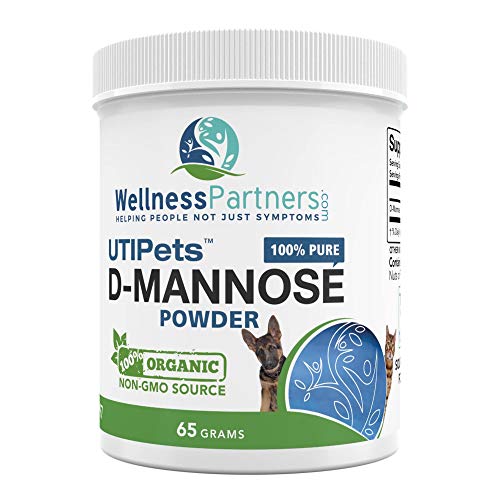
For a powder whose name identifies D-mannose as the sole ingredient, this 65-gram jar is the most direct fit. The maker says the mannose is organically sourced from Europe and describes the formula as non-GMO, gluten-free, kosher, soy-free, dairy-free, vegetarian and vegan. The powder format may suit owners who prefer not to give a tablet or liquid, but the package size alone does not establish a dose for a particular dog. Ask your veterinarian whether D-mannose is appropriate and what amount, if any, fits your dog’s diagnosis and health history.
Bottom line: Choose this if you want a powder with D-mannose as its named ingredient.
Chicken D-Mannose Powder, 115 g

Real chicken flavor and a larger 115-gram powder size distinguish this option from the plain powder and tablet formats. The maker says D-mannose is intended to help keep bacteria from sticking to urinary-tract walls, and also describes the powder as a prebiotic. The product is presented for both dogs and cats. The amount of D-mannose per serving is not provided in the specifications, so ask a veterinarian to verify dosing before use.
Bottom line: Choose this if chicken flavor and a powder format suit your dog.
Cranberry D-Mannose Chewable Tablets
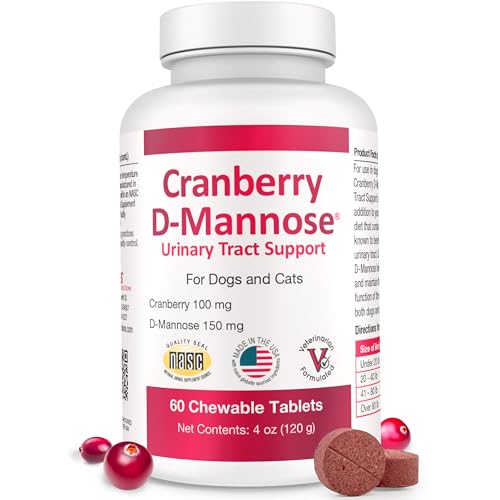
Each chewable tablet has an ingredient amount: 150 mg of D-mannose and 100 mg of cranberry extract, plus vitamin C. That makes the formula easier to compare by per-tablet quantities than options whose fields give no D-mannose amount. The product is intended for dogs and cats, and its features describe urinary wellness support. Ask your veterinarian whether the combined ingredients fit your dog’s condition and medication routine.
Bottom line: Choose this if you prefer chewable tablets with per-tablet ingredient amounts.
Cat & Dog Cranberry D-Mannose Drops

A 60-milliliter liquid format sets these cat-and-dog drops apart from powders and chewables. That makes the bottle size insufficient for comparing dose strength. Ask a veterinarian to review the full label and confirm whether the formula is suitable for your dog.
Bottom line: Choose this if a liquid format is easier for your dog to take.
Mighty Petz MAX Cranberry Chews

This cranberry-focused dog supplement combines D-mannose with probiotics, grapefruit seed extract, vitamin C and turkey broth. That broader ingredient mix distinguishes it from the single-ingredient powder and the tablet formula with D-mannose and cranberry amounts. The maker says the formula supports urinary and digestive wellness and describes it as vet-approved. Check the package directions with your veterinarian, especially if your dog has urinary symptoms or takes medication.
Bottom line: Choose this if you want a dog-focused cranberry blend with added ingredients.
How to choose D-mannose for dogs
Start with veterinary diagnosis, then compare format and ingredient amounts rather than relying on a supplement’s UTI claims. Dogs with frequent urination, straining, blood in urine or accidents need a veterinary exam; a urinalysis and urine culture can help distinguish bacterial infection from stones or other causes. D-mannose is a sugar, but evidence for preventing or treating canine UTIs is limited, and it is not a substitute for prescribed antibiotics when those are needed. Prefer a formula that gives a clear amount per serving if your veterinarian recommends considering it. If your dog cannot pass urine, seek emergency veterinary care rather than trying a supplement.
Powder, drops and chewables compared
Choose the format your dog can reliably take, but do not assume different formats deliver equivalent doses. Powders can be mixed into food, while drops may be simpler for some dogs; chewables can offer a fixed amount per tablet when the label gives one. A serving quantity matters more than a jar or bottle’s total size when comparing exposure. The table separates format and ingredient amount from the medical decision: no format establishes a diagnosis or makes a supplement a treatment for an active infection.
| Need | Format to consider | What to verify |
|---|---|---|
| Mix into food | Powder | D-mannose amount per serving |
| Liquid delivery | Drops | Amount per milliliter and serving size |
| Fixed tablet unit | Chewable tablets | Amount per tablet and dog-specific directions |
When urinary symptoms need urgent care
Repeated attempts to urinate with little or no urine, especially in a male dog, can indicate a urinary blockage and require emergency care. Blood in urine, painful urination, new accidents or marked increases in drinking and urination also warrant prompt veterinary advice, because causes include infection, stones, diabetes and kidney problems. Do not wait for a supplement to work or use symptom changes to decide that an infection has cleared. If a veterinarian prescribes medication, ask before adding a supplement; bring the full ingredient panel so the clinic can assess the combination and the dog’s other conditions.
Dosing and safety questions to settle first
There is no universally established canine D-mannose dose that can be derived from a product’s total package weight. A 65-gram jar or 60-milliliter bottle does not tell you the amount per serving, and products with multiple ingredients add another reason to check the complete label. Ask the veterinarian for a dog-specific amount and duration only after the cause of symptoms is assessed. Avoid translating human supplement directions to a dog by body weight: the right decision depends on diagnosis, formulation and health history. Contact the clinic if symptoms worsen, new vomiting or lethargy appears, or urination becomes difficult.
Frequently Asked Questions
Can D-mannose replace antibiotics for a dog UTI?
No; D-mannose is not a substitute for veterinary diagnosis or prescribed antibiotics. A urine culture may be needed to identify bacteria and guide treatment, and straining without urine is an emergency.
How much D-mannose can I give my dog?
There is no universal dose established by these specifications. Ask your veterinarian for a dog-specific recommendation and compare the amount per serving, not just the jar or bottle size.
How can I tell if my dog has a urinary blockage?
Repeated straining with little or no urine can signal a blockage and needs emergency veterinary care, especially in male dogs. Do not wait to see whether a supplement changes the symptoms.
Does cranberry prevent urinary infections in dogs?
Cranberry supplements are marketed for urinary support, but they do not diagnose or reliably treat an active infection. Blood in urine, painful urination or new accidents should prompt veterinary evaluation.
Should a urine sample be checked before supplements?
Veterinary testing is the safer first step when urinary symptoms appear. Urinalysis and, when indicated, culture help distinguish infection from stones and other conditions that supplements cannot identify.