
Dandelion and Burdock Tea: 3 Blends Compared

For a caffeine-free dandelion and burdock tea with roasted roots and barley, start with HANFANGLING Roasted Dandelion & Burdock; choose another blend if you want peach flavor, more tea bags, or a different botanical mix.
Dandelion and burdock tea is an herbal infusion made with the plants’ roots, often combined with other ingredients that change its flavor and composition.
We earn a commission if you buy through links on this page. As an Amazon Associate I earn from qualifying purchases. Products are compared on manufacturer specifications, not hands-on testing.
- Best overall: HANFANGLING Roasted Dandelion & Burdock – Pairs roasted dandelion and burdock roots with barley in 20 caffeine-free tea bags.
- Best for peach flavor: TeeLux Peach Dandelion Burdock – Combines roasted roots with peach notes, ginger, cinnamon and other spices in 100 tea bags.
| Product | Best for | Format and count | Root preparation | Other ingredients | Shop |
|---|---|---|---|---|---|
| HANFANGLING Roasted Dandelion & Burdock | Roasted root blend | 20 tea bags | Roasted | Barley | Check Price on Amazon |
| TeeLux Peach Dandelion Burdock | Peach and spice | 100 tea bags | Roasted | Ginger, cinnamon, licorice, peach | Check Price on Amazon |
| Dr. Siana 13-Herb Dandelion Tea | Many botanicals | 30 tea bags | — | Cassia, barley, green tea, chicory | Check Price on Amazon |
Dandelion and burdock tea blends
Compare the ingredients and formats to find a blend that matches your preferred flavor and brewing routine.
HANFANGLING Roasted Dandelion & Burdock

HANFANGLING Roasted Dandelion & Burdock is the direct match for a roasted dandelion-and-burdock blend, with barley as its third named ingredient. The maker describes it as caffeine-free and positions it as a coffee alternative, so it suits someone seeking a roasted-style herbal cup without caffeine. Its 20 tea bags make it a smaller count than the 100-bag option. The product also makes detoxification claims; those claims should not be taken as proof that tea removes toxins or treats a health condition.
Bottom line: Choose this if you want roasted roots with barley in a caffeine-free tea-bag format.
TeeLux Peach Dandelion Burdock

TeeLux Peach Dandelion Burdock stands apart with peach and a wider spice profile alongside roasted dandelion and burdock roots. Its ingredients include ginger, cinnamon, licorice, cardamom, clove and orange peel, making it the choice for a more layered, gently sweet cup rather than a plain root infusion. The pack has 100 tea bags and is described as caffeine-free and sugar-free. The long ingredient list may not suit someone who wants only dandelion and burdock or who avoids particular botanicals.
Bottom line: Pick this for a fruit-and-spice profile and a large tea-bag count.
Dr. Siana 13-Herb Dandelion Tea
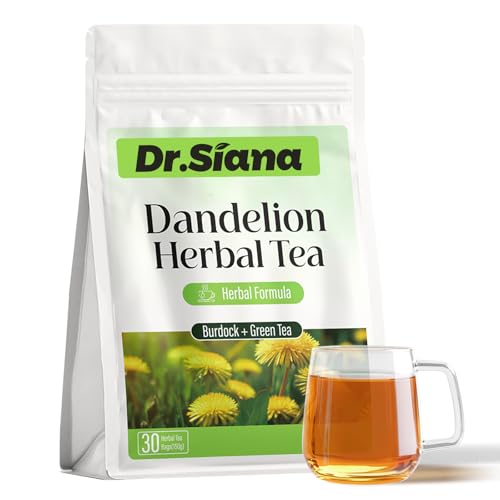
Dr. Siana 13-Herb Dandelion Tea uses a 13-ingredient herbal blend rather than focusing on roasted roots. Along with dandelion and burdock, the ingredients include cassia seeds, rose petals, lotus leaf, barley, green tea, gardenia, winter melon, orange peel, dried apple, roselle and chicory. This makes it a fit for buyers interested in a broad botanical mix. Because green tea is included, do not assume this blend is caffeine-free; check the package if caffeine avoidance is important.
Bottom line: Choose this if you want dandelion and burdock among a much broader herbal blend.
How to choose dandelion and burdock tea
Choose first by the ingredients and root preparation, then by format and caffeine needs. Roasting gives roots a toasty character, while unroasted dandelion root has a different, less roasted profile; added spices, fruit and herbs can dominate the cup. Tea bags are convenient for single-cup brewing, while loose leaf requires an infuser or strainer. For caffeine avoidance, favor a blend explicitly described as caffeine-free and inspect the full ingredient list: green tea naturally contains caffeine, so Dr. Siana 13-Herb Dandelion Tea should not be assumed caffeine-free. If you want only the two roots, avoid blends with a long list of added botanicals.
What root and ingredient differences matter
Roasted roots are common in coffee-style herbal infusions because roasting develops browned, toasted flavors; unroasted roots do not offer the same roast profile. Barley adds another grain ingredient, while peach, licorice, cinnamon, ginger, cardamom and citrus peel shift the flavor toward sweet, spicy or aromatic notes. Dandelion leaf is a distinct plant part from dandelion root, so a leaf-and-root blend is not the same ingredient combination as a roasted root tea. Use this guide to match the blend type to your preference rather than treating all dandelion teas as interchangeable.
| What you want | Blend type to look for |
|---|---|
| Toasty, coffee-style flavor | Roasted root blend |
| Fruit and spice notes | Roots with peach, ginger or cinnamon |
| Dandelion leaves | Leaf-and-root blend |
| Loose brewing format | Loose-leaf tea |
Brewing herbal tea safely
Herbal tea bags are generally steeped in freshly boiled water for about 5 to 10 minutes, with longer steeping producing a stronger cup; follow the product’s package directions when available. Use a clean cup and keep hot water away from children to avoid scalds. Botanicals can interact with medicines or trigger allergies, and dandelion may be unsuitable for people with allergies to related plants or certain health conditions. If you are pregnant, nursing, taking medication, or managing a medical condition, ask a qualified clinician before using an herbal tea regularly. Do not rely on detox claims as a substitute for medical care.
Frequently Asked Questions
Does dandelion and burdock tea contain caffeine?
Many blends made only with roots and herbs are caffeine-free, but ingredients matter. Green tea naturally contains caffeine, so check the ingredients and package before choosing a blend when avoiding caffeine.
How long should I steep dandelion root tea?
A typical herbal-tea steep is about 5 to 10 minutes in freshly boiled water. Longer steeping usually makes the cup stronger, so adjust within that range to taste and use the package directions if provided.
Can I drink dandelion tea every day?
There is no single daily amount that suits everyone because ingredients and health circumstances differ. Ask a clinician before regular use if you take medication, are pregnant or nursing, or have a medical condition.
Does dandelion tea detox the liver?
Tea should not be treated as a proven liver detox or a substitute for medical care. Claims about detoxification do not establish that a blend removes toxins or treats disease.
Can dandelion tea cause an allergic reaction?
Yes, an allergy is possible, including for people sensitive to plants related to dandelion. Stop drinking it if you develop a reaction and seek medical advice for concerning symptoms.