
50Hz to 60Hz Converter: Models Compared by Output

For a dedicated 50Hz-to-60Hz converter, EX-8 900W Frequency Converter is the clearest match because it specifies 200–240V, 50Hz input and selectable 100–120V, 60Hz output. Choose X-10 1,200W Frequency Converter instead for its 1,200W rating; the other units focus on stepping voltage down and are not as clear a fit for equipment that requires a change in frequency.
A frequency converter changes the electrical cycles per second as well as voltage, unlike a basic step-down transformer.
We earn a commission if you buy through links on this page. As an Amazon Associate I earn from qualifying purchases. Products are compared on manufacturer specifications, not hands-on testing.
- Best overall: EX-8 900W Frequency Converter – Specifies 50Hz input and selectable 60Hz output, with a 900W rating.
- Best for higher rated power: X-10 1,200W Frequency Converter – Specifies 1,200W continuous power and 220V/50Hz to 120V/60Hz conversion.
- Best for higher appliance wattage: HYTED 1,600W Voltage Converter – Offers a 1,600W continuous pure-sine-wave rating for voltage conversion.
| Product | Best for | Frequency conversion | Dimensions (in.) | Shop |
|---|---|---|---|---|
| EX-8 900W Frequency Converter | Specified frequency change | 50Hz to 60Hz | 14.96 × 7.87 × 7.08 | Check Price on Amazon |
| X-10 1,200W Frequency Converter | Higher rated capacity | 220V/50Hz to 120V/60Hz | 16.34 × 10.83 × 4.92 | Check Price on Amazon |
| DOACE 500W Converter | Compact voltage conversion | 50/60Hz input; 60Hz output claim | 6.3 × 4.0 × 1.57 | Check Price on Amazon |
| HYTED 1,600W Voltage Converter | Higher wattage appliances | — | 6.4 × 3.5 × 2.3 | Check Price on Amazon |
| 3,000W Step-Down Transformer | Voltage-only step-down | — | 7.48 × 3.0 × 9.53 | Check Price on Amazon |
50Hz to 60Hz converters
Check both the frequency change and voltage range against your appliance’s requirements before choosing.
EX-8 900W Frequency Converter
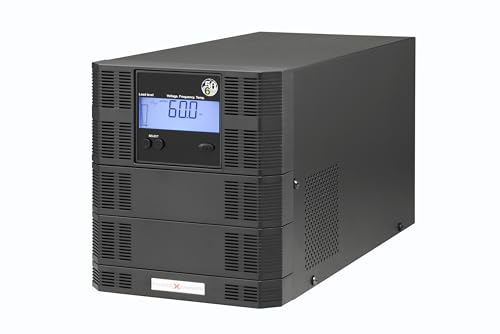
EX-8 900W Frequency Converter explicitly pairs 50Hz input with 60Hz output, making the frequency change central to its specifications rather than an inference from voltage conversion. It accepts 200–240V and offers selectable 100V, 110V, 115V, or 120V output; its 900W/8A rating is the capacity. The maker says its pure sine wave output and protection features support sensitive electronics and motor-driven equipment. This unit suits a 50Hz supply when an appliance requires 60Hz. Its 900W ceiling makes it a poor match for loads above that rating, especially if startup demand is high.
Bottom line: Choose this when your appliance needs 60Hz and its load stays within 900W.
X-10 1,200W Frequency Converter

X-10 1,200W Frequency Converter is the higher-rated dedicated frequency converter here, specifying 220V/50Hz input and 120V/60Hz output at 1,200W/10A. The maker says it can operate at its full rated power and lists voltage regulation, surge, short-circuit, over-current, and thermal protection. A wall-mount kit, four international power cords, and an extension outlet are included. Consider it when a 900W unit would not cover the appliance’s running load. At 20.9 pounds and 16.34 inches long, however, it is not the compact choice for luggage or a small work surface.
Bottom line: Pick this for a specified 60Hz output with a load above 900W but within 1,200W.
DOACE 500W Converter

DOACE 500W Converter is a compact voltage converter with a claimed 500W maximum and a claimed 100–240V, 50/60Hz-to-110V, 60Hz conversion. That input range describes compatibility with either incoming frequency; it does not clearly establish regeneration of 50Hz into 60Hz in the same way as units specifying a dedicated frequency change. The maker says the output is pure sine wave and identifies CPAP machines and other electronics among possible uses. At 1.32 pounds and 6.3 inches long, it is easier to pack than the larger units. Its 500W maximum limits the loads it can serve.
Bottom line: Consider it for compact voltage conversion, but verify frequency requirements for a 50Hz appliance.
HYTED 1,600W Voltage Converter

HYTED 1,600W Voltage Converter focuses on stepping voltage down, claiming 220–250V input and stable 120V pure sine wave output with a 1,600W continuous rating. Its focus is American appliances used in higher-voltage countries, and it includes a Type E/F cord plus C, G, and I adapters. The maker says it supports heating, motor, electronic, and mixed loads. It is a partial match for someone seeking a 50Hz-to-60Hz converter because its specifications center on voltage and do not establish frequency regeneration. Choose it for a 120V load whose power demand fits the rating, not solely because the destination supply is 50Hz.
Bottom line: Choose it when voltage conversion and a 1,600W rating matter more than a specified frequency change.
3,000W Step-Down Transformer

3,000W Step-Down Transformer is a step-down transformer, not a clearly specified frequency converter: its purpose is using U.S. appliances on 220V European supplies. Although its name gives a 3,000W rating, the maker advises choosing a transformer at least 1.25 times the appliance’s power and recommends keeping appliances at or below 2,400W. That distinction matters when sizing a transformer for startup demand; the larger headline rating should not override the maker’s usage advice. The unit suits buyers focused on reducing voltage for appliances within that advised limit. It does not address a 50Hz appliance’s need for 60Hz output.
Bottom line: Pick it for voltage step-down only when the appliance fits the maker’s advised limit.
How to choose a 50Hz to 60Hz converter
Start by matching both the input and output frequency, because a transformer can change voltage without changing frequency. A device that requires 60Hz needs a unit that explicitly specifies 60Hz output from 50Hz input; broad compatibility with 50/60Hz input alone is not the same claim. Next, check input voltage, selectable output voltage, and the appliance nameplate. Compare continuous wattage with the appliance’s running demand, then allow for startup surge from motors and compressors. For a simple decision rule, if a load exceeds 900W but stays at or below 1,200W, the 900W model is too small by its rating while the 1,200W model is within its ceiling. Confirm the appliance’s required frequency and voltage before selecting a unit.
Frequency conversion versus voltage conversion
Frequency conversion changes cycles per second; voltage conversion changes electrical potential. A step-down transformer can turn a 220V supply into roughly 110–120V while leaving the supply frequency unchanged, so it will not meet a 60Hz requirement from 50Hz merely by lowering voltage. Some travel converters accept both 50Hz and 60Hz input, but an input range does not by itself prove that the unit regenerates frequency. Use the product’s explicit input-to-output frequency specification to distinguish the types.
| Need | What to look for | What it does |
|---|---|---|
| 50Hz appliance supply; 60Hz appliance required | Explicit 50Hz input and 60Hz output | Changes frequency and may also step voltage down |
| 220–240V supply; 110–120V appliance | Input and output voltage ratings | Steps voltage down; frequency may remain unchanged |
| Higher startup demand | Continuous rating and motor surge guidance | Helps avoid exceeding the unit’s capacity |
Match converter capacity to appliance load
Use the appliance’s rated watts as a starting point, not the converter’s largest marketing number alone. Motor-driven equipment, compressors, and some heating appliances may draw more power during startup than while running, so check the appliance’s nameplate or manual for starting demand where available. A converter’s continuous rating is the useful limit for sustained operation; a short surge claim, if supplied, is a separate specification. On the transformer option here, the maker recommends sizing at 1.25 times appliance power and keeping appliances within 2,400W despite a 3,000W name rating. Leave headroom rather than planning around a borderline match. Never connect a load that exceeds the converter’s rated capacity.
Check plugs, voltage, and electrical safety
Confirm that the wall outlet voltage and plug type match the converter’s input before connecting an appliance. An included travel plug adapter changes plug shape; it does not itself convert voltage or frequency. Keep the converter’s input and output sides distinct, and use any grounding connection as intended. Electrical converters can run warm under load, so keep ventilation openings clear and place the unit on a stable, dry surface away from fabric or other materials that can obstruct airflow. Stop using a unit if its cord, plug, or casing is damaged, or if it overheats or emits an unusual smell. A compatible outlet adapter is not a substitute for checking the appliance’s voltage and frequency requirements.
Frequently Asked Questions
Can a step-down transformer change 50Hz to 60Hz?
A basic step-down transformer changes voltage, not frequency. If an appliance requires 60Hz on a 50Hz supply, choose equipment that explicitly specifies 50Hz input and 60Hz output.
How much extra capacity should a converter have?
For transformers, a common sizing approach is to allow about 25% headroom above an appliance’s rated watts, with more attention to motor startup demand. Follow any stricter capacity guidance for the particular unit.
Does a plug adapter convert voltage or frequency?
No, a plug adapter changes the physical plug connection only. Check the converter’s input and output ratings separately, and use a unit that explicitly changes frequency when 60Hz output is required.