
Definitive Technology Demand D17: Speaker Fit Guide

The Definitive Technology Demand D17 suits buyers seeking a dedicated right-channel tower with dual 10-inch passive radiators and a matching left-channel speaker. Choose a different model if you need a complete stereo pair, a center channel, or a compact shelf speaker.
The D17 is a floorstanding speaker built to work as one side of a stereo setup, rather than a self-contained pair.
We earn a commission if you buy through links on this page. As an Amazon Associate I earn from qualifying purchases. Products are compared on manufacturer specifications, not hands-on testing.
- Best overall: Definitive Technology Demand D17 Right Tower – Its dedicated right-channel design and dual 10-inch passive radiators match the D17 search.
- Best for powered bass: Definitive Technology BP-9040 Tower – It combines a tower speaker with a built-in powered 8-inch subwoofer.
- Best for immersive sound: Definitive Technology Dymension DM70 Tower – Its tower design pairs a powered 10-inch subwoofer with adjustable bipolar arrays.
| Product | Best for | Speaker role | Bass system | Dimensions (H × W × D) | Shop |
|---|---|---|---|---|---|
| Definitive Technology Demand D17 Right Tower | D17 stereo pairing | Right-channel tower | Dual 10-inch passive radiators | 43.25 × 10.17 × 14.72 in. | Check Price on Amazon |
| Definitive Technology BP-9040 Tower | Powered bass | Tower speaker | Powered 8-inch subwoofer | 39 × 11 × 13 in. | Check Price on Amazon |
| Definitive Technology ProMonitor 1000 Pair | Compact placement | Pair of satellite speakers | 5.25-inch passive radiator per speaker | 10.81 × 6.25 × 6.5 in. | Check Price on Amazon |
| Definitive Technology Dymension DM70 Tower | Bipolar tower sound | Tower speaker | Powered 10-inch subwoofer; passive radiators | 47.4 × 11.3 × 16 in. | Check Price on Amazon |
Definitive Technology Demand D17 and Related Speakers
Compare channel role and bass design first, then check cabinet dimensions against your room and placement plan.
Definitive Technology Demand D17 Right Tower
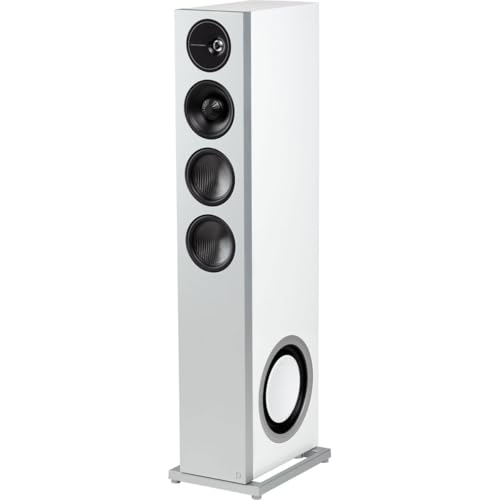
The D17 is the only dedicated Demand Series right-channel tower here, with offset tweeters and a specified 6.5-inch BDSS woofer, two 6.5-inch carbon-fiber drivers, dual 10-inch side-firing passive radiators and a 1-inch tweeter. Definitive Technology says its Wave Alignment Lens and driver arrangement are intended to deliver balanced, full-range sound. Its 43.25-inch height and 14.72-inch depth call for floor space, and the speaker is sold singly. Pair it with a dedicated D17 left channel for stereo; buyers seeking a ready-made pair should consider a pair of matched speakers instead.
Bottom line: Choose this when you need the D17 right channel and will match it with its dedicated left speaker.
Definitive Technology BP-9040 Tower
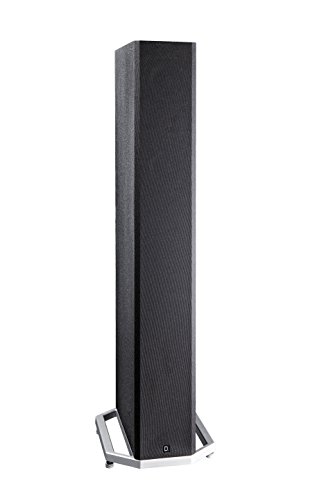
The BP-9040 differs from the D17 by using a built-in powered 8-inch subwoofer and front-and-rear driver arrays rather than a dedicated D17 right-channel layout. Its front array has a 1-inch tweeter and two 4.5-inch midrange drivers; the rear has a 1-inch tweeter and a 4.5-inch midrange driver. The manufacturer describes its bipolar design as spreading sound across a wider area. At 39 inches high, it is shorter than the D17, but it still needs floor space and a suitable power connection for its integrated subwoofer. Choose it for a powered-bass tower, not to complete a D17 stereo pair.
Bottom line: Pick this if an integrated powered subwoofer matters more than matching the D17 channel design.
Definitive Technology ProMonitor 1000 Pair

The ProMonitor 1000 is a compact pair, unlike the D17’s single full-height right-channel tower. Each speaker combines a 5.25-inch BDSS mid/bass driver with a 5.25-inch passive radiator, and the manufacturer gives a frequency response extending down to 47 Hz. A pair can serve as stereo speakers or front/rear home-theater channels, with shelf, wall or stand placement available. At 10.81 inches tall, these speakers suit rooms where a tower cabinet will not fit. Their compact form is the limitation: buyers looking specifically for a D17 tower or its dedicated right-channel role should stay with the D17.
Bottom line: Choose this pair when compact placement matters more than a full-size tower.
Definitive Technology Dymension DM70 Tower

The DM70 is a larger Dymension tower with adjustable bipolar arrays, not a D17-series right-channel speaker. Its design includes four 5.25-inch BDSS mid/bass woofers, a tweeter, two 3XR-optimized passive radiators and an integrated powered 10-inch subwoofer with 180-watt Class D amplification. Definitive Technology says the adjustable front-and-back arrays are designed for enveloping sound. The 47.4-inch height and 16-inch depth make it the largest tower by height and depth among these options. Choose it for its powered-subwoofer and adjustable-array design, but not as a direct D17 match.
Bottom line: Pick this if you want an adjustable bipolar tower with integrated powered bass.
How to choose a tower speaker for a stereo system
Start with the speaker’s channel role: a single right-channel tower is not a stereo pair, so plan for a matching left channel before buying. Stereo speakers work best when placed symmetrically around the listening position; a useful starting point is equal distance from the listener and between the speakers, forming a roughly equilateral triangle. Keep each tower clear of furniture that blocks its drivers, and adjust toe-in toward the seat if imaging sounds diffuse. A tower with a powered subwoofer also needs an outlet nearby, while a passive-radiator design does not have that built-in powered bass section. If you cannot make room for a tower cabinet, a compact pair may be a more practical form factor, though it changes the system role and bass design.
How tower placement changes bass and imaging
Begin with several inches of clearance from walls, then adjust in small steps: rear and side boundaries can reinforce bass, while asymmetrical placement can pull the stereo image to one side. Side-firing passive radiators need open space beside the cabinet rather than being pressed against furniture or a wall. For stereo listening, place the two speakers at similar distances from the side walls and angle them consistently; a difference of even a few inches can affect balance. Room furnishings, floor materials and listening distance all influence the result, so make one placement change at a time. Do not confuse cabinet depth with the clearance needed behind or beside the speaker; allow space for connections and unobstructed driver operation.
How tower and compact speaker types differ
Towers trade floor area for a larger cabinet and, in some designs, integrated bass hardware; compact speakers conserve space and can be shelf-, stand- or wall-mounted. The table compares the main system distinction, not sound quality, which depends on room, placement and the rest of the system.
| Type | Typical role | What to check |
|---|---|---|
| Dedicated-channel tower | One specified stereo side | Matching opposite-channel speaker |
| Tower with powered subwoofer | Floorstanding front or rear speaker | Nearby power outlet |
| Compact speaker pair | Stereo or surround channels | Shelf, stand or wall placement |
Choose by role first, then compare cabinet footprint and bass arrangement. A tower labeled for a specific channel should not be assumed to include its counterpart.
What to check before connecting home speakers
Confirm that the receiver or amplifier supports the speakers’ impedance and power requirements before connecting them; those compatibility figures are essential to a safe system match. Use speaker wire with intact insulation, keep bare wire strands from touching neighboring terminals, and switch equipment off before making or changing connections. Powered-subwoofer towers need their own power connection in addition to the speaker signal, so plan cable routes without pinching wires under furniture or across walkways. In multi-channel systems, use a center speaker for dialogue duty and keep left and right speakers assigned to their matching channels. These steps prevent common setup mistakes, but they do not replace the component manuals for connection-specific limits.
Frequently Asked Questions
Does the Demand D17 come as a stereo pair?
No, the D17 specified here is a single right-channel speaker. A stereo setup needs a matching left-channel D17 as well.
How much space should I leave around a tower speaker?
Start with several inches between the cabinet and nearby walls, then adjust placement in small steps to balance bass and imaging. Keep side-firing radiators unobstructed and allow extra room for cables.
Can I use compact speakers instead of tower speakers?
Yes, if their channel role and system needs fit your setup. Compact speakers save floor space, while a tower may include a larger driver arrangement or powered bass hardware.
Do tower speakers with powered subwoofers need an outlet?
Yes, a built-in powered subwoofer needs electrical power in addition to its audio signal. Plan an outlet and safe cable route near the speaker position.
How do I match speakers with an amplifier?
Check the speaker impedance and power-handling requirements against the amplifier’s supported range before connecting them. Switch the equipment off during wiring and prevent stray wire strands from bridging terminals.