
Best Cream for Varicose Veins: 5 Leg Creams Compared

Goicoechea Arnica & Chamomile Lotion is the best fit for most people seeking a cream for varicose veins because its arnica-and-chamomile lotion focuses on skin hydration and soothing tired legs. These creams may moisturize skin or provide a cooling sensation, but they do not remove or repair varicose veins; choose a different option if you prefer a smaller tube, a lightweight gel-like feel, or another ingredient blend.
We earn a commission if you buy through links on this page. As an Amazon Associate I earn from qualifying purchases. Products are compared on manufacturer specifications, not hands-on testing.
- Best overall: Goicoechea Arnica & Chamomile Lotion – A 13.5-ounce arnica-and-chamomile lotion offers a larger format and emphasizes hydration for tired legs.
- Best for aloe and allantoin: Moisturizing Leg Cream with Aloe – Its formula includes aloe vera, sunflower seed oil, allantoin, glycerin, and a cooling sensation.
- Best for menthol cooling: PUTRIZEN MSM & Arnica Cream – The 2.02-ounce cream pairs menthol and aloe vera with MSM and arnica.
| Product | Best for | Size | Notable ingredients | Texture or feel | Shop |
|---|---|---|---|---|---|
| Goicoechea Arnica & Chamomile Lotion | Daily hydration | 13.5 oz | Arnica, chamomile | Non-greasy lotion | Check Price on Amazon |
| Moisturizing Leg Cream with Aloe | Aloe blend | 5.07 fl oz | Aloe, sunflower oil, allantoin | Lightweight, cooling | Check Price on Amazon |
| PUTRIZEN MSM & Arnica Cream | Menthol refresh | 2.02 fl oz | MSM, arnica, menthol, aloe | Fast-absorbing, non-greasy | Check Price on Amazon |
| Horse Chestnut Leg Cream | Horse chestnut | 2.12 oz | Horse chestnut | Cooling, non-greasy | Check Price on Amazon |
| Varicosyl Cooling Leg Cream | Arnica and MSM | 2 oz | Horse chestnut, arnica, MSM, menthol | Cooling, non-greasy | Check Price on Amazon |
Creams for Varicose Veins
Compare these creams as leg-skin-care options, not treatments that eliminate varicose veins.
Goicoechea Arnica & Chamomile Lotion
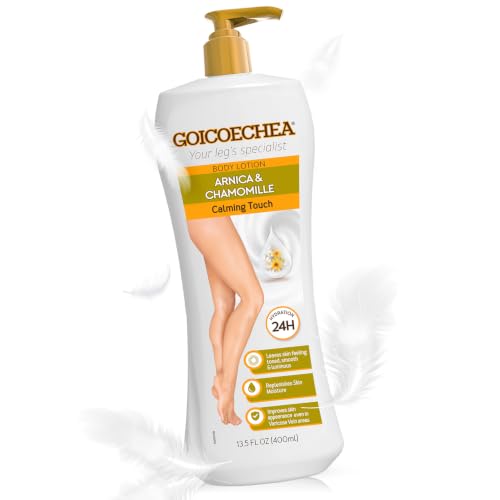
Goicoechea Arnica & Chamomile Lotion stands out for its 13.5-ounce size and lotion format, making it a fit for people who want a larger amount for regular leg-skin care. The maker says the arnica-and-chamomile formula hydrates for up to 24 hours and helps refresh tired legs; it also promotes improved skin appearance in areas with visible veins. This is a moisturizing body lotion, not a way to make varicose veins disappear. Its larger bottle may be less convenient if you want a compact tube for travel or a small trial size.
Bottom line: Choose this if you want a larger, daily-use lotion focused on hydration.
Moisturizing Leg Cream with Aloe

Moisturizing Leg Cream with Aloe differs from the larger lotion with a 5.07-fluid-ounce cream and an ingredient mix that includes aloe vera, sunflower seed oil, allantoin, and glycerin. The maker says the lightweight formula absorbs quickly and gives a gentle cooling sensation while moisturizing leg skin. That makes it a reasonable choice for someone who prefers a smaller package and a non-sticky feel. The product is for everyday skin care; it should not be expected to shrink, close, or remove visible veins.
Bottom line: Pick this if aloe and a lightweight, cooling feel suit your routine.
PUTRIZEN MSM & Arnica Cream

PUTRIZEN MSM & Arnica Cream is the compact option among these creams, at 2.02 fluid ounces, and its formula combines MSM and arnica with menthol and aloe vera. The maker says it absorbs quickly without a heavy or sticky residue and provides mild refreshment for legs that feel tired after sitting, standing, work, or travel. The smaller size may suit a limited-space routine, but it offers less product than the 5.07- and 13.5-ounce options. Its cooling feel is cosmetic comfort, not treatment for vein disease.
Bottom line: Choose this if a small tube and menthol refreshment are priorities.
Horse Chestnut Leg Cream

Horse Chestnut Leg Cream centers its formula on horse chestnut and is described as a soothing cream for tired, heavy-feeling legs. The maker says the non-greasy cream provides cooling comfort and is paraben-free. At 2.12 ounces, it is a smaller-format choice, although the size is measured in ounces rather than fluid ounces, so it should not be directly compared by volume with the fluid-ounce tubes. Claims about soothing or circulation do not establish that a topical cream treats varicose veins.
Bottom line: Consider this if horse chestnut is the ingredient you want to try.
Varicosyl Cooling Leg Cream

Varicosyl Cooling Leg Cream combines horse chestnut, arnica, MSM, and menthol, distinguishing it from options that focus on a single botanical blend. The maker says the cream gives a cooling sensation, absorbs easily, and supports soft, hydrated-looking skin. Its 2-ounce size is another compact choice for a personal-care routine. The formula may appeal to someone who wants several named ingredients in one cream, but the claims concern comfort and skin appearance; it is not a substitute for evaluation or treatment of varicose veins.
Bottom line: Pick this if you prefer a cooling cream with several named botanicals.
What a Varicose Vein Cream Can and Cannot Do
Topical creams can moisturize the skin or create a temporary cooling sensation, but they cannot close or remove a varicose vein. Varicose veins are enlarged superficial veins whose valves do not move blood efficiently back toward the heart. A clinician can assess symptoms and may use duplex ultrasound to map blood flow before recommending procedures such as sclerotherapy or endovenous ablation. Choose a cream for skin feel and hydration, not as a substitute for medical assessment. If a vein becomes newly painful, red, warm, or swollen, contact a healthcare professional; sudden one-sided leg swelling or shortness of breath needs urgent medical attention.
How to Choose a Leg Cream
Choose a leg cream by its texture, ingredients, and package size rather than by promises to erase veins. Lotions tend to spread over larger areas, while creams are typically thicker; cooling ingredients such as menthol can feel refreshing but may irritate sensitive skin. For a first use, apply a small amount to a limited patch and stop if burning, rash, or worsening irritation develops. Compare quantities carefully: fluid ounces measure volume, while ounces can refer to weight, so those units are not interchangeable. A cream is a reasonable choice when the goal is skin moisturization or a pleasant leg-care routine; persistent aching or swelling calls for clinical advice rather than trying more topical products.
When Compression or Medical Care Matters More
Compression garments apply graduated pressure, usually strongest at the ankle, and may help manage symptoms for some people; they do not permanently eliminate varicose veins. A common over-the-counter range is 15–20 mmHg, while higher compression such as 20–30 mmHg may be recommended after clinical assessment. Fit matters: ankle and calf measurements should be taken according to the garment maker’s sizing method, and people with circulation problems should ask a clinician before using compression. For persistent symptoms, a clinician can check circulation and discuss options; creams are not a substitute. Seek urgent care for sudden swelling in one leg, especially with chest pain or shortness of breath.
Common Mistakes With Vein Creams
The main mistake is expecting a cosmetic cream to change the underlying vein. Avoid applying a topical product to broken or irritated skin unless a healthcare professional says it is appropriate, and discontinue use if a rash or significant burning occurs. Another mistake is assuming “natural” means risk-free: botanical ingredients can still trigger skin reactions. Cooling sensations can also mask discomfort without addressing its cause. If leg heaviness or swelling is persistent, worsening, or accompanied by skin changes or an open sore, arrange a medical evaluation instead of relying on repeated cream applications. A clinician can distinguish vein symptoms from other causes and explain treatment choices.
Frequently Asked Questions
Can cream get rid of varicose veins?
No topical cream can close or remove a varicose vein. Creams may moisturize skin or offer a temporary cooling sensation, while procedures such as sclerotherapy or ablation treat the vein itself.
How often should I apply leg cream?
Use the frequency on the product packaging, and patch-test a small area first if you have sensitive skin. Stop applying it if you develop a rash, persistent burning, or worsening irritation.
Can I wear compression stockings with leg cream?
Usually, but let the cream absorb fully before putting on stockings so the fabric is less likely to slide. Ask a clinician about compression strength if you have circulation problems or significant swelling.
When should swollen legs get medical attention?
Arrange medical care for persistent or worsening swelling, skin changes, or an open sore near the ankle. Sudden swelling in one leg, particularly with chest pain or shortness of breath, needs urgent care.
Does menthol treat the vein itself?
No, menthol can create a cooling sensation on the skin but does not repair vein valves or remove enlarged veins. Stop using a menthol product if it causes irritation.