
DeWalt Coffee Maker 20V: Compatible Options Compared

The Taingwei portable coffee maker is the closest match because it is designed for compatible DeWalt 20V MAX batteries and brews 190 ml in about 200 seconds. No DEWALT-branded coffee maker is among these options; choose another model only if you are willing to use a different battery system or power source.
We earn a commission if you buy through links on this page. As an Amazon Associate I earn from qualifying purchases. Products are compared on manufacturer specifications, not hands-on testing.
- Best overall: Taingwei DeWalt 20V Portable Coffee Maker – Designed for compatible DeWalt 20V MAX batteries and brews a 190 ml cup in about 200 seconds.
- Best for K-Cup flexibility: BougeRV 144Wh Portable Coffee Maker – Supports K-Cup pods and ground coffee, with an included 144Wh battery and AC power compatibility.
- Best for Makita batteries: Makita DCM501Z Cordless Coffee Maker – Uses Makita 18V LXT or 12V max CXT batteries and brews a 5-ounce cup in 5 minutes.
| Product | Best for | Battery or power fit | Brew size | Brew time | Shop |
|---|---|---|---|---|---|
| Taingwei DeWalt 20V Portable Coffee Maker | DeWalt 20V users | Compatible DeWalt 20V MAX | 190 ml | About 200 seconds | Check Price on Amazon |
| BougeRV 144Wh Portable Coffee Maker | Pod coffee outdoors | Included 18V 8Ah battery; AC/DC | 8 oz | 6–8 minutes | Check Price on Amazon |
| Makita DCM501Z Cordless Coffee Maker | Makita battery owners | Makita 18V LXT or 12V max CXT | 5 oz | 5 minutes | Check Price on Amazon |
| Byutrcfuy Ryobi 18V Cordless Coffee Maker | Ryobi battery owners | Ryobi 18V | 8 oz | A few minutes | Check Price on Amazon |
DeWalt 20V Coffee Maker Options
Compare battery fit, brew size and the power system each portable brewer requires.
Taingwei DeWalt 20V Portable Coffee Maker
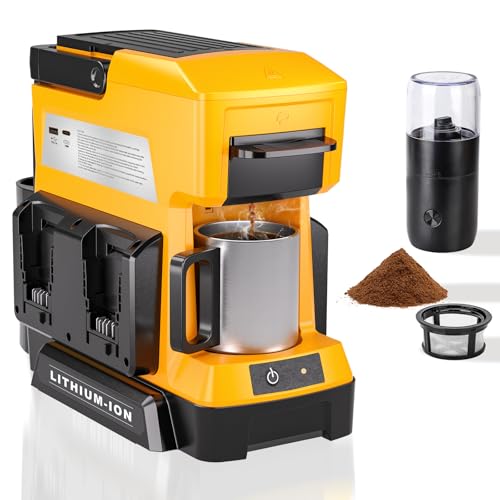
The Taingwei is the only option here identified as compatible with DeWalt 20V MAX batteries, including several DCB models. It brews a 190 ml cup and includes a permanent filter for ground coffee, plus an integrated grinder with adjustable grind coarseness. Its compact, cordless format suits camping or travel when you already own a compatible battery. The battery is not included, so this is a poor fit if you need a complete powered setup or cannot confirm that your specific battery model is supported.
Bottom line: Choose this if you have a compatible DeWalt 20V MAX battery and want a single 190 ml brew.
BougeRV 144Wh Portable Coffee Maker

The BougeRV differs from the DeWalt-compatible option by including its own removable 144Wh battery rather than using a DeWalt 20V MAX pack. It accepts K-Cup pods, coffee powder and ground coffee, and the maker says a charge can brew up to 5–6 cups of 8 ounces each, depending on ambient and water temperature. AC power is also supported. This flexibility suits travelers who use pods or share coffee, but it is not a match for buyers who specifically need to run a brewer from their DeWalt battery.
Bottom line: Pick this for pod compatibility and an included battery, not DeWalt pack use.
Makita DCM501Z Cordless Coffee Maker

The Makita DCM501Z is a cordless tool-system brewer for Makita 18V LXT or 12V max CXT batteries, not DeWalt 20V packs. It makes a 5-ounce cup in 5 minutes with an 18V LXT battery and accepts either ground coffee or single-serve packs through a permanent filter. Makita says a 5.0Ah LXT battery can brew up to three cups. The smaller cup size suits a short coffee break, but buyers wanting a larger serving or DeWalt compatibility should choose another fit.
Bottom line: Choose it if your battery platform is Makita and a 5-ounce serving works.
Byutrcfuy Ryobi 18V Cordless Coffee Maker

The Byutrcfuy is built around Ryobi 18V batteries, making its key difference the battery platform rather than DeWalt compatibility. It offers three brewing options, a reusable metal filter and a separate rechargeable grinder. The maker says its 400W heating system brews an 8-ounce coffee in a few minutes; a 4Ah battery is estimated to provide about 2–3 cups. The battery is not included, and the Ryobi fit means it is unsuitable for someone who wants to power a coffee maker with a DeWalt 20V pack.
Bottom line: Pick this if you already use Ryobi 18V batteries and want an 8-ounce brew.
How to choose a DeWalt 20V coffee maker
Start with the battery platform, not the voltage printed in a product name: a 20V MAX pack is not automatically interchangeable with another maker’s 18V or 20V system. Check the brewer’s named compatibility against the exact pack model you own before choosing. Then compare serving size and brewing format: these options range from 5 ounces to 8 ounces, and some accept pods while others use grounds. A practical rule is to choose the 190 ml brewer if one small cup and cordless DeWalt-pack operation matter most; choose a pod-compatible model only if its separate battery or AC power meets your needs. Battery runtime can change with water temperature and conditions, so do not treat an estimated cup count as guaranteed.
Battery compatibility and portable power
Battery compatibility depends on the tool system and physical connection, not voltage alone. The Taingwei names specific DeWalt 20V MAX batteries, while the Makita model names LXT and CXT packs and the Byutrcfuy names Ryobi 18V; those systems should not be treated as interchangeable. A separate-battery brewer avoids using a tool battery but requires charging and carrying its own pack. For outdoor use, account for the brewer, water, coffee and battery as separate items, and keep electrical connections dry. Hot water presents a scald hazard: brew on a stable, level surface and keep the cup away from children and pets.
Cup size, brew style and time
These portable coffee makers do not all serve the same amount: the brew sizes span 5 ounces, 190 ml (about 6.4 ounces) and 8 ounces. Choose by the cup you actually drink, rather than assuming “single serve” means one standard size. Ground coffee works across the Taingwei and Makita options, while the BougeRV also supports K-Cup pods; pod use can simplify portioning but requires carrying compatible pods. Brewing times also differ, from about 200 seconds to 6–8 minutes. A faster cycle does not establish how strong the coffee will taste: grind size and coffee-to-water ratio also affect extraction.
| Priority | Compare | Decision rule |
|---|---|---|
| Use existing battery | Named battery platform and pack compatibility | Choose only a brewer that identifies your platform |
| Use coffee pods | Supported brew format | Choose a model that explicitly accepts pods |
| Make a larger cup | Volume per brew | Prefer an 8-ounce serving over a 5-ounce cup |
Safe use while camping or traveling
Portable coffee makers heat water, so a stable surface and a secure cup matter more than convenience when brewing outdoors or in a vehicle. Keep the brewer upright during use, avoid placing it near a vehicle’s controls, and let the hot cup settle before moving it. Battery packs and connections should stay dry; do not operate a powered brewer where rain or spilled water can reach exposed electrical contacts. Leave room around the cup so it cannot be knocked over, especially around children or pets. For car travel, brew while parked rather than handling hot liquid while driving.
Frequently Asked Questions
Will a DeWalt 20V battery fit every cordless coffee maker?
No, voltage alone does not establish battery compatibility. Match the brewer’s named battery platform and compatible pack models; a DeWalt 20V MAX pack should not be assumed to fit a Makita or Ryobi brewer.
How much coffee does a 190 ml brew make?
A 190 ml brew is about 6.4 US fluid ounces. That is larger than a 5-ounce cup but smaller than an 8-ounce serving.
Can portable coffee makers use ground coffee?
Yes, several portable brewers accept grounds, often through a reusable filter. The BougeRV also supports K-Cup pods, so check the supported format if you plan to bring pods.
How long does a cordless coffee maker take to brew?
The options here range from about 200 seconds to 6–8 minutes per brew. Water and ambient temperature can affect brewing time and battery-powered performance.
Is it safe to use a coffee maker inside a car?
Use a portable coffee maker only while the vehicle is parked on a stable surface. Hot water can spill and cause scalds, so keep the cup secure and the brewer away from controls and exposed electrical connections.