
Dexron 111 Automatic Transmission Fluid: 3 Options Compared

For older transmissions that call for DEXRON III, Kendall Classic ATF, 1 Gallon is the clearest gallon-size match because it names DEXRON III H and older GM and Ford applications; choose by the exact specification in your manual. Amalie DEXRON III-H/MERCON, 1 Quart and Dexron III Conventional ATF, 1 Quart are quart-size alternatives, while a different ATF type may not meet your transmission’s requirements.
DEXRON III is an automatic transmission fluid specification, not a universal fluid for every automatic transmission. Verify the required fluid before buying or adding any ATF.
We earn a commission if you buy through links on this page. As an Amazon Associate I earn from qualifying purchases. Products are compared on manufacturer specifications, not hands-on testing.
- Best overall: Kendall Classic ATF, 1 Gallon – Its compatibility language specifically names DEXRON III H and older GM and Ford applications, and it comes in a 1-gallon jug.
- Best for quart size: Amalie DEXRON III-H/MERCON, 1 Quart – A 1-quart option labeled DEXRON III-H/MERCON for buyers who need a smaller container.
- Best for friction features: Dexron III Conventional ATF, 1 Quart – The product calls out friction characteristics, oxidation resistance, thermal stability and low-temperature properties in a 1-quart bottle.
| Product | Best for | Container size (qt) | Named compatibility | Formulation | Shop |
|---|---|---|---|---|---|
| Kendall Classic ATF, 1 Gallon | Older GM and Ford | 4 qt | DEXRON-III H; older GM/Ford | Conventional | Check Price on Amazon |
| Amalie DEXRON III-H/MERCON, 1 Quart | Quart-size top-offs | 1 qt | DEXRON III-H/MERCON | — | Check Price on Amazon |
| Dexron III Conventional ATF, 1 Quart | Cold-weather properties | 1 qt | Dexron III | Conventional | Check Price on Amazon |
Dexron III automatic transmission fluid options
Compare the compatibility and container size, then match the fluid to the specification your transmission requires.
Kendall Classic ATF, 1 Gallon
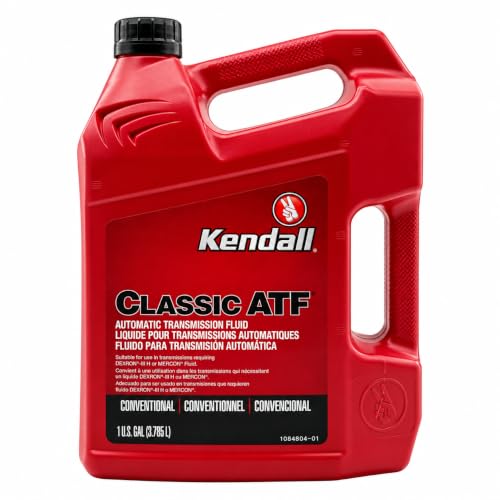
For buyers who want the application named directly, this 4-quart jug identifies DEXRON III H and qualifying older GM and Ford transmissions. The conventional ATF is intended for maintenance in compatible applications; its feature claims include friction characteristics for smooth shifts and shudder control, plus protection against wear, rust, corrosion and deposits. The larger container suits a service that requires more than a quart. The maker recommends it for qualifying GM and Ford vehicles no longer under warranty, but that broad range is not a substitute for checking the exact transmission specification in your manual.
Bottom line: Choose this when your older GM or Ford transmission specifically calls for a compatible DEXRON III fluid and a 4-quart container is useful.
Amalie DEXRON III-H/MERCON, 1 Quart

Unlike the 4-quart option, this Amalie fluid comes in a 1-quart container and names both DEXRON III-H and MERCON. That makes the size convenient when you need a smaller amount, but the dual specification does not mean the fluid suits every transmission carrying either name; confirm the required specification and any restrictions in the vehicle manual. The package identifies a vehicle-specific fit, so do not treat the name alone as proof that it matches your particular vehicle. Its main limitation is the quart capacity if a service requires more fluid.
Bottom line: Pick this for a smaller amount when your vehicle’s required specification matches the label.
Dexron III Conventional ATF, 1 Quart
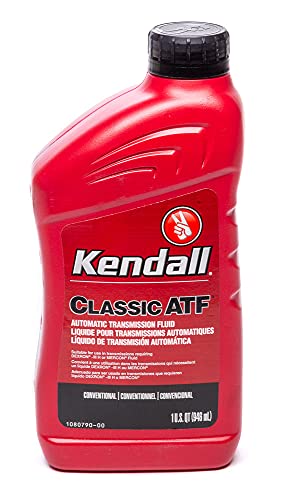
This quart-size conventional ATF stands out for its low-temperature properties, alongside friction characteristics for smooth shifting and anti-shudder performance. The maker also cites oxidation resistance and thermal stability for long fluid life. Those claims may matter to a buyer choosing among conventional DEXRON III options, but they do not establish compatibility with every transmission; the required fluid specification still decides fit. Its 1-quart bottle is the smallest practical choice among the 4-quart option and this product, though it may be insufficient for a larger service.
Bottom line: Choose this if its DEXRON III specification matches your transmission and cold-temperature properties are a priority.
How to choose Dexron III automatic transmission fluid
Start with the exact fluid specification in the vehicle owner’s manual or transmission service information, not just the vehicle’s age or the color of the fluid. DEXRON III is an older GM specification, and GM ended licensing for DEXRON III; a product’s compatibility claim should not be treated as a GM license. Match the full requirement, including any suffix such as III-H, and confirm whether the manual permits a replacement specification. If the manual calls for something other than DEXRON III, do not choose a fluid based only on similar-sounding names. A measurable decision rule is simple: if the manual does not name DEXRON III or an explicitly compatible replacement, pause and verify the application before adding fluid.
Quart or gallon container size
Choose container size from the amount your service actually needs: a quart holds 32 fluid ounces, while a US gallon holds 128 fluid ounces. A quart can suit a small top-off or limited service, while a gallon reduces the number of containers needed when the specified service quantity is larger. The transmission’s drain-and-fill amount can be much less than its total capacity because fluid remains in the torque converter and cooler circuits; a full rebuild or dry fill can require more. Use the service procedure’s specified quantity rather than assuming the transmission’s total capacity is the amount needed for routine maintenance. Never overfill: an incorrect fluid level can impair operation, and checking methods differ by vehicle.
DEXRON III labels and compatibility
DEXRON III labels can include suffixes such as III-H, so compare the complete designation with the vehicle requirement. Some aftermarket fluids name compatibility with older specifications, but compatibility is an application claim rather than proof of a current GM license. Do not assume that any ATF marked Dexron, Mercon or multi-vehicle is interchangeable; fluid friction characteristics and operating requirements differ across transmissions. A simple need-to-choice guide is below; the manual’s required specification still takes priority.
| Need | What to match | Container cue |
|---|---|---|
| Small amount or top-off | Exact required spec, including suffix | Quart |
| Larger service quantity | Exact required spec and service procedure | Gallon |
| Vehicle specifies another ATF | Approved fluid for that transmission | Do not choose by container alone |
Checking ATF level and handling it safely
Transmission fluid level checks are vehicle-specific: some dipsticks are read with the engine running, the transmission in a specified gear, and fluid near a target temperature, while sealed transmissions use a service-level plug and temperature window. Use the vehicle’s procedure and keep the vehicle level; a cold reading on a hot-check system can give a misleading result. ATF can be hot enough to burn during service, so let components cool and avoid skin contact with hot fluid. Use a clean funnel and keep dirt out of the fill opening, since contamination can affect valve-body passages. Collect drained fluid in a sealed container and take it to a local used-oil or hazardous-waste collection point rather than pouring it onto the ground or into a drain.
Frequently Asked Questions
Can I use Dexron III in any automatic transmission?
No; use DEXRON III only when the vehicle’s transmission specification calls for it or explicitly allows a compatible replacement. Similar fluid names do not establish compatibility.
What does the III-H suffix mean on ATF?
The suffix identifies a specific DEXRON III formulation category, so match the complete designation when the vehicle requirement names III-H. Do not assume a label without the suffix meets that requirement.
How much transmission fluid does a drain and fill take?
The quantity depends on the transmission and service procedure because a drain and fill leaves fluid in components such as the torque converter. Use the specified service amount and level-check procedure rather than total capacity.
Can I mix different automatic transmission fluids?
Avoid mixing fluids unless the transmission maker permits the combination; different friction requirements can make an otherwise similar ATF unsuitable. If the existing fluid is unknown, identify the application and service requirements before topping off.
How often should automatic transmission fluid be changed?
There is no single interval that applies to every transmission; service schedules depend on the vehicle and operating conditions. Use the manual’s mileage or time interval, and check whether severe-duty use changes that schedule.