
Diamond Naturals Large Breed Puppy: 5 Foods Compared

Diamond Naturals Large Breed Puppy Lamb & Rice is the closest match for a growing large breed puppy because it is formulated for large breed needs and comes in a 40-pound bag. Choose another formula only if your puppy is small or medium, or you specifically want a different recipe; the other options here do not share the same large breed focus.
We earn a commission if you buy through links on this page. As an Amazon Associate I earn from qualifying purchases. Products are compared on manufacturer specifications, not hands-on testing.
- Best overall: Diamond Naturals Large Breed Puppy Lamb & Rice – It is the only formula here specifically described as designed for large breed puppies.
- Best for chicken: Diamond Naturals All Life Stages Chicken & Rice – The all life-stages recipe uses cage-free chicken as its first ingredient and comes in a 40-pound bag.
- Best for small breeds: Diamond Naturals Small & Medium Puppy Chicken – Its small kibble and puppy formulation target small and medium breeds rather than large breed puppies.
| Product | Best for | Breed focus | Main protein | Bag size | Shop |
|---|---|---|---|---|---|
| Diamond Naturals Large Breed Puppy Lamb & Rice | Large breed puppies | Large-breed puppy | Lamb | 40 lb | Check Price on Amazon |
| Diamond Naturals All Life Stages Chicken & Rice | Chicken recipe | All life stages | Chicken | 40 lb | Check Price on Amazon |
| Diamond Naturals Small & Medium Puppy Chicken | Small puppy kibble | Small and medium puppy | Chicken | 6 lb | Check Price on Amazon |
| Diamond Naturals Skin & Coat Salmon & Potato | Salmon recipe | All life stages | Salmon | 15 lb | Check Price on Amazon |
| Diamond Naturals Grain-Free Pasture-Raised Beef | Beef recipe | All life stages | Beef | 28 lb | Check Price on Amazon |
Diamond Naturals Large Breed Puppy Food Compared
Compare the breed focus, main protein, and package size before choosing a formula for your puppy.
Diamond Naturals Large Breed Puppy Lamb & Rice

The large breed focus is the key distinction: this lamb-and-rice dry food is formulated for the needs of large breed puppies, unlike the other options here. Lamb is the first ingredient, and the formula includes DHA for brain and vision development. The 40-pound bag suits households that want a larger package. Choose another formula if you need food specifically for small or medium breeds, or want a chicken, salmon, or beef recipe instead.
Bottom line: Choose this formula when large breed puppy nutrition is the deciding factor.
Diamond Naturals All Life Stages Chicken & Rice

The all life-stages label sets this chicken-and-rice recipe apart from the dedicated large breed puppy formula. Cage-free chicken is the first ingredient; the recipe also has 26% protein, 16% fat, omega fatty acids, and K9 Strain probiotics. Its 40-pound bag matches the larger package size of the large breed option. This is a related alternative for someone seeking a chicken recipe, but its maker does not identify it as specially formulated for large breed puppies.
Bottom line: Pick this if an all life-stages chicken recipe matters more than a large breed-specific formula.
Diamond Naturals Small & Medium Puppy Chicken

Small kibble and a small- and medium-breed focus distinguish this puppy recipe from the large breed food. Cage-free chicken is the first ingredient, and the formula is also described for nursing adult dogs. The 6-pound package is much smaller than the 40-pound large breed option, which can suit someone seeking a compact bag. Its breed focus makes it a poor match for a large breed puppy; choose a formula expressly intended for that growth category instead.
Bottom line: Choose this for a small or medium puppy, not a large breed puppy.
Diamond Naturals Skin & Coat Salmon & Potato
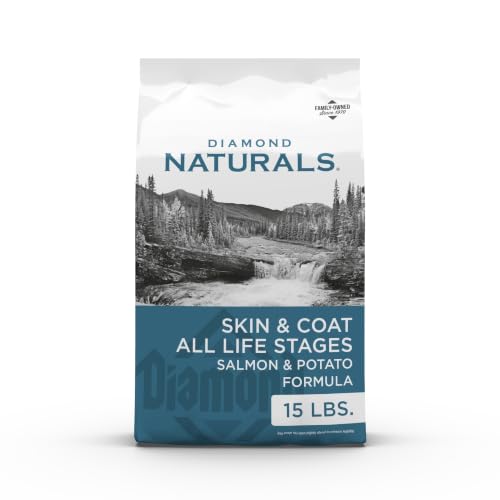
Salmon and potato make this an alternative for buyers seeking a different protein and recipe focus. Salmon is the first ingredient, and the all life-stages formula includes omega fatty acids, vegetables, superfoods, and K9 Strain probiotics. The 15-pound bag is smaller than the large breed puppy food’s 40-pound package. The product is described for all life stages, but not as specially formulated for large breed puppies, so buyers prioritizing that distinction should choose the dedicated puppy formula.
Bottom line: Pick this when a salmon recipe is the priority and large breed-specific formulation is not.
Diamond Naturals Grain-Free Pasture-Raised Beef

The grain-free beef recipe differs from the large breed puppy option in both its recipe and stated focus. Pasture-raised beef is the first ingredient, with sweet potatoes, antioxidant-containing fruits, omega fatty acids, and probiotics also included. The 28-pound bag sits between the 15-pound salmon bag and 40-pound options.
Bottom line: Choose this for a grain-free beef recipe only if its general life-stage focus fits your needs.
How to choose food for a large breed puppy
For a large breed puppy, start with a food labeled for growth of large-size dogs rather than relying only on the word “puppy.” Large breed growth formulas are intended to manage nutrient levels, including calcium and phosphorus, during a rapid-growth period. Check the nutritional adequacy statement on the bag for language covering growth, including growth of large-size dogs expected to weigh 70 pounds or more as adults. A puppy formula without that wording may still suit some dogs, but it does not establish the same large breed-specific fit. If your puppy’s expected adult size is near that 70-pound threshold, ask your veterinarian which growth category applies before switching foods.
Compare recipe focus and package size
The products here differ in breed focus, protein, and bag size, so choose on those criteria rather than treating all puppy-suitable foods as interchangeable. A dedicated large breed puppy formula is the direct fit; all life-stages recipes and small- or medium-breed puppy foods are related alternatives with different stated purposes. Package size also affects how often an opened bag is used, so consider your puppy’s daily intake and storage space. Keep dry food in its original bag, sealed inside a cool, dry container. A need-to-choice guide helps separate the closest match from alternatives.
| Need | Choice |
|---|---|
| Large breed puppy focus | Large Breed Puppy Lamb & Rice |
| Small or medium puppy | Small & Medium Puppy Chicken |
| Different protein or recipe focus | Chicken, salmon, or beef alternative |
Check the growth label and feeding amount
Use the food’s feeding chart as a starting point, then adjust with your veterinarian as your puppy grows; calorie needs change with age, body size, activity, and expected adult weight. Weigh portions rather than estimating by eye, since a measuring cup can vary with kibble shape and how it is filled. Keep treats to no more than 10% of daily calories so the complete food remains the main source of nutrition. For large breed puppies, avoid adding calcium supplements to a complete growth diet unless a veterinarian directs it, because extra minerals can disrupt the intended nutrient balance.
Transition foods gradually and store them safely
Change a puppy’s food over about 7 days by mixing increasing amounts of the new formula with decreasing amounts of the old one; slow the transition if loose stool develops. Avoid changing several parts of the diet at once, since that makes it harder to identify what caused digestive upset. Store kibble away from heat and moisture, and close the inner bag after each serving. Wash food and water bowls daily, and discard stale food rather than mixing it into a fresh serving. Persistent vomiting, diarrhea, appetite loss, or poor growth calls for veterinary advice rather than another formula change.
Frequently Asked Questions
What makes a puppy food suitable for large breeds?
Look for a nutritional adequacy statement that covers growth, including growth of large-size dogs expected to weigh at least 70 pounds as adults. Large breed growth formulas manage mineral levels as well as calories, so the word “puppy” alone is not enough to confirm the fit.
How long should a puppy food transition take?
A gradual transition usually takes about 7 days, starting with a small amount of new food mixed into the old food. Extend the change if your puppy develops loose stool, and contact a veterinarian for persistent digestive symptoms.
How many meals should a growing puppy eat?
Many puppies do well with three measured meals a day until about 6 months old, then move toward two meals daily. The amount per meal depends on the food’s calorie content, age, and growth, so use the package feeding chart as a starting point.
Should I add calcium to large breed puppy food?
Do not add calcium to a complete large breed growth food unless your veterinarian recommends it. Extra calcium can upset the mineral balance intended for growth, particularly in large breed puppies.
How much of a puppy’s daily calories can be treats?
Keep treats and other extras at 10% or less of daily calories, with complete puppy food providing the remainder. This limit helps prevent extras from displacing nutrients the puppy needs for growth.