
Discovery MindBlown Model Engine Kits Compared by Design

For the Discovery model engine kit, choose Discovery 3-Cylinder Hybrid Engine Model if you want a 3-cylinder build with pull-handle action and moving parts; the MindBlown four-cycle kit is a separate alternative for an assembly-focused build.
Choose National Geographic 4-Cylinder Engine Kit instead if you want a battery-powered, clear 4-cylinder model with 175+ pieces, or Playz V8 Engine Model Kit for a V8 model with engine sounds. These kits demonstrate engine mechanics; their features do not establish that they reproduce a full-size engine’s operation.
We earn a commission if you buy through links on this page. As an Amazon Associate I earn from qualifying purchases. Products are compared on manufacturer specifications, not hands-on testing.
- Best overall: Discovery 3-Cylinder Hybrid Engine Model – Its 116-piece, 3-cylinder model has moving pistons and valves, with pull-handle action and a light display.
- Best for a battery-powered build: National Geographic 4-Cylinder Engine Kit – This clear 4-cylinder model has 175+ pieces and uses 3 AA batteries, not included.
- Best for a V8 model: Playz V8 Engine Model Kit – The kit is identified as a working V8 model and features engine sounds and turning fans.
| Product | Best for | Engine design | Piece count | Operation | Shop |
|---|---|---|---|---|---|
| Discovery 3-Cylinder Hybrid Engine Model | Pull-handle building | 3-cylinder hybrid model | 116 pieces | Pull handle; lights | Check Price on Amazon |
| National Geographic 4-Cylinder Engine Kit | Battery-powered motion | 4-cylinder model | 175+ pieces | 3 AA batteries; not included | Check Price on Amazon |
| Playz V8 Engine Model Kit | V8 enthusiasts | V8 model | — | Motor, fans, sounds | Check Price on Amazon |
| MindBlown Four-Cycle Engine Kit | Assembly-focused builds | Four-cycle engine | — | Assembly kit | Check Price on Amazon |
Discovery MindBlown Model Engine Kits
Compare the engine layouts, build contents and actions to find the kit that fits the kind of mechanical model you want to assemble.
Discovery 3-Cylinder Hybrid Engine Model

Discovery 3-Cylinder Hybrid Engine Model is the Discovery-named option, with a 3-cylinder layout and pull-handle action rather than a battery-powered start. The 116-piece build has a transparent housing, moving pistons, a rotating crankshaft, working valves and a spinning light display. That makes it a fit for builders who want to see linked mechanical parts move after assembly. The model is called a hybrid motor, but its pull-handle action and lights do not by themselves demonstrate a full-size hybrid car’s electric and combustion systems. Its 12 × 12-inch footprint also calls for a wider display spot than a narrow model.
Bottom line: Pick this if you want a Discovery engine model with visible moving parts and pull-handle action.
National Geographic 4-Cylinder Engine Kit
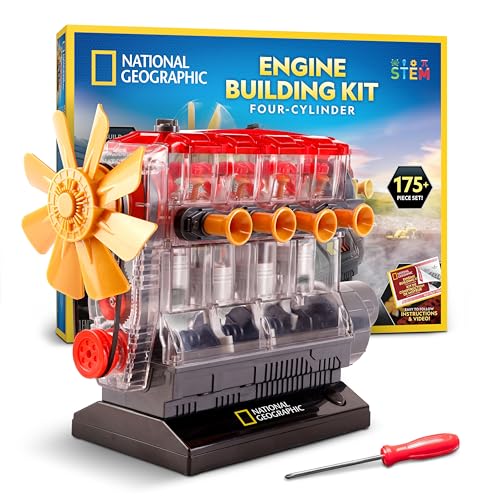
National Geographic 4-Cylinder Engine Kit differs from the Discovery kit with a 4-cylinder layout and battery-powered movement. Its clear model contains 175+ pieces, with moving pistons, valves and gears; the kit also includes tools, illustrated instructions and a Learning Guide. Three AA batteries are required and are not included, so have those ready if you want to see the assembled mechanism move. This is a strong fit for a builder who wants a parts-rich build and an included guide. The battery requirement is a limitation for anyone seeking a pull-operated model or a kit ready to run without extra supplies.
Bottom line: Choose this for a clear 4-cylinder build with 175+ parts and battery-powered motion.
Playz V8 Engine Model Kit

Playz V8 Engine Model Kit stands apart with a V8 layout and engine sounds, rather than the 3-cylinder or 4-cylinder designs of the other model kits. Its features describe a working replica with pistons, interactive cables and turning fans. The V8 format suits builders particularly interested in seeing a larger cylinder arrangement represented in a model. Choose another kit if a parts total or a pull-handle mechanism is essential.
Bottom line: Pick this if a V8 layout and engine sounds matter more than a piece count.
MindBlown Four-Cycle Engine Kit
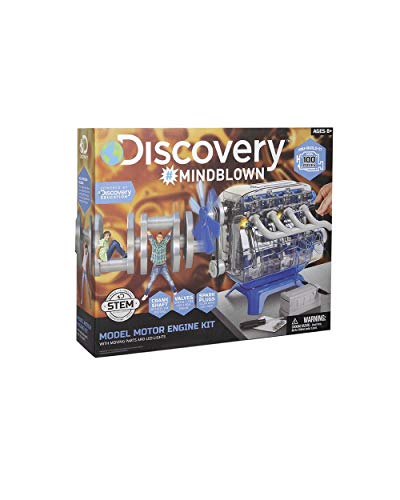
MindBlown Four-Cycle Engine Kit is the MindBlown option for a four-cycle engine assembly, with valves, cylinders and hardware identified among its components. Unlike the clear moving models, its specifications emphasize construction pieces rather than a particular power source, light display or sound feature. Its 15-inch length and 12.2-inch width make it a fairly broad project to plan space for. This suits buyers focused on assembling a miniature internal-combustion model. The maker does not establish how the completed model is powered or what functions it demonstrates, so it is a less direct choice if visible movement after assembly is the deciding factor.
Bottom line: Choose this for a MindBlown four-cycle assembly focused on valves, cylinders and hardware.
How to choose a model engine kit
Choose by the mechanism you want to build and demonstrate: cylinder layout, moving parts, and how the model starts are more useful distinctions than a kit’s engine-themed name. A four-stroke engine cycle has four stages: intake, compression, power and exhaust; a model can illustrate some moving components without reproducing combustion or a complete running engine. Compare piece counts only when both kits supply them, and check whether batteries are needed before starting. A pull-operated model avoids that battery requirement, while a battery-powered build may offer a different demonstration. For a first project, prefer a kit with included illustrated instructions or a learning guide if step-by-step support matters. Set aside a stable work surface wider than the model’s footprint, and keep small parts away from young children.
What cylinder count tells you
Cylinder count describes the engine layout represented by the model, not how powerful a toy is or how closely it matches a full-size vehicle. A V8 represents eight cylinders, while a 3-cylinder or 4-cylinder layout shows fewer; visible pistons and a crankshaft can help explain how reciprocating motion becomes rotation. A transparent housing makes those parts easier to see, but does not prove that a model reproduces the engine’s full operating cycle. Treat terms such as “hybrid” carefully: a model label alone does not establish that the kit demonstrates both electric drive and combustion. Use this quick guide to match the layout to the learning goal.
| Learning goal | Model feature to prioritize |
|---|---|
| See several linked moving parts | Visible pistons, valves and crankshaft |
| Compare cylinder layouts | Stated cylinder count |
| Build without batteries | Pull-handle action, if specified |
| Follow guided assembly | Illustrated instructions or learning guide |
Plan the build space and setup
Reserve a work area larger than the assembled model, with room to sort pieces and follow the instructions; a model measuring 15 inches long and 12.2 inches wide needs more than a compact shelf. Keep the workspace level so small parts do not roll away, and separate pieces before assembly to reduce mix-ups. A battery-powered model requires three AA batteries, while a pull-handle model uses a different action; check those needs before the build rather than halfway through it. Small components can present a choking hazard, so adults should supervise children and store loose parts securely. Do not force a crankshaft, valve or gear that resists movement; recheck the assembly sequence instead.
What to expect from engine model actions
Moving pistons and gears demonstrate mechanical motion, but a model’s action is not evidence of a full-size engine’s combustion, fuel delivery or road performance. Four-stroke engines use intake, compression, power and exhaust in sequence; a kit may show only selected components or motions. Battery-driven and pull-handle mechanisms also work differently: one needs batteries, while the other begins with a manual pull. Light effects and sounds add feedback but do not change the represented cylinder layout. If the goal is to study a specific engine system, identify the parts and actions the kit actually includes before choosing it. Keep liquids, heat and loose tools away from the build area.
Frequently Asked Questions
What does a four-cycle engine do?
A four-cycle, or four-stroke, engine moves through intake, compression, power and exhaust. A model kit may show some linked parts without demonstrating combustion or every stage.
Do engine model kits need batteries?
Some do, and the National Geographic 4-cylinder kit requires three AA batteries that are not included. A pull-handle design uses manual action instead, so check the mechanism before setting up.
What does a clear engine model show?
A clear housing can make moving pistons, valves and gears visible during operation. Visibility helps with observing motion, but does not mean the model reproduces every system in a full-size engine.
How much space should I leave for an engine model kit?
Leave room beyond the assembled model’s dimensions for handling parts and working through instructions. For example, a 15-inch-long, 12.2-inch-wide model needs a work surface larger than that footprint.
Are small engine model parts safe for young children?
Small components can be a choking hazard, so supervise children and keep loose pieces away from young children. Sort and store the parts securely when assembly is paused.