
ARTISTRO 48 Color Watercolor Paint Set Compared

The ARTISTRO Professional 48-color watercolor set is the closest match for painters who want 48 XL pans and the maker’s ASTM-I lightfastness claim. Choose a travel kit instead if built-in mixing space and included brushes matter more; watercolor markers suit pen-based work rather than pan painting.
We earn a commission if you buy through links on this page. As an Amazon Associate I earn from qualifying purchases. Products are compared on manufacturer specifications, not hands-on testing.
- Best overall: ARTISTRO Professional Watercolor Set, 48 Colors – Its 48 XL watercolor pans match the requested color count and format.
- Best for included tools: ARTISTRO Watercolor Kit, 50 Colors – The 50-color kit includes eight brushes and a built-in mixing palette.
- Best for a compact kit: Grabie Watercolor Set, 50 Colors – It pairs 50 colors with six brushes and a mixing tray in a portable case.
| Product | Best for | Colors | Included tools | Format | Shop |
|---|---|---|---|---|---|
| ARTISTRO Professional Watercolor Set, 48 Colors | 48-pan painting | 48 | — | XL pans | Check Price on Amazon |
| ARTISTRO Watercolor Kit, 50 Colors | Brushes included | 50 | 8 brushes, palette | Travel kit | Check Price on Amazon |
| Grabie Watercolor Set, 50 Colors | Fine brushwork | 50 | 6 brushes, mixing tray | Portable case | Check Price on Amazon |
| ARTISTRO Deluxe Watercolor Set, 168 Colors | Broad color range | 168 | Brush pens, palette | Portable case | Check Price on Amazon |
ARTISTRO 48 Color Watercolor Paint Set Options
Compare the requested 48-pan set with related watercolor kits by color count, included tools, and format.
ARTISTRO Professional Watercolor Set, 48 Colors

The 48-color count and XL pans distinguish this set from the larger travel kits in this group. ARTISTRO says the paints have ASTM-I lightfastness and strong tinting strength, and describes them as transparent, blendable watercolors for washes and layering. This format suits painters who already have brushes and a mixing surface, or who specifically want a 48-pan palette. The main tradeoff is that the maker does not identify included tools, so buyers who need an all-in-one kit should confirm the set contents before ordering.
Bottom line: Pick this set if the 48 XL-pan format matters more than a bundle of accessories.
ARTISTRO Watercolor Kit, 50 Colors

The added tools set this 50-color kit apart: it includes eight brushes, additional painting accessories, and a built-in mixing palette. Its 50 watercolor pans suit beginners and experienced painters who want a broader count than the requested set and a ready-to-use assortment. The built-in palette also keeps mixing space with the paints.
Bottom line: Choose this kit when you want brushes and mixing space bundled with the paints.
Grabie Watercolor Set, 50 Colors
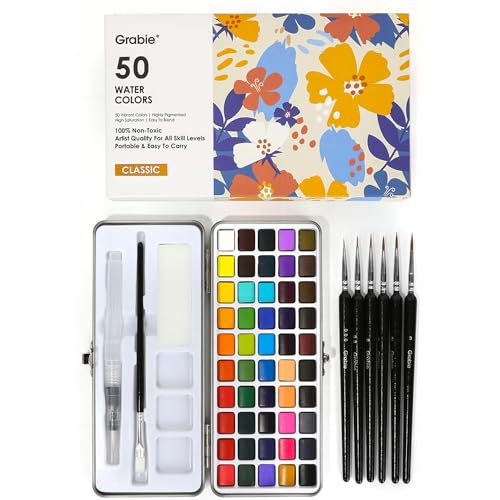
Six pointed brushes, rather than the eight-brush assortment in the other 50-color kit, distinguish this portable set. Grabie supplies 50 semi-transparent watercolor colors and an integrated mixing tray, with brushes sized from 3/0 to 3. This makes the kit a fit for beginners or hobby painters who want fine-pointed brushes alongside a compact case.
Bottom line: Pick this kit if pointed brushes and an integrated mixing tray are priorities.
ARTISTRO Deluxe Watercolor Set, 168 Colors

The 168-color palette is the defining difference here, far exceeding the requested 48 shades. ARTISTRO describes the paints as high-pigment and blendable, and the set combines pans, brush pens, and a built-in mixing palette in a portable case. That combination suits artists who want many shades and accessories stored together for painting away from a fixed workspace. Its large color count and special travel case make it a different choice from a focused 48-pan set; painters who prefer choosing each hue through mixing may not need so many ready-made shades.
Bottom line: Choose this set if a very broad palette and portable all-in-one format suit your work.
How to Choose Watercolor Paints
For most watercolor painting, choose by pigment behavior, palette size, and paper before prioritizing a high shade count. A pan set is activated with a damp brush; a small amount of water makes a light wash, while repeated layers build darker color. Watercolor paper is commonly sold at 140 pounds (300 gsm), and heavier paper generally buckles less when wet. Cold-press paper has a textured surface that holds washes, while hot-press paper is smoother for fine detail. If you paint on paper under 140 pounds, tape it down or stretch it to reduce warping. A 48-color palette is a practical choice when you want many ready-made hues without stepping up to a very large collection.
Watercolor Pan Sets and Brush Kits
Pan sets use solid cakes of paint that a wet brush reactivates, while brush pens hold color in a pen-style body for direct application. Choose pans if you want to load a brush, mix colors on a separate surface, and work in washes; choose markers for pen-like strokes and portable drawing. In kit comparisons, distinguish the number of paints from the number and type of brushes: more colors do not automatically mean better brush control.
| Need | Format to consider | Decision point |
|---|---|---|
| Traditional washes | Watercolor pans | Check pan count and whether a palette is included |
| Ready-to-mix travel kit | Pans with palette and brushes | Compare brush count and case format |
| Pen-like drawing | Watercolor markers | Confirm the set includes a water brush if blending is needed |
Choosing Watercolor Paper and Brush Size
Paper weight and surface change how watercolor behaves, so choose them before judging a paint set by color count alone. The common 140-pound (300 gsm) weight is a useful starting point for washes; 90-pound paper costs less to carry but usually benefits from stretching or taping. Cold-press paper adds tooth and helps break up broad passages, while hot-press paper supports crisp lines and detail. For brushes, a pointed round can handle both fine marks and broader strokes by changing pressure; a flat brush covers wide areas. If the set’s brush shapes are not your priority, budget room in your kit for a separate round and a flat.
Watercolor Lightfastness and Storage
Lightfastness describes how well a pigment resists fading under light, and it matters most for artwork that will be displayed. ASTM D4303 uses categories I through IV, with I indicating excellent lightfastness; a maker’s ASTM-I claim is not a substitute for checking pigments individually when archival permanence is essential. Keep watercolor pans closed and dry between sessions, and store finished work away from direct sunlight. Watercolor paint is intended for art materials, not skin or food use. Wash hands after painting, keep paint out of reach of young children, and follow the packaging’s safety directions, especially when working with loose pigments or sanding dried paint.
Frequently Asked Questions
What paper weight works for watercolor washes?
Watercolor paper at 140 pounds (300 gsm) is a common starting point for washes because it generally buckles less than lighter paper. Paper around 90 pounds may need taping or stretching to stay flatter when wet.
What is the difference between cold-press and hot-press paper?
Cold-press paper has a textured surface that helps create varied washes, while hot-press paper is smoother for fine lines and detail. Choose based on whether the work needs visible texture or crisp marks.
How do I mix watercolor paint from pans?
Touch a damp brush to the pan, then move the loaded brush to a mixing surface and add water until the wash reaches the desired strength. Start with less water for darker color and add water gradually for a lighter wash.
Does ASTM-I mean watercolor will never fade?
No; ASTM lightfastness categories describe resistance to fading under light, and category I is excellent rather than a guarantee of no change. Display conditions, including direct sunlight, still affect artwork over time.
How can I keep watercolor paper from buckling?
Using 140-pound (300 gsm) paper or heavier reduces buckling for many washes. Lighter sheets can be taped down or stretched before wet painting to help keep the surface flat.