
Double-Sided Fusible Interfacing: 4 Options Compared

For most applique and craft projects, Transparia Paper-Backed Web, 12 in x 10 yd is the most versatile choice because its paper backing helps position its lightweight, 12-inch-wide web. Choose PLANTIONAL Medium-Weight Adhesive Film, 11.8 in x 10 yd if you need medium-weight adhesive, or 59 x 79 in Lightweight Fusible Sheet or Transparia Lightweight Web, 19.69 in x 6 yd when a wider sheet or web better suits your project.
Double-sided fusible interfacing is a heat-activated adhesive layer that bonds two fabric surfaces; it is not a substitute for structural stitching on load-bearing seams.
We earn a commission if you buy through links on this page. As an Amazon Associate I earn from qualifying purchases. Products are compared on manufacturer specifications, not hands-on testing.
- Best overall: Transparia Paper-Backed Web, 12 in x 10 yd – Its paper backing supports placement, and the 12-inch by 10-yard roll suits applique and general fabric bonding.
- Best for medium-weight bonding: PLANTIONAL Medium-Weight Adhesive Film, 11.8 in x 10 yd – The product is identified as medium weight and measures 11.8 inches by 10 yards.
- Best for broad coverage: 59 x 79 in Lightweight Fusible Sheet – The 59-by-79-inch folded sheet is much wider than the rolls.
- Best for wide roll projects: Transparia Lightweight Web, 19.69 in x 6 yd – Its 19.69-inch width covers more area per pass than the 12-inch rolls.
| Product | Best for | Width | Length | Weight/backing | Shop |
|---|---|---|---|---|---|
| Transparia Paper-Backed Web, 12 in x 10 yd | Applique placement | 12 in | 360 in | Lightweight, paper-backed | Check Price on Amazon |
| PLANTIONAL Medium-Weight Adhesive Film, 11.8 in x 10 yd | Medium-weight bond | 11.8 in | 360 in | Medium weight | Check Price on Amazon |
| Transparia Lightweight Web, 19.69 in x 6 yd | Wide roll coverage | 19.69 in | 216 in | Lightweight | Check Price on Amazon |
| 59 x 79 in Lightweight Fusible Sheet | Large flat projects | 59 in | 79 in | Lightweight, no paper backing | Check Price on Amazon |
Double-Sided Fusible Interfacing Options
Compare the web’s width, format and backing with the fabric and project area you need to bond.
Transparia Paper-Backed Web, 12 in x 10 yd

For applique that benefits from controlled placement, this paper-backed web is the clearest fit among these options. The 12-inch-wide, 10-yard roll is lightweight, and its paper backing offers a surface to handle while positioning adhesive for fabric-to-fabric bonding. The maker says the bond preserves fabric softness and is machine washable once set.
Choose it for appliques and crafts where a light bond is preferable to medium-weight adhesive. The paper backing adds a preparation step compared with unbacked web, and lightweight web may not suit projects that need a firmer hand. Use a scrap to check the result before committing a finished piece.
Bottom line: Pick this for lightweight applique where paper backing can help with placement.
PLANTIONAL Medium-Weight Adhesive Film, 11.8 in x 10 yd

Unlike the lightweight webs here, this adhesive film is identified as medium weight, making it the option to consider when a project needs more body. The roll is 11.8 inches wide and 10 yards long, and heat from a household iron activates its double-sided adhesive. The maker says it creates a permanent bond for fabric fixes, applique and crafts.
Choose it when weight matters more than extra width or a paper-backed placement surface. Its medium-weight designation may be too firm for projects where preserving a very soft drape is the priority. Test the intended fabric combination on a scrap, since fabric and iron settings affect the result.
Bottom line: Pick this when a medium-weight adhesive layer is more important than a paper backing.
Transparia Lightweight Web, 19.69 in x 6 yd

For projects that need wider strips, this lightweight roll offers 19.69 inches of width, more than the other roll options here. Its 6-yard length is shorter than the 10-yard rolls, so it favors broad panels or large applique pieces over maximizing total roll length. The maker says the polyamide mesh bonds fabric while retaining its softness.
Choose it when fewer widthwise joins matter more than having the longest roll. The web is not sticky at room temperature, according to the maker, and melts with heat; plan placement before pressing. A wide roll can also be awkward to handle on a small ironing surface, so work in manageable sections.
Bottom line: Choose this for wider fabric pieces when a lightweight web and fewer joins are priorities.
59 x 79 in Lightweight Fusible Sheet
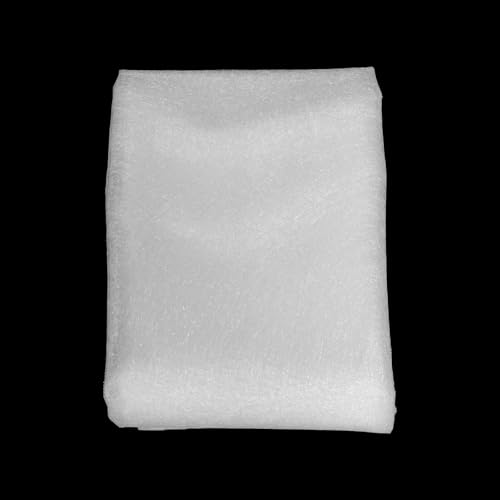
This folded sheet has the broadest single-piece coverage here: 59 by 79 inches, with no paper backing. Its nonwoven, lightweight construction is intended to bond fabric without adding much weight or stiffness. The maker gives a pressing range of 266–338°F for about 10–20 seconds, with thicker materials needing longer heat exposure.
Choose the sheet for large flat pieces or when cutting several shapes from one broad area. Unlike a roll, it arrives folded, and the lack of paper backing means careful handling is important during placement. Because heat settings vary by fabric, test a scrap first and avoid applying an iron directly to a delicate or heat-sensitive surface.
Bottom line: Pick this for large pieces where broad sheet coverage outweighs the convenience of a roll.
How to Choose Double-Sided Fusible Interfacing
Match the web’s weight and backing to the fabric and the kind of bond you want. Lightweight web is intended to add less bulk; a medium-weight product can add more body but may change the drape. Paper-backed web gives you a surface to position and handle before bonding, while an unbacked web needs more careful alignment between fabric layers.
Use a scrap of the same fabric to test the bond, appearance and hand before cutting the final piece. A useful rule is to choose a sheet when the project’s bonded area is wider than 20 inches; for narrower work, a roll may be easier to manage. Fusible adhesive is best for craft and applique bonding, not seams that must carry substantial tension.
Backing and Format for Fabric Projects
Paper-backed web supports controlled placement, while web without paper can require more care to keep the adhesive from shifting. Cut paper-backed adhesive to the shape you need, fuse it to one fabric face, let it cool, then remove the paper and fuse the second fabric. Always follow the product’s included directions when they differ, because heat activation and handling can vary by adhesive.
Rolls are convenient for long strips and repeated small cuts; a broad sheet can reduce joins across a large piece. A practical decision rule is to choose a format wider than the largest uninterrupted area you want to bond, or plan a seam between sections. Keep the hot iron moving as directed and protect the ironing surface; fusible adhesive can transfer to an iron or board if exposed.
Heat, Fabric Compatibility and Bonding Safety
Use the lowest iron setting that successfully bonds a fabric test swatch, because cotton, synthetics and blends tolerate different heat. One product here specifies 266–338°F for 10–20 seconds, but that range should not be applied to every adhesive or fabric. Press with a cloth barrier when the fabric is delicate, textured or prone to shine, and check the swatch after cooling.
A household iron can cause burns, so keep hands clear of the soleplate and let the iron cool before storing it. Do not leave a hot iron unattended or place fusible adhesive directly against its soleplate. If a bond releases after cooling, check alignment and heat coverage on a small test before repeating; excessive heat can damage fabric even when adhesive needs more activation.
Common Fusible Web Mistakes to Avoid
Skipping a fabric test is a common cause of disappointing bonds: adhesive performance changes with fabric thickness, surface texture and heat tolerance. Bonding dusty, damp or heavily textured fabric can also interfere with contact between adhesive and fibers, so work on clean, dry pieces. Trim away excess web before pressing when exposed adhesive could reach the iron or ironing board.
Another mistake is treating fusible web as a replacement for stitching wherever a seam bears load. Use it for applique, hems and craft bonds, but reinforce structural or frequently stressed seams with sewing when the project requires it. Avoid stretching fabric during pressing, and let the fused area cool flat before handling so the layers have time to set.
Frequently Asked Questions
Can double-sided fusible web replace sewing on a garment seam?
Fusible web can bond fabric for hems and decorative work, but it is not a dependable replacement for stitching on a seam that bears repeated tension. Reinforce load-bearing seams with sewing, especially around armholes, crotches or closures.
How do I apply paper-backed fusible web to applique?
Fuse the web to one fabric surface, let it cool, peel off the paper, position the applique, then press the layers together. Test the sequence on a scrap first, since required heat and pressing time differ by product and fabric.
What iron temperature should I use for fusible interfacing?
Use a temperature your fabric can tolerate while still bonding the adhesive, confirmed on a scrap. One sheet here specifies 266–338°F for about 10–20 seconds, but that range is product-specific, not a universal setting.
Will fusible web make fabric stiff?
The result depends on the adhesive weight, fabric and bonded area. Lightweight web is intended to add less body than medium-weight web, so test a small fused sample if preserving drape is important.
How wide should fusible web be for a project?
Choose web at least as wide as the largest uninterrupted area you plan to bond, or expect to join sections. For an area wider than 20 inches, a sheet or wider roll can reduce the number of joins.