
Mini Irons for Crafts: 4 Models Compared

For a named mini iron for crafts, K KERNOWO Adjustable Mini Craft Iron is the adjustable-temperature pick, while HTVRONT Mini Heat Press is a compact heat press for small heat-transfer projects. Choose BEAUTURAL Mini Travel Steam Iron instead if you need steam and dual-voltage travel use, or Clover MCI-900 Mini Iron for quilting and appliqué around tight spots.
We earn a commission if you buy through links on this page. As an Amazon Associate I earn from qualifying purchases. Products are compared on manufacturer specifications, not hands-on testing.
- Best overall: K KERNOWO Adjustable Mini Craft Iron – Its adjustable temperature spans 180–450°C, with a digital display and temperature lock.
- Best for heat transfers: HTVRONT Mini Heat Press – Three temperature settings cover small HTV and sublimation projects.
- Best for travel sewing: BEAUTURAL Mini Travel Steam Iron – It offers steam, three fabric settings and selectable dual voltage.
- Best for tight spots: Clover MCI-900 Mini Iron – Its mini-shaped head targets bias work and appliqué.
| Product | Best for | Temperature range or settings | Power | Distinctive feature | Shop |
|---|---|---|---|---|---|
| K KERNOWO Adjustable Mini Craft Iron | Detailed heat work | 180–450°C | 100 W | Digital display | Check Price on Amazon |
| HTVRONT Mini Heat Press | Small heat transfers | 284°F, 320°F, 356°F | — | Three heat settings | Check Price on Amazon |
| BEAUTURAL Mini Travel Steam Iron | Traveling crafters | Three settings | 420 W | Steam; dual voltage | Check Price on Amazon |
| Clover MCI-900 Mini Iron | Quilting and appliqué | — | — | Mini-shaped head; stand | Check Price on Amazon |
Mini Irons for Crafts Compared
Match the tool’s heat control and working shape to the materials and craft tasks you plan to handle.
K KERNOWO Adjustable Mini Craft Iron

K KERNOWO Adjustable Mini Craft Iron stands apart with a wide adjustable range rather than preset heat modes. Its 100-watt design has a digital display, temperature lock, Celsius/Fahrenheit switching and a temperature compensation function. That combination suits crafters who want to set a specific heat for small sewing or craft tasks, including work on patches, clothes, shoes and hats. The limitation is its very high maximum setting: 450°C is far hotter than the other tools here, so this is not the right choice for someone who only needs moderate heat-transfer temperatures.
Bottom line: Pick this when adjustable heat and a temperature lock matter for detailed craft work.
HTVRONT Mini Heat Press
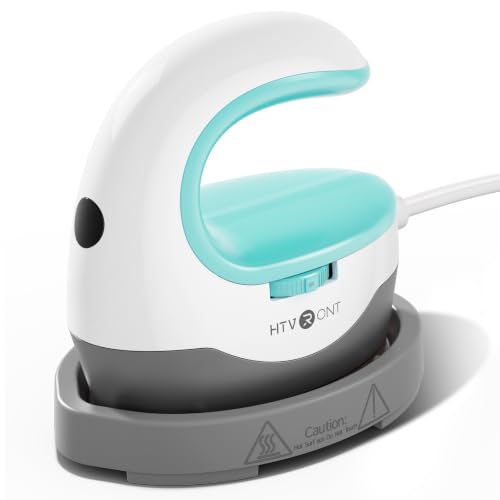
HTVRONT Mini Heat Press is a mini heat press rather than a general-purpose iron, and its three preset modes make it the focused choice for small HTV and sublimation projects. The settings are 284°F, 320°F and 356°F, selected with a sliding knob. Its compact shape is intended for small or unusual projects that do not need a larger press. It is less adaptable than a continuously adjustable iron because the available heat is limited to those three levels; choose another option if you need to select an in-between temperature or want steam.
Bottom line: Choose this for small heat-transfer projects that match its three preset temperatures.
BEAUTURAL Mini Travel Steam Iron

BEAUTURAL Mini Travel Steam Iron differs from the craft-focused tools by combining steam with dual-voltage travel use. It switches between 110–127 V and 220–240 V, includes a US plug, and the maker says it heats in 40 seconds. Three temperature settings are intended for fabrics including linen, cotton, silk and wool, and its uses include quilting, sewing, appliqué and patchwork. This is a partial fit for someone seeking a tiny craft iron: its travel steam format is useful for fabric work, but it does not offer the precise numerical adjustment of K KERNOWO Adjustable Mini Craft Iron or the heat-transfer focus of HTVRONT Mini Heat Press.
Bottom line: Pick this for portable fabric crafts where steam and dual voltage are useful.
Clover MCI-900 Mini Iron

Clover MCI-900 Mini Iron is distinguished by a mini-shaped head and included stand, with rubber sole feet and a metal holder. Its lightweight form is intended for quilters and seamstresses working on tight spots, quick bias techniques and appliqué. That makes it a more specialized option than a general adjustable craft iron: the specifications do not provide a temperature range, so it is a weaker match for buyers who need to select a specific heat for a material. Consider it when maneuverability for small sewing tasks matters more than preset or displayed temperature control.
Bottom line: Choose this for quilting, bias work and appliqué in tight areas.
Choosing a Mini Iron for Crafts
Choose by the craft’s heating method first: heat-transfer vinyl and sublimation call for a press-style tool, while sewing and quilting often benefit from a narrow iron tip or steam. Common household iron settings run from roughly 230°F for synthetics to 400°F for linen, but craft tools may use different scales and surface temperatures. For heat-transfer work, use the transfer material maker’s temperature and timing rather than assuming a fabric setting will work. If a project needs heat above 356°F, HTVRONT Mini Heat Press does not reach that temperature; K KERNOWO Adjustable Mini Craft Iron has the broader stated range.
Temperature alone does not determine a successful transfer. The amount of pressure, contact time and whether the material needs steam or dry heat also matter, so match all three to the material’s instructions.
Heat Presses and Craft Irons Compared
A heat press applies pressure across a heated surface, while a conventional iron lets the user move a soleplate over fabric; compact craft irons add access to narrow areas. Steam helps relax fabric fibers, but heat-transfer materials commonly require dry application. Before starting, check whether the transfer material calls for a press or an iron and whether steam must be off.
The table shows which tool format fits a common task; choose based on the project rather than assuming every mini iron handles the same materials.
| Task | Useful format | Decision point |
|---|---|---|
| HTV or sublimation | Mini heat press | Use the transfer material’s heat and time requirements |
| Quilting or appliqué | Narrow craft iron | Prioritize reach into small areas |
| Fabric touch-ups while traveling | Mini steam iron | Confirm voltage compatibility at destination |
Temperature and Fabric Safety
Use the lowest temperature that bonds or smooths the material, then increase only if needed; synthetic fabrics can melt at temperatures tolerated by cotton or linen. Test an inconspicuous fabric scrap before applying heat to a finished project, especially when combining fabric, adhesive and decorative trim. The 450°C maximum on K KERNOWO Adjustable Mini Craft Iron is far above ordinary fabric ironing settings, so set it carefully and keep the hot plate away from skin, work surfaces and cords.
Place a hot iron on its included stand when available, and unplug it before leaving the work area. Never leave a heated iron unattended: a compact tool can still cause burns or ignite nearby fabric.
Voltage and Travel Fit
Dual-voltage appliances can operate on more than one supply range, but the plug shape and local voltage are separate compatibility questions. BEAUTURAL Mini Travel Steam Iron switches between 110–127 V and 220–240 V and includes a US plug; travelers should still verify the outlet type and follow the appliance’s voltage-switching directions before connecting power. A plug adapter changes pin fit, not voltage.
For domestic craft use, decide whether a travel feature is useful or whether a stand, narrow head or adjustable temperature matters more. Keep cords clear of the ironing area and use a stable, heat-resistant surface when working with fabric or transfers.
Frequently Asked Questions
Can a mini iron apply heat-transfer vinyl?
A mini heat press can handle small HTV projects when its temperature and contact area match the transfer material’s requirements. This comparison’s press has three settings from 284°F to 356°F, so check the vinyl maker’s target heat and timing first.
Should steam be used with heat-transfer vinyl?
Most heat-transfer vinyl applications call for dry heat, because moisture can interfere with bonding. Turn steam off for a vinyl transfer unless the material maker explicitly directs otherwise.
What temperature should I use for quilting fabric?
Cotton quilting fabric is commonly pressed around 350°F to 400°F, while synthetics need lower heat to avoid melting. Test a scrap first, especially if the piece includes adhesive, trim or mixed fibers.
Is dual voltage the same as a plug adapter?
No: dual voltage lets an appliance accept different electrical supply ranges, while a plug adapter only changes the plug’s physical fit. The travel iron supports 110–127 V and 220–240 V, but travelers still need to check the outlet and switch setting.
How can I prevent burns while using a mini iron?
Place a hot iron on a stable stand or heat-resistant surface between passes, and keep fingers away from the soleplate. Unplug it when finished and never leave it unattended near fabric.