
Drill Attachment Paint Stirrers Compared by Fit

For a drill attachment paint stirrer, Youtex 4-Blade Helix Mixer is the most versatile match because its 4-blade, 2.76-inch helix is sized for 1- to 5-gallon buckets. Choose a smaller-batch model if you mainly mix one gallon, or a splash-reducing design for a full 5-gallon pail.
A drill mixer is a paddle that turns in a bucket to blend paint and other compatible materials; match the shaft to your drill and keep the paddle submerged while mixing.
We earn a commission if you buy through links on this page. As an Amazon Associate I earn from qualifying purchases. Products are compared on manufacturer specifications, not hands-on testing.
- Best overall: Youtex 4-Blade Helix Mixer – Its 2.76-inch four-blade helix is intended for 1- to 5-gallon buckets.
- Best for 1-gallon batches: Edward Tools Even Flow Helix Mixer – The helix mixer is intended for one gallon and fits 3/8-inch and larger drills.
- Best for reducing splashes: Edward Tools 5-Gallon No-Splash Mixer – Its ribbon paddle is designed to mix a 5-gallon bucket without splashing out.
| Product | Best for | Bucket range | Paddle design | Drill connection | Shop |
|---|---|---|---|---|---|
| Youtex 4-Blade Helix Mixer | Large batch range | 1–5 gallons | 4-blade helix, 2.76 in | Standard drill or impact driver | Check Price on Amazon |
| Edward Tools Paint and Mud Mixer | Paint and mud | 1–3 gallons | 2.5 × 2.5 in head | 5/16-in hex | Check Price on Amazon |
| Edward Tools Even Flow Helix Mixer | Small resin batches | 1 gallon | Helix, Even Flow design | 3/8-in and larger drill | Check Price on Amazon |
| Edward Tools 5-Gallon No-Splash Mixer | Five-gallon pails | 5 gallons | Ribbon, no-splash design | 5/16-in hex for 3/8-in drill | Check Price on Amazon |
| Double-Helix Paint Mixer | General paint mixing | 1–5 gallons | Double helix | Any drill bit | Check Price on Amazon |
Drill Attachment Paint Stirrers
Compare the mixing head, intended batch size and drill connection before choosing a paddle.
Youtex 4-Blade Helix Mixer

The broadest bucket range here is 1 to 5 gallons, paired with a 2.76-inch four-blade helix head. The maker says its zinc-plated, rust-resistant steel head is suitable for paint, resin, epoxy, concrete and slurry, and claims the larger head improves efficiency compared with a 2.36-inch head.
This is a fit for buyers who want one paddle for varied batch sizes and materials. The tradeoff is the larger head: for a one-gallon container, check that it can move freely without striking the sides. Keep the head below the liquid surface to limit splashing.
Bottom line: Choose this if you mix across several bucket sizes and want a four-blade helix.
Edward Tools Paint and Mud Mixer

A 5/16-inch hex shaft and 2.5-by-2.5-inch head distinguish this paddle, which is intended for 1- to 3-gallon batches. Its zinc-plated steel construction and reinforced weld are specified for mixing paint, mud, grout and concrete; the hex connection is designed to resist slipping in the drill chuck.
This is a practical match when mud or grout is part of the job and the batch stays within three gallons. Its capacity does not extend to five-gallon buckets, so choose a larger-range mixer for those. Clean the metal paddle promptly after use so residue does not harden around the head.
Bottom line: Pick this for paint or mud in 1- to 3-gallon batches.
Edward Tools Even Flow Helix Mixer
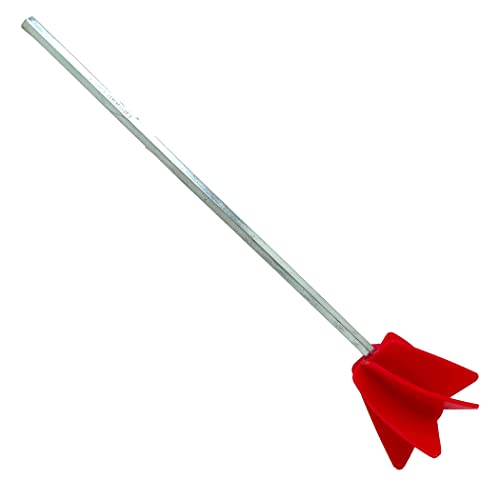
For a one-gallon batch, this Edward Tools helix mixer is the most specifically sized option in the group. The maker describes its Even Flow design as a way to mix faster and more consistently, and says the metal-and-plastic surfaces are easy to clean for reuse.
Its drill fit is 3/8-inch hand drills and larger, making chuck size the key compatibility check. It is suited to paint, epoxy, resin and silicone in small quantities, but the one-gallon use case is narrower than paddles designed for multiple bucket sizes. Avoid treating a general-purpose drill mixer as a substitute for a manufacturer-specified mixer for specialty compounds.
Bottom line: Choose this for one-gallon epoxy, resin or paint batches with a compatible drill.
Edward Tools 5-Gallon No-Splash Mixer

The ribbon-shaped plastic head is the defining difference here: it is designed to mix a full 5-gallon bucket while limiting splashes. A heavy-duty steel 5/16-inch hex shaft is specified for standard 3/8-inch drills, and the paddle is intended for paint, resin and epoxy.
This suits large-batch work where keeping material inside the pail matters. The bucket capacity is more specific than the range offered by Youtex 4-Blade Helix Mixer, so it is less adaptable if you regularly mix small amounts. Start with the head submerged and use controlled drill speed; a paddle can still throw material if it is run too fast or lifted above the mixture.
Bottom line: Pick this for 5-gallon mixing when splash control is a priority.
Double-Helix Paint Mixer

A double-helix design sets this mixer apart from the single-head and ribbon paddles.
This is a candidate for household paint projects when the exact drill attachment interface is confirmed. The phrase “any drill bit” does not identify a shaft dimension, so verify the connection before ordering if your drill uses a particular chuck or adapter. For high-viscosity materials, use a drill and mixer rated for the load rather than forcing a stalled paddle.
Bottom line: Choose this for general paint and resin mixing after confirming the shaft connection.
How to choose a drill paint stirrer
Choose by batch size, shaft fit and the material you plan to mix, not by paddle shape alone. A gallon of paint occupies about 231 cubic inches, while a 5-gallon pail holds 1,155 cubic inches, so the same head may be awkward in a small can and slow in a large one. A 5/16-inch hex shaft needs a chuck that can close securely on that shaft; a 3/8-inch drill refers to the chuck capacity, not the shaft size. If your drill has a smaller chuck, do not force the connection. Start at low speed and increase gradually, with the paddle immersed to reduce splatter.
Thicker compounds load a drill more heavily than ordinary paint. For grout, mud or concrete, use a drill suitable for sustained mixing and stop if the motor strains or the paddle binds. Never hold a loose bucket with one hand while operating a powered mixer.
Match the paddle to the bucket
Bucket fit comes down to head width and room for circulation. A paddle should rotate without scraping the sides or bottom; leave several inches of working clearance where possible, especially in narrow cans. Larger buckets generally need a head that can move enough material to reach the edges, but excessive speed can pull air into paint and create foam.
The product capacities here are intended batch ranges, not a guarantee that every drill can mix every compound at that volume. This guide helps map common needs to paddle type:
| Mixing need | Useful design | Check before mixing |
|---|---|---|
| Small resin or epoxy batch | Compact helix | Head clears the container walls |
| Paint and mud, up to 3 gallons | Steel paddle with hex shaft | Chuck secures the shaft |
| Full 5-gallon pail | Large-range or ribbon paddle | Drill handles the material load |
For a can under a gallon, favor a head that can turn freely rather than a wide paddle intended for a 5-gallon pail.
Mix paint without splashing or air bubbles
Keep the mixing head below the paint surface and use a slow start; raising the paddle while it spins can fling paint and whip air into the coating. Move the paddle gradually through the liquid instead of drilling in one spot, reaching material near the bottom without striking the container.
Paint settles as pigments and solids sink, so stir until color and texture are uniform, scraping settled material with a manual stir stick if needed. Do not use a drill paddle in a partly filled open container at high speed. Wear eye protection and gloves, and unplug or remove the battery before cleaning or changing attachments.
Clean and store a drill mixer
Clean a paint mixer promptly after use, before residue dries on the shaft or paddle. For water-based paint, rinse according to the paint maker’s cleanup directions; oil-based coatings require the appropriate solvent and ventilation. Keep rinse water and solvent out of storm drains.
Disconnect the drill before wiping or rinsing the attachment, and avoid immersing a drill or powered tool. Dry metal parts before storage to limit corrosion, even when a surface is plated or described as rust-resistant. Inspect the shaft, welds and head before each use; a bent shaft can cause vibration, while a loose joint can separate under load. Store the mixer where the head will not be bent or struck.
Frequently Asked Questions
What drill size fits a paint mixer attachment?
Check the shaft diameter against the drill chuck capacity; a 5/16-inch hex shaft fits a chuck that can securely hold that size. A 3/8-inch drill fit describes chuck capacity, not a 3/8-inch shaft.
How fast should I run a paint mixer drill attachment?
Start at the drill’s lowest speed and increase only until the paint circulates without splashing. High speed can draw air into paint, creating bubbles that may show in the finish.
Can a drill paint stirrer mix epoxy resin?
Some paddles are intended for epoxy or resin, but batch size and the resin maker’s mixing directions matter. For small two-part batches, use the specified ratio and mix time; do not assume a large paint paddle suits every resin.
How do I keep paint from splashing while mixing?
Submerge the head before starting and keep it below the surface while the drill runs. A slow start and a bucket with enough headroom help contain splashes; stop the drill before lifting the paddle out.
How often should I clean a paint mixer attachment?
Clean the paddle after every batch, before paint or compound dries on it. Use the coating’s recommended cleanup method, and disconnect the drill or remove its battery before cleaning.