
Drywall Sander for Popcorn Ceiling: 4 Models Compared

For popcorn-ceiling sanding, choose a drywall sander with adjustable speed and dust collection, and match its reach to your ceiling height; 8-Amp Drywall Sander, 12 Discs is a strong fit with a 3.9-to-5.5-foot extension pole. If you plan to remove rather than sand the texture, first check the ceiling material and its condition, since sanding can create substantial dust.
Choose a different setup if the texture may contain asbestos: have it assessed before disturbing it, and do not sand it.
We earn a commission if you buy through links on this page. As an Amazon Associate I earn from qualifying purchases. Products are compared on manufacturer specifications, not hands-on testing.
- Best overall: 8-Amp Drywall Sander, 12 Discs – Its extension pole adjusts from 3.9 to 5.5 feet, and it has seven speed settings and a built-in vacuum.
- Best for mixed abrasives: KUPERIA 8.5-Amp Drywall Sander – It includes six basic and six grid sanding sheets, plus seven speed settings.
- Best for faster speed range: 1200W Drywall Sander, 5-Speed – Its five speed settings span 800–2,100 RPM.
| Product | Best for | Speed range | Speed settings | Included abrasives | Shop |
|---|---|---|---|---|---|
| 8-Amp Drywall Sander, 12 Discs | Adjustable reach | 800–1,800 RPM | 7 | 12 discs | Check Price on Amazon |
| KUPERIA 8.5-Amp Drywall Sander | Two abrasive types | 800–1,800 RPM | 7 | 12 sheets (6 each) | Check Price on Amazon |
| 1200W Drywall Sander, 5-Speed | Higher RPM range | 800–2,100 RPM | 5 | — | Check Price on Amazon |
| 9-Speed Drywall Sander, 16 Sandpaper Pieces | More speed steps | 800–2,100 RPM | 9 | 16 pieces | Check Price on Amazon |
Drywall Sanders for Popcorn Ceilings
Compare speed controls, included abrasives and reach to find a sander suited to the ceiling and the work you plan to do.
8-Amp Drywall Sander, 12 Discs
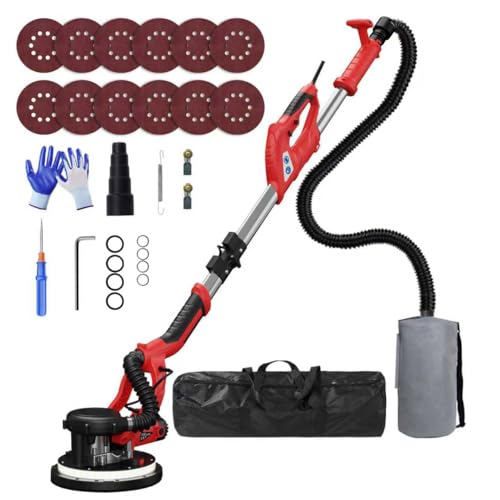
Adjustable reach is the defining feature of 8-Amp Drywall Sander, 12 Discs: its telescoping pole extends from 3.9 to 5.5 feet, useful when overhead work would otherwise require frequent repositioning. The sander has an 8-amp motor, seven speed settings, a 10-hole disc design and a built-in vacuum system; 12 sanding discs are included. The maker gives a 10-pound total weight for the sander, pole, hose and collection bag. Its speed tops out at 1,800 RPM, so buyers who want a higher stated maximum should compare another option.
Bottom line: Choose it if adjustable pole length and a complete dust-collection setup are priorities.
KUPERIA 8.5-Amp Drywall Sander

KUPERIA 8.5-Amp Drywall Sander stands apart for including two kinds of abrasive: six basic sheets and six grid sandpaper sheets. It has an 8.5-amp motor, seven speed settings from 800 to 1,800 RPM, an extendable handle and an LED light. The maker says its dual-channel vacuum system can capture 97%–99% of dust when operated properly, and notes that keeping the sanding disc parallel to the wall helps limit dust leakage. The maker gives no extension length, so buyers with high ceilings should confirm the reach before choosing it.
Bottom line: Choose it if you want both basic and grid abrasives in the set.
1200W Drywall Sander, 5-Speed

1200W Drywall Sander, 5-Speed reaches 2,100 RPM, the highest maximum among these choices, with five speed settings covering 800–2,100 RPM. It has a 1,200-watt motor and an extendable handle, making it a candidate for buyers who want a higher top speed for surface sanding. The maker also describes soft-start operation and claims three times the dust suction of standard drywall sanders.
Bottom line: Choose it if the 2,100-RPM maximum is more important than having more speed steps.
9-Speed Drywall Sander, 16 Sandpaper Pieces

9-Speed Drywall Sander, 16 Sandpaper Pieces offers nine speed settings across an 800–2,100 RPM range and includes 16 pieces of sandpaper. It also has a collapsible handle, LED light, flexible dust hose and collection bag. The maker describes its vacuum system as capturing fine particles during operation.
Bottom line: Choose it if you value nine speed settings and 16 included sandpaper pieces.
Choose a Sander for the Work, Not Just the Texture
A drywall sander is for abrading a surface; it is not automatically the right tool for removing every popcorn ceiling. First decide whether you are smoothing texture, removing it, or sanding a patch, since these jobs create different debris and require different preparation. For sanding, a variable-speed tool helps you start gently and adjust as needed; avoid pressing hard, which can gouge the drywall or expose the paper face. A built-in collection bag can reduce cleanup, but it does not make the work dust-free. If the texture may contain asbestos, stop before scraping, sanding, drilling or otherwise disturbing it and arrange appropriate assessment.
Match Pole Reach to Ceiling Height
Measure from the floor to the ceiling and compare that height with your comfortable working reach, rather than relying on pole length alone. An extension pole length is not the same as the tool’s total working reach because the operator’s arm position and stance add to it. Keep the sander head flat against the surface; tilting an orbital head can leave uneven marks or dig an edge into the ceiling. For a tall ceiling, check the product’s maximum extension and whether the hose can reach without pulling the head sideways. Among these choices, only 8-Amp Drywall Sander, 12 Discs gives a pole range, from 3.9 to 5.5 feet.
Understand Speeds, Abrasives and Dust Collection
RPM is the rotation rate, while the number of speed settings tells you how many selectable steps the tool offers; more steps do not by themselves prove faster work or a smoother finish. Begin on a low setting in an inconspicuous area, then increase only if the abrasive is cutting too slowly without pressure. Sandpaper grit also matters: a coarser abrasive removes material faster but leaves deeper scratches, while finer grit is used for smoothing. The products here do not give grit numbers for their included abrasives, so inspect the packaging before starting. A vacuum system can capture some debris, but ceiling sanding still calls for containment, eye protection and a properly fitted respirator.
Prepare the Room and Work Safely
Seal doorways and cover floors and furniture before sanding; fine drywall dust can spread well beyond the immediate work area. Turn off or protect HVAC returns in the work zone so the system does not circulate dust, then clean surfaces with a HEPA vacuum rather than dry sweeping. Wear sealed eye protection and a NIOSH-approved particulate respirator suited to the task; a dust bag is not personal protective equipment. Work from a stable platform, keep the cord and hose from snagging, and unplug the tool before changing abrasives. If the ceiling is damaged, damp, or potentially asbestos-containing, do not sand it until the underlying issue is addressed.
Frequently Asked Questions
Can a drywall sander remove popcorn ceiling texture?
A drywall sander can abrade ceiling texture, but it may be a poor choice for removing a thick or painted popcorn finish because sanding creates airborne dust and can damage the drywall beneath. Before disturbing older texture, have it assessed for asbestos; do not sand material that may contain asbestos.
What speed should I use on a popcorn ceiling?
Start at the lowest setting and test a small, inconspicuous area before increasing speed. Use only enough speed to smooth the surface without pressing hard, since excess pressure can gouge drywall or leave visible swirls.
What grit sandpaper works for ceiling texture?
Use a finer abrasive for light smoothing and a coarser one only when more material removal is appropriate. The exact grit depends on the coating and surface condition, so check the abrasive packaging and test a small area first.
Do drywall sanders collect all ceiling dust?
No; built-in vacuums and collection bags can capture dust but do not guarantee a dust-free room. Cover furnishings, isolate the work area, protect HVAC returns, and wear eye protection and a properly fitted particulate respirator.
Should I sand a painted popcorn ceiling?
Do not assume sanding is safe or effective on painted texture; paint can make texture harder to remove and sanding can spread dust. If the ceiling may contain asbestos, leave it undisturbed and arrange assessment before choosing a removal method.