
ELAC Debut 3.0 DB53: Bookshelf Speaker Fit Compared

The ELAC Debut 3.0 DB53-BK bookshelf pair suits listeners who want compact two-way speakers with 5.25-inch aramid-fiber woofers; the floorstanding DF53-BK uses a three-way design and dual woofers instead. The DB53 is the named model here, while the floorstander is an alternative for listeners with room for a tower.
We earn a commission if you buy through links on this page. As an Amazon Associate I earn from qualifying purchases. Products are compared on manufacturer specifications, not hands-on testing.
- Best overall: ELAC Debut 3.0 DB53-BK Bookshelf Pair – The exact-match DB53 bookshelf pair has 5.25-inch aramid-fiber woofers and aluminum-dome tweeters.
- Best for tower setup: ELAC Debut 3.0 DF53-BK Floorstander – The DF53-BK is a three-way floorstander with dual 5.25-inch woofers and a 38 Hz lower response limit.
| Product | Best for | Format | Driver layout | Frequency response | Shop |
|---|---|---|---|---|---|
| ELAC Debut 3.0 DB53-BK Bookshelf Pair | Bookshelf stereo | Bookshelf pair | 2-way; 5.25-inch woofer | 48 Hz–38 kHz | Check Price on Amazon |
| ELAC DB53BK Debut 3.0 Bookshelf Pair | DB53 alternative | Bookshelf pair | 5.25-inch woofer; 2-way not given | — | Check Price on Amazon |
| ELAC Debut 3.0 DF53-BK Floorstander | Tower speaker setup | Floorstanding, each | 3-way; dual 5.25-inch woofers | 38 Hz–38 kHz | Check Price on Amazon |
ELAC Debut 3.0 speakers
Compare the DB53 bookshelf pair with the related DF53 floorstander to match the speaker format to your room and setup.
ELAC Debut 3.0 DB53-BK Bookshelf Pair

The DB53-BK is the exact bookshelf-speaker match, combining a 1-inch aluminum-dome tweeter with a 5.25-inch woven aramid-fiber woofer in a two-way bass-reflex design. ELAC says the waveguide and phase plug broaden dispersion for more consistent sound across listening positions. The pair suits a stand or shelf-based stereo setup where a tower cabinet is not wanted. Its frequency response begins at 48 Hz, so buyers seeking deeper bass from the speakers alone should compare its range with the floorstanding alternative or plan for a subwoofer.
Bottom line: Choose this pair for a bookshelf-based stereo with a two-way driver layout.
ELAC DB53BK Debut 3.0 Bookshelf Pair
This DB53BK is another black Debut 3.0 bookshelf pair, but its maker identifies the 5.25-inch aramid-fiber woofer and aluminum-dome tweeter without giving a frequency range or confirming the two-way bass-reflex layout. That makes it a possible fit for a buyer focused on the basic bookshelf format and driver materials. The distinction matters if frequency extension or cabinet alignment is a deciding factor: compare those specifications before choosing between the two DB53 pair entries.
Bottom line: Consider it when bookshelf format and driver materials matter more than a confirmed response range.
ELAC Debut 3.0 DF53-BK Floorstander
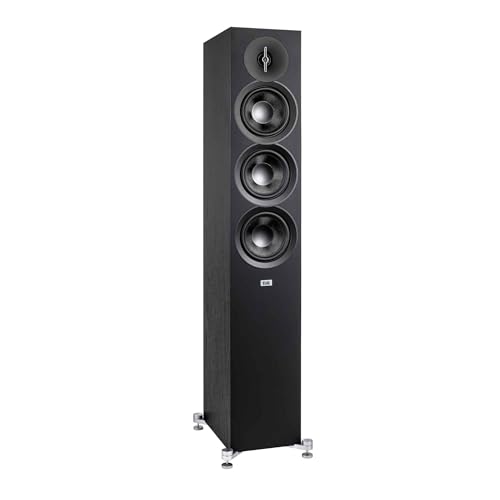
The DF53-BK changes the setup from bookshelf pair to a single floorstanding speaker with a 1-inch aluminum-dome tweeter, 5.25-inch aramid-fiber midrange driver and two 5.25-inch aramid-fiber woofers. Its three-way bass-reflex design assigns high, midrange and bass duties to separate drivers; ELAC says that arrangement optimizes each driver’s frequency role. The 38 Hz lower response figure reaches lower than the DB53-BK’s 48 Hz limit. This is a related alternative rather than the requested bookshelf model, and each speaker stands 40.6 inches tall, so buyers need floor space and should account for the required number of units for their system.
Bottom line: Pick this floorstander when you want a tower format and have space for it.
How to choose between the DB53 and DF53
Choose by cabinet format first: the DB53 is a bookshelf pair, while the DF53 is a floorstanding speaker sold individually in the name. A bookshelf cabinet usually needs a stable stand or shelf with the tweeter near seated ear height; a tower sits on the floor and needs clearance from walls and walkways. The DB53 response begins at 48 Hz and the DF53 at 38 Hz, but response figures alone do not establish in-room bass output. Room size, placement, listening level and any subwoofer change the result. If you have less than 40 inches of vertical clearance for speaker placement, a 40.6-inch tower will not fit upright; choose a bookshelf format instead.
| Need | Format to consider | Key distinction |
|---|---|---|
| Keep speakers on stands or shelves | DB53 bookshelf pair | Two-way, 5.25-inch woofer |
| Use floorstanding cabinets | DF53 floorstander | Three-way, dual 5.25-inch woofers |
What the speaker specifications mean
A two-way speaker divides sound between a tweeter and a woofer, while a three-way model adds a dedicated midrange driver; the crossover sends each frequency band to its assigned driver. A bass-reflex cabinet uses a tuned port to reinforce output near the port’s tuning frequency, but the response range shown is not a promise of equal output at every frequency. A 1-inch tweeter diameter and 5.25-inch woofer diameter describe driver size, not the cabinet’s external dimensions. For stereo, a pair means left and right speakers; an item sold individually needs a second matching unit for a conventional two-channel setup. Confirm the number of speakers included before ordering if the pair-versus-single distinction is unclear.
Placement and room fit for ELAC bookshelf speakers
Bookshelf speakers generally perform best on rigid stands, with the tweeters near ear level and the cabinets separated to form a listening triangle. Start with speaker spacing close to the distance from each speaker to the listening seat, then adjust for room shape and imaging. Rear ports need breathing room: begin with roughly 6 to 12 inches between a ported cabinet and the wall, then listen for excess bass and move the cabinet if needed. Keep left and right speakers at similar heights and distances from nearby boundaries. Use stable stands or shelves, secure cables out of walkways, and never place a speaker where it can fall onto a child or pet.
Frequently Asked Questions
Do ELAC DB53 speakers need a subwoofer?
A subwoofer is not mandatory, but it can extend bass below the DB53’s 48 Hz lower response limit. Choose one if music or movies need stronger low bass than the main speakers provide in your room.
How far apart should bookshelf speakers be placed?
A useful starting point is spacing the speakers about as far apart as each speaker is from the listening seat. For example, with a 7-foot listening distance, begin near 7 feet of separation and adjust for the room and stereo image.
Can bookshelf speakers sit directly on a desk?
They can, but a rigid stand or isolation pad helps reduce cabinet vibration transferring into the desk. Aim the tweeters toward seated ear height and keep both speakers at similar heights.
How much room does the DF53 floorstander need?
The DF53 is 40.6 inches tall, so the speaker needs at least that much unobstructed vertical clearance to stand upright. Leave room around the cabinet and keep it clear of paths where it could be struck or tipped.
What does a three-way speaker design change?
A three-way speaker assigns high, midrange and bass frequency ranges to separate drivers, whereas a two-way design uses a tweeter and woofer. The crossover point and driver design affect how those ranges blend, so the driver count alone does not guarantee better sound.