
Electric Clock Motor Replacement: 4 Types Compared

For a vintage electric wall clock with a Hansen-style synchronous movement, loosoo A43RA/I43RA Synchronous Motor is the closest fit because it has a 10-tooth gear and is specified for compatible clock systems. Choose a quartz kit instead if your clock runs on a battery and its dial thickness and shaft dimensions match.
These replacements are not interchangeable: confirm the original movement type, gear or shaft dimensions, voltage, and mounting before ordering.
We earn a commission if you buy through links on this page. As an Amazon Associate I earn from qualifying purchases. Products are compared on manufacturer specifications, not hands-on testing.
- Best overall: loosoo A43RA/I43RA Synchronous Motor – A synchronous motor specified for Hansen Type C and Haydon Glo-Dial E100-AH clocks, with a pre-installed 10-tooth gear.
- Best for thicker dials: Youngtown 12888 Long-Shaft Quartz Kit – Its 18 mm shaft and 5 mm threaded section suit panels 1–3 mm thick.
- Best for thin dials: Roymnie 12 mm Silent Quartz Kit – The 12 mm shaft kit is specified for clock faces 1–3 mm thick.
- Best for 9–13 mm panels: 23 mm Long-Shaft Quartz Movement Kit – The 23 mm shaft movement is specified for clocks in that panel-thickness range.
| Product | Best for | Movement type | Shaft or gear | Dial thickness | Shop |
|---|---|---|---|---|---|
| loosoo A43RA/I43RA Synchronous Motor | Vintage electric clocks | Synchronous AC | 10-tooth gear | — | Check Price on Amazon |
| Youngtown 12888 Long-Shaft Quartz Kit | Thicker DIY dials | Battery quartz | 18 mm shaft | 1–3 mm | Check Price on Amazon |
| Roymnie 12 mm Silent Quartz Kit | Thin dial repairs | Battery quartz | 12 mm shaft | 1–3 mm | Check Price on Amazon |
| 23 mm Long-Shaft Quartz Movement Kit | Thicker clock panels | Battery quartz | 23 mm shaft | 9–13 mm | Check Price on Amazon |
Electric Clock Motor Replacement Options
Match the motor type and dimensions to the clock’s existing movement before choosing a replacement.
loosoo A43RA/I43RA Synchronous Motor

Unlike the battery-powered quartz kits, this is an AC synchronous motor intended for compatible vintage electric clocks. It has a pre-installed 10-tooth output pinion and is specified for Hansen Type C movements and Haydon Glo-Dial E100-AH clocks. The maker also names vintage Cleveland neon wall clocks and other systems using Hansen-style synchronous motors. This is the option to consider when the original clock uses that movement style. Its fit depends on matching the original gear, voltage, and mounting; a similar-looking motor is not enough to establish compatibility.
Bottom line: Choose it when your clock uses a compatible Hansen-style synchronous movement.
Youngtown 12888 Long-Shaft Quartz Kit
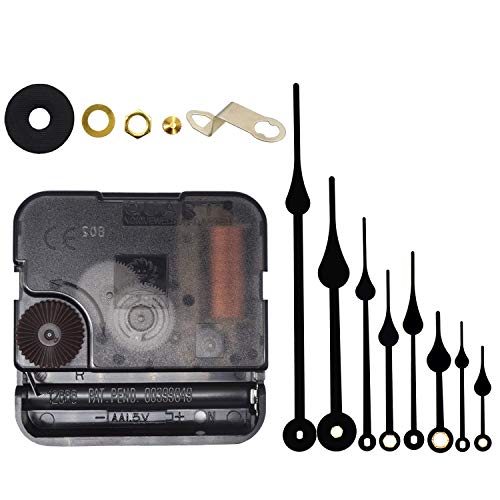
The Youngtown 12888 is a battery-operated quartz movement, not an AC synchronous motor. Its 18 mm total shaft length and 5 mm threaded section distinguish it from the shorter quartz kits here, and it is intended for clock panels 1–3 mm thick. The package includes a hook, mounting hardware, and two hour and two minute hands. It suits a DIY clock or a battery-powered repair when the hand reach and shaft dimensions match. It will not replace a mains-powered synchronous motor, so identify the existing movement type before selecting it.
Bottom line: Choose it for a battery-powered clock with a matching panel and hand reach.
Roymnie 12 mm Silent Quartz Kit

The Roymnie kit stands out for its short 12 mm shaft and included second hand, unlike the longer-shaft alternatives. It is a battery-operated quartz movement with a 6.2 mm threaded section, specified for 1–3 mm clock faces; the battery is not included. The kit comes with three pairs of hour and minute hands, so it can suit a thin-panel DIY repair when a compatible hand length is available. It is not a replacement for a synchronous AC clock motor, and its shaft reach may be unsuitable for a deeper clock case.
Bottom line: Choose it for a thin-face quartz clock that needs the short shaft.
23 mm Long-Shaft Quartz Movement Kit
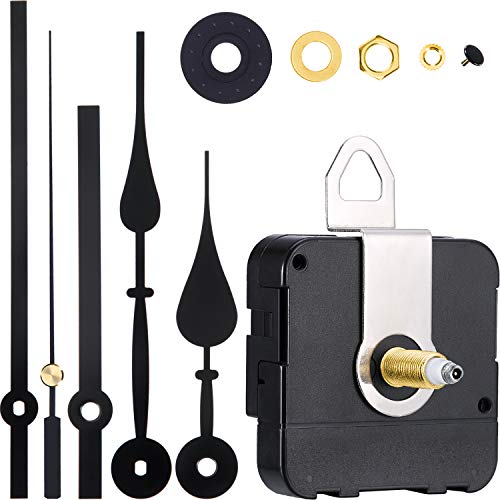
The 23 mm shaft makes this quartz movement the option here for a substantially thicker clock panel; the maker specifies compatibility with 9–13 mm clocks. It is a battery-powered, second-jump movement with a metal hook and two pairs of hour and minute hands. The hand ranges reach 450 mm, making hand reach another dimension to compare with the original clock. Its panel range differs from the 1–3 mm kits, but it still is not an AC synchronous motor. Check that the hands and mounting arrangement suit the clock before replacing its movement.
Bottom line: Choose it for a quartz repair with a 9–13 mm panel.
How to choose an electric clock motor replacement
Start by identifying whether the clock uses an AC synchronous motor or a battery-powered quartz movement; these are different drive types, not drop-in substitutes. For a synchronous replacement, match the voltage, frequency, gear tooth count, gear position, and mounting tabs to the original. The motor here has a 10-tooth gear and is specified for Hansen-style compatibility. For a quartz movement, compare shaft length, threaded length, dial thickness, and hand reach. Measure the clock face from the center to the hand tip: the minute hand should remain within the face and clear any glass or frame. A measurable rule is to reject a movement if its threaded shaft is shorter than the panel thickness plus the washer and nut stack.
Shaft length and clock panel fit
Quartz movement fit is governed by panel thickness and the shaft section that passes through the dial. A short shaft can leave too little thread for the washer and nut; an excessively long-shaft can leave the hands raised away from the face. The kits span 12 mm, 18 mm, and 23 mm total shaft lengths, while their intended panel ranges differ. Measure the panel at the mounting hole, including any finish or backing that the movement must pass through. For dependable alignment, check the threaded length as well as total shaft length. Keep the minute and hour hands free of one another, the dial, and the clock cover after assembly.
Synchronous and quartz clock motors compared
A synchronous motor is designed to run from AC power, while a quartz movement uses a battery-powered electronic timebase and small motor. The replacement must match the clock’s original system; using a battery movement in a clock wired for mains power is not an appropriate conversion. Common quartz wall movements use a single AA battery, but confirm the required cell and polarity for the chosen movement. The table summarizes the key choice by clock type and dimensions.
| Clock or movement | What to match | Typical use |
|---|---|---|
| AC synchronous | Voltage, frequency, gear, mounting | Compatible electric wall clocks |
| Short-shaft quartz | Shaft and panel thickness | Thin-face battery clocks |
| Long-shaft quartz | Thread reach and hand length | Thicker panels or larger hands |
Safe clock motor replacement and setup
Disconnect a mains-powered clock from its outlet before opening the case; do not handle exposed wiring while it is energized. Battery-powered quartz movements avoid mains wiring, but remove the battery before servicing the mechanism. Photograph or label the original wire and gear positions before disassembly, and support the clock face so the shaft does not twist or crack the dial. Install hands in alignment at the same reference time, then turn them through a full cycle by hand to check for collisions. A hand that touches the glass or another hand can stop or damage the movement, so correct the clearance before running the clock.
Frequently Asked Questions
How do I identify a synchronous clock motor?
A synchronous clock motor connects to AC power rather than relying on a battery-operated quartz movement. Check the clock’s wiring and the motor’s voltage, frequency, gear, and mounting before replacing it.
Can a quartz movement replace an AC clock motor?
No, not as a direct replacement: quartz kits use a battery-powered movement, while synchronous motors run from AC. Use the same drive type as the original unless the clock is specifically rewired by a qualified person.
How much shaft length does a clock movement need?
The shaft must pass through the panel and leave enough threaded length for the washer and retaining nut. Measure panel thickness at the mounting hole and compare it with both total shaft length and threaded length.
How long should clock hands be?
Measure from the center of the dial to the desired hand tip, and keep the minute hand within the face and clear of the glass. Check that the hour and minute hands do not overlap or rub during a full rotation.
Is it safe to replace a wall clock motor?
Battery quartz movements can be serviced with the battery removed, but disconnect a mains-powered clock before opening it. Never work on energized wiring; if the clock has damaged wiring or uncertain connections, have a qualified repairer handle it.