
Evergreen Dwarf Grass Seed: 5 Lawn Mixes Compared

For a lower-mow lawn, No Mow Dwarf Fine Fescue Mix is the closest match because it is a dwarf fine fescue mix intended for low maintenance. Choose a different mix if your priority is heat tolerance, pet traffic or a larger quantity of seed.
“Evergreen” does not mean a cool-season lawn stays green in every climate: heat or drought can cause dormancy, so match the grass type to local conditions.
We earn a commission if you buy through links on this page. As an Amazon Associate I earn from qualifying purchases. Products are compared on manufacturer specifications, not hands-on testing.
- Best overall: No Mow Dwarf Fine Fescue Mix – Dwarf fine fescue is the clearest match for a low-maintenance, lower-mow lawn.
- Best for heat: Black Beauty Heat & Drought Resistant – The mix contains tall fescue and Texas bluegrass and is described as heat tolerant up to 100°F.
- Best for pet yards: X-Seed Pet Proof Fescue Blend – The fescue and perennial ryegrass blend is marketed for urine resistance and heavy traffic.
| Product | Best for | Seed weight | Grass type | Sun or climate fit | Shop |
|---|---|---|---|---|---|
| No Mow Dwarf Fine Fescue Mix | Low-mow lawns | 1 lb | Dwarf fine fescue | Zones 4–7 | Check Price on Amazon |
| Black Beauty Heat & Drought Resistant | Hot sunny lawns | 3 lb | Tall fescue, Texas bluegrass | Full sun to light shade; heat to 100°F | Check Price on Amazon |
| Pennington Kentucky 31 Tall Fescue 40 lb | Large lawn areas | 40 lb | Kentucky 31 tall fescue | Hot summers; heavy rain | Check Price on Amazon |
| X-Seed Pet Proof Fescue Blend | Pet traffic | 3 lb | Tall fescue, perennial ryegrass | Sun and shade; cool-season growth | Check Price on Amazon |
| Pennington Kentucky 31 Tall Fescue 7 lb | Smaller tall fescue lawns | 7 lb | Kentucky 31 tall fescue | Full sun to moderate shade | Check Price on Amazon |
Evergreen dwarf grass seed options
Compare the grass type and intended growing conditions before choosing a seed mix for your lawn.
No Mow Dwarf Fine Fescue Mix

For a lower-mow lawn, this dwarf fine fescue mix is the most direct fit among these options. The 1-pound pack is intended for a low-maintenance lawn, and the maker says established grass develops deep roots and tolerates drought. The zone range is 4–7, which makes regional suitability an important first screen. Fine fescues are cool-season grasses; they generally establish best in late summer or early fall, while very hot weather can cause cool-season turf to lose color or go dormant. This mix is less suited to buyers prioritizing a tall fescue lawn for heavy traffic.
Bottom line: Choose this for a dwarf fine fescue lawn and reduced mowing.
Black Beauty Heat & Drought Resistant

For heat tolerance rather than a dwarf, low-mow profile, this 3-pound blend combines tall fescue and Texas bluegrass. The maker says it tolerates heat up to 100°F, grows in full sun to light shade, and can develop roots up to 4 feet deep. That makes it a more relevant alternative where summer stress is the chief concern. Tall fescue usually forms a coarser, taller lawn than fine fescue, so it is not the closest choice for a no-mow look. Plan to mow according to the lawn’s growth rather than expecting a dwarf habit.
Bottom line: Pick this when heat tolerance matters more than a dwarf growth habit.
Pennington Kentucky 31 Tall Fescue 40 lb

For covering a larger area with a traditional tall fescue lawn, this 40-pound Kentucky 31 bag differs most in quantity. The product is described as durable, drought resistant, and able to stand up to hot summers, heavy rain, and foot traffic; its expected results window is 8 to 21 days. Kentucky 31 grows thick blades and a lighter-green turf, not a dwarf fine fescue carpet. The large bag makes sense when the lawn area justifies that amount of seed; for a small patch, a smaller package is easier to match to the job.
Bottom line: Choose this for a large area suited to tall fescue.
X-Seed Pet Proof Fescue Blend

For a pet-use lawn, this 3-pound blend is the only option here specifically marketed for urine resistance. It combines tall fescue with perennial ryegrass and is described as suited to sun and shade, high traffic, and cool-season growth. The product also claims year-round color, but cool-season turf can still turn brown and become dormant during heat or drought; color depends on growing conditions. This is not a dwarf fine fescue mix, so it may not meet a buyer’s goal of minimizing mowing. Consider it when durability around pets outweighs a low-mow habit.
Bottom line: Choose this for a pet yard where traffic resistance is the priority.
Pennington Kentucky 31 Tall Fescue 7 lb
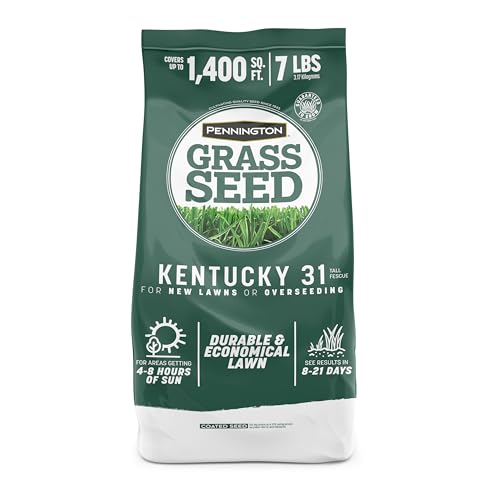
For a smaller tall fescue project, this 7-pound Kentucky 31 option is more manageable than the 40-pound bag of the same grass type. It is intended for full sun to moderate shade and is described as suitable for foot traffic, hot summers, and heavy rain. The product gives a coverage figure of up to 1,400 square feet in its name, while another feature states up to 4,000 square feet; verify the coverage rate for your seeding purpose before ordering. Like the larger Kentucky 31 option, it is not a dwarf blend.
Bottom line: Pick this for a smaller area where Kentucky 31 fits the lawn.
How to choose evergreen dwarf grass seed
Choose by growth habit, climate, and use rather than relying on “evergreen” as a promise of year-round color. Fine fescues are cool-season grasses; tall fescue and perennial ryegrass are also cool-season types, while the mix determines how the lawn performs. Cool-season lawns often grow most actively in spring and fall, and heat or drought can lead to dormancy. For a lower-mow goal, prioritize a mix explicitly identified as dwarf or low-mow; a drought resistant or traffic-tolerant label does not mean the grass stays short. Check the lawn’s sun exposure and intended foot traffic before selecting a blend, and confirm the seed’s recommended seeding rate for the area you need to cover.
When to plant cool-season lawn seed
Late summer to early fall is usually the best window for establishing cool-season grass because warm soil supports germination while cooler air reduces stress on new seedlings. Aim to seed about 6 to 8 weeks before the first expected fall frost; spring is another option, but young grass then faces summer heat sooner. Prepare a loose, fine seedbed and keep the upper soil consistently moist during germination, using light watering rather than letting seed wash or dry out. Germination time varies by grass type and conditions, so a 8-to-21-day result window is not a guarantee for every lawn. Avoid heavy foot traffic until seedlings are rooted and growing steadily.
How to establish a dense, healthy lawn
Successful seeding depends on seed-to-soil contact, moisture, and mowing at the right stage. Rake seed into the top 1/8 to 1/4 inch of soil or lightly cover it; deeper burial can make emergence harder. Keep the surface moist until germination, then water less often but more deeply as roots develop. Mow only after new grass reaches roughly 3 to 4 inches, removing no more than one-third of its height at a time. Keep people and pets off newly seeded areas until the grass is established, especially when the soil is soft. Persistent bare patches can point to poor seed contact, washout, shade, or watering problems rather than a need to apply more seed.
Frequently Asked Questions
Does evergreen grass seed stay green all year?
No grass seed guarantees year-round green color in every climate. Cool-season lawn grasses can go dormant and turn brown during heat or drought, then recover when conditions improve.
When should I plant dwarf fine fescue seed?
Late summer to early fall is generally the best time for cool-season grass seed. Target about 6 to 8 weeks before the first expected fall frost so seedlings have time to establish.
How often should I water new grass seed?
Keep the upper soil consistently moist until the seed germinates, often with several light waterings during dry weather. After seedlings emerge, gradually shift to deeper, less frequent watering as roots grow.
How short should I mow a dwarf fescue lawn?
Do not mow new grass until it reaches about 3 to 4 inches. Remove no more than one-third of the blade at a time; the right ongoing height depends on the specific fescue mix and lawn conditions.
Can I seed a lawn during hot weather?
Hot weather is a difficult time to establish cool-season grass because seedlings dry out quickly and heat can stress the turf. If seeding cannot wait, maintain consistent soil moisture and avoid the hottest part of the season when possible.