
EverStart Maxx Battery Charger: 3 Options Compared

For an EverStart Maxx J7CCE or J7CE jump starter, EverStart Maxx 12V Adapter for J7CCE/J7CE is the closest match because it specifies 12V, 1A output and compatibility with those models. Choose EverStart Maxx 12V Adapter, 5-Foot Cord as an alternative adapter with the same output; choose BLACK+DECKER BM3B Battery Maintainer only if you need a separate 6V/12V battery maintainer with clips or ring terminals.
A jump-starter adapter recharges the jump starter itself, while a maintainer connects to a vehicle battery; confirm the connector matches your unit before ordering.
We earn a commission if you buy through links on this page. As an Amazon Associate I earn from qualifying purchases. Products are compared on manufacturer specifications, not hands-on testing.
- Best overall: EverStart Maxx 12V Adapter for J7CCE/J7CE – Specifies 12V, 1A output and compatibility with the EverStart Maxx J7CCE and J7CE.
- Best for a 5-foot cord: EverStart Maxx 12V Adapter, 5-Foot Cord – Also specifies 12V, 1A output and a 5-foot power cord for J7CCE and J7CE.
- Best for vehicle batteries: BLACK+DECKER BM3B Battery Maintainer – Works with 6V and 12V AGM, GEL and WET batteries and includes clips and ring terminals.
| Product | Best for | Output | Battery fit | Connection | Shop |
|---|---|---|---|---|---|
| EverStart Maxx 12V Adapter for J7CCE/J7CE | J7CCE or J7CE | 12V, 1A | J7CCE, J7CE | Wall plug | Check Price on Amazon |
| EverStart Maxx 12V Adapter, 5-Foot Cord | Longer cord reach | 12V, 1A | J7CCE, J7CE | Wall plug | Check Price on Amazon |
| BLACK+DECKER BM3B Battery Maintainer | Vehicle batteries | 6V/12V | AGM, GEL, WET | Clips, O-rings | Check Price on Amazon |
EverStart Maxx Battery Charger Options
Match the charger to what needs charging: the jump starter or a separate vehicle battery.
EverStart Maxx 12V Adapter for J7CCE/J7CE

This adapter is the closest match for the EverStart Maxx J7CCE and J7CE jump starters, with 12V, 1A output and a 5-foot cord. It accepts 100–240V AC input at 50/60Hz, so it can be used with common household power in the US. Its intended job is charging a compatible jump starter, not charging a car battery directly. The product claims surge, overcurrent, overvoltage, short-circuit and over-temperature protection. The key limitation is model fit: buyers with a different jump-starter model should verify the connector and compatibility before choosing it.
Bottom line: Pick this if your jump starter is a J7CCE or J7CE and you need its 12V adapter.
EverStart Maxx 12V Adapter, 5-Foot Cord

This adapter also targets the J7CCE and J7CE, but its maker additionally names J7-CCE and J7-CE; it supplies 12V at 1A through a 5-foot cord. The 100–240V AC input range supports household outlets across different regions. Like the other replacement adapter, it is for powering the jump starter, not for maintaining a vehicle battery through its terminals. The product claims surge, overcurrent, overvoltage, short-circuit and over-temperature protection. It remains a model-specific replacement, so someone with a different EverStart Maxx unit should confirm connector fit rather than assuming the family name is enough.
Bottom line: Choose this if you need a J7-compatible replacement adapter and want its 5-foot cord.
BLACK+DECKER BM3B Battery Maintainer
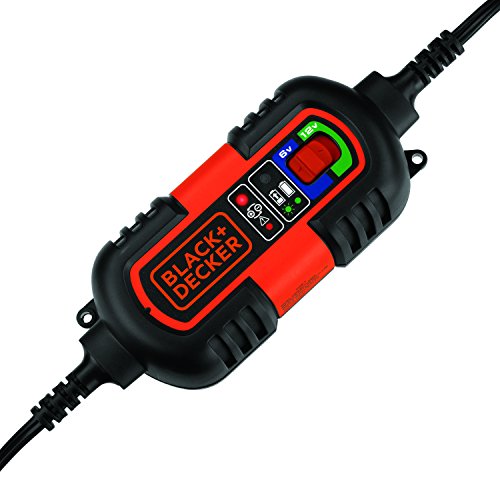
Unlike the EverStart-compatible adapters, this BLACK+DECKER unit connects to a separate vehicle battery with clips or O-ring terminals and supports 6V and 12V AGM, GEL and WET batteries. It automatically stops charging or topping off a full battery and switches to float monitoring. The maker also specifies circuit protection against overcharging, reverse polarity and short circuit, plus ETL certification. This is the better fit when the job is maintaining a vehicle battery, not recharging an EverStart Maxx jump starter. Its different connection method and purpose make it unsuitable as a direct replacement for the J7CCE/J7CE adapter.
Bottom line: Pick this for a compatible vehicle battery that needs automatic charging and float maintenance.
Choose a charger for the device you need to charge
Start by deciding whether the target is the jump starter or the vehicle battery. A jump-starter adapter supplies the unit through its charging input; a battery maintainer attaches to battery terminals.
For a replacement adapter, match the required output voltage, current, connector dimensions and polarity to the unit’s label or manual. Voltage must match; the connector must seat securely, and polarity must be correct. For a maintainer, match 6V or 12V and the battery chemistry it supports. Pick an adapter only when the jump-starter model and plug match; pick a maintainer only when the battery type and terminal connection match.
Know the difference between charging a jump starter and a car battery
A jump starter’s built-in battery is charged through its designated input, while a standalone maintainer connects to the vehicle battery’s terminals. That distinction matters: a 12V adapter for a jump starter is not automatically suitable for direct connection to a car battery. Battery maintainers may support several chemistries, but charging voltage and behavior vary by chemistry.
For a typical 12V lead-acid battery, resting voltage near 12.6–12.8V indicates a full charge, while charging voltage is generally higher and varies by battery type and charger mode. Use a compatible automatic maintainer rather than guessing at voltage. Disconnect power before attaching or removing clamps, keep sparks and flames away from batteries, and work in a ventilated area.
Use the connection and fit to avoid a mismatch
Model compatibility and connector fit are the deciding checks for a replacement jump-starter adapter. Compare the model code on the unit with the adapter’s supported models, then check plug shape, diameter and polarity; a plug that physically fits can still have the wrong electrical polarity. If the model code or connector cannot be confirmed, verify those before ordering.
Terminal accessories also affect maintainer choice. Clips suit temporary connections, while ring terminals can remain attached to battery posts for repeat use, provided the lead is secured and insulated. Never let clamps touch each other or bridge positive and negative terminals. A maintainer with reverse-polarity protection is useful, but connect it correctly rather than relying on the protection to prevent every hazard.
Compare adapter and maintainer types
Choose by charging target first, then narrow the choice by voltage, battery chemistry and connection. The table separates a jump-starter adapter from a terminal-connected maintainer so the purpose is clear.
| Need | Product type | Match before use |
|---|---|---|
| Recharge a compatible jump starter | Device-specific AC adapter | Model, voltage, current, plug and polarity |
| Maintain a separate vehicle battery | Battery charger/maintainer | Battery voltage, chemistry and terminal connection |
A wrong-purpose charger can fail to connect or supply the required charging profile. Keep the charger and battery dry, avoid charging a frozen or visibly damaged battery, and stop if the battery becomes unusually hot or emits a strong odor.
Frequently Asked Questions
Can a 12V EverStart adapter charge a car battery directly?
No; an adapter intended for an EverStart jump starter powers that device through its charging input. A vehicle battery needs a charger or maintainer designed to connect to battery terminals and support its chemistry.
How do I check whether a replacement adapter will fit?
Match the jump-starter model code and compare the plug dimensions and polarity with the unit’s label or manual. A plug that fits mechanically can still have incorrect polarity or electrical output.
What is the difference between a charger and a maintainer?
A charger replenishes a battery, while a maintainer can monitor a charged battery and provide float charging as needed. Automatic models switch modes, but the supported voltage and battery chemistry still need to match.
Can battery maintainers stay connected all winter?
Some automatic maintainers switch to float monitoring after charging, which is designed for extended maintenance. Use one only if its manual permits long-term connection and the battery type and voltage are supported.
Should I connect clamps while a maintainer is plugged in?
No; disconnect the maintainer from AC power before attaching or removing clamps. Keep the connection area ventilated, avoid sparks near the battery, and prevent clamps from contacting each other.