
Expanded Metal for Grill Grate: 3 Sheets Compared

For a custom grill grate, 11-Gauge Flattened Steel, 48 x 36 in, 2-Pack offers the largest sheets and a 11-gauge thickness, useful when you need broad coverage or several cut pieces. Choose Gisafai 9-Gauge Flattened Steel, 24 x 12 in, 2-Pack for smaller sections, or Flattened 3/4 #9 Steel, 24 x 48 in with Skewers if the included stainless steel skewers suit your project; verify the steel finish and food-contact suitability before cooking.
We earn a commission if you buy through links on this page. As an Amazon Associate I earn from qualifying purchases. Products are compared on manufacturer specifications, not hands-on testing.
- Best overall: 11-Gauge Flattened Steel, 48 x 36 in, 2-Pack – Two 48-by-36-inch sheets and stated 11-gauge cold-rolled steel provide the most material.
- Best for compact grates: Gisafai 9-Gauge Flattened Steel, 24 x 12 in, 2-Pack – Two 24-by-12-inch pieces are sized for smaller grate or repair projects.
- Best with skewers: Flattened 3/4 #9 Steel, 24 x 48 in with Skewers – The 24-by-48-inch sheet comes with two stainless steel BBQ skewers.
| Product | Best for | Sheet size | Gauge / thickness | Pieces | Shop |
|---|---|---|---|---|---|
| 11-Gauge Flattened Steel, 48 x 36 in, 2-Pack | Large grate builds | 48 x 36 in | 11 gauge; 0.12 in | 2 sheets | Check Price on Amazon |
| Gisafai 9-Gauge Flattened Steel, 24 x 12 in, 2-Pack | Small grate sections | 24 x 12 in | 9 gauge | 2 sheets | Check Price on Amazon |
| Flattened 3/4 #9 Steel, 24 x 48 in with Skewers | Skewer projects | 24 x 48 in | #9; 0.110 in | 1 sheet | Check Price on Amazon |
Expanded metal for grill grate projects
Match sheet dimensions and thickness to your grate frame, then account for mesh opening, finish and edge preparation.
11-Gauge Flattened Steel, 48 x 36 in, 2-Pack

11-Gauge Flattened Steel, 48 x 36 in, 2-Pack supplies the largest total sheet area here: two 48-by-36-inch panels of flattened, cold-rolled steel. The product states 11 gauge (0.12 inch) and 0.6-by-1.2-inch diamond openings, so plan the grate frame around those openings rather than assuming a solid cooking surface. This size suits a wide custom grate or projects that need several cuts. Its large panels may be cumbersome to handle and trim, and the steel finish and food-contact suitability should be confirmed before cooking.
Bottom line: Choose this for a large custom grate or multiple cut sections.
Gisafai 9-Gauge Flattened Steel, 24 x 12 in, 2-Pack

Gisafai 9-Gauge Flattened Steel, 24 x 12 in, 2-Pack is the compact option, with two 24-by-12-inch flattened carbon-steel sheets that can be cut to fit smaller openings or repair areas. The product identifies the material as carbon steel and calls it rustproof, but does not give a mesh-opening measurement; confirm that the opening size works with your food and support spacing before choosing it. The black finish also makes coating and heat suitability important checks for direct cooking. Its smaller panels will not cover a broad grill in one piece.
Bottom line: Pick this for smaller grate sections after confirming mesh opening and finish.
Flattened 3/4 #9 Steel, 24 x 48 in with Skewers
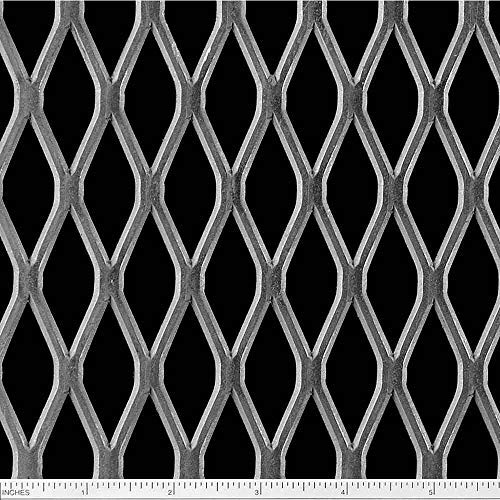
Flattened 3/4 #9 Steel, 24 x 48 in with Skewers pairs a 24-by-48-inch flattened expanded-metal sheet with two stainless-steel BBQ skewers, making the included accessories its key distinction. The sheet is identified as 3/4 #9 and 0.110 inch thick, and the product notes that its openings pass air, light or liquid. One sheet provides less total material than the two-sheet options.
Bottom line: Choose this when a single 24-by-48-inch panel and included skewers fit the project.
How to choose expanded metal for a grill grate
Start with the frame’s inside dimensions and the sheet’s opening size, not just its outside measurements. Expanded metal is slit and stretched into diamond-shaped openings; flattened mesh has been rolled flatter, while raised mesh leaves the strands uneven. Opening size and strand width affect airflow, rigidity and how readily small food can slip through. The 0.6-by-1.2-inch openings on 11-Gauge Flattened Steel, 48 x 36 in, 2-Pack are relatively large, so consider whether the food you cook needs a finer support surface. Also verify the steel finish: bare or coated steel may need different preparation, and a generic steel label alone does not establish that a panel is suitable for direct food contact.
Expanded metal sheet sizing and support
Measure the grate frame at its narrowest points and allow for the way the sheet will sit on its supports. A large sheet can be cut down, but a finished panel needs support around its perimeter and often intermediate rails to limit sagging; spacing depends on the sheet thickness, opening pattern and load. For a small patch, a 24-by-12-inch panel may be easier to position than a 48-by-36-inch panel. Expanded-metal openings are directional, so check the diamond orientation against the frame and the direction of the load before cutting. Compare the dimensions with the actual clear area you need, rather than assuming a nominal sheet size equals usable cooking area.
Steel finish, heat and food-contact checks
Before cooking on steel mesh, determine whether the surface is bare, plated, painted or otherwise coated; do not burn off an unknown coating over food. Carbon steel can rust when exposed to moisture, so dry it after washing and store it away from rain. Cut expanded-metal edges can be sharp, and trimming creates burrs; wear gloves and eye protection, then smooth and inspect every cut edge before handling or cooking. A stainless-steel accessory does not mean the expanded sheet is stainless steel. Confirm the sheet material and finish are appropriate for the intended cooking surface, and avoid relying on broad heat-resistance language as a substitute for a suitable finish.
Common expanded-metal grate mistakes
The most common mistake is choosing by gauge alone: gauge numbering is not a universal thickness conversion across every metal product, so compare the inch thickness where available. Another mistake is overlooking the diamonds; openings determine whether narrow items need a separate finer rack or another cooking surface. Make a cardboard template of the grate opening before cutting, and account for the frame overlap so the sheet cannot shift or fall through. Finally, do not leave freshly cut mesh edges exposed where hands or food can snag. If the sheet has a black or other treated finish, verify its intended use before exposing it to grill heat.
Frequently Asked Questions
What mesh opening size works for grill food?
There is no single opening size for every food; narrow items such as sliced vegetables need finer support than large cuts of meat. 11-Gauge Flattened Steel, 48 x 36 in, 2-Pack gives 0.6-by-1.2-inch diamond openings, so use a finer cooking surface or basket when food can pass through.
Should expanded metal be flattened for grilling?
Flattened expanded metal has a more even surface than raised mesh, which can make it easier to position food and fit a frame. Flattening does not establish food-contact suitability, so check the steel finish before using it over heat.
How do I keep a steel grill grate from rusting?
Dry carbon steel promptly after washing and store it in a dry place; moisture left on the surface can lead to rust. If a panel has a coating, confirm that it is intended for cooking before applying heat.
Can I cut expanded metal to fit a grill?
Yes, expanded-metal sheets can be trimmed to a frame, but the edges can be sharp and may leave burrs. Wear gloves and eye protection while cutting, then deburr and secure the cut panel so it cannot shift.
Does a thicker expanded-metal sheet always make a better grate?
Thickness is only one factor; opening size, strand pattern, support spacing and frame fit also affect how a grate performs. Compare the inch thickness and provide perimeter support rather than selecting by gauge number alone.