
Fiberglass Reinforcement for Concrete: 5 Options Compared

For general mortar and concrete projects, ZENFUN 3/4-Inch Fiberglass, 4.4 lb offers 3/4-inch strands in a 4.4-pound pack, making length and amount the key starting points. Choose another option if you need a larger supply, a smaller pack, or shorter fibers.
Chopped fiberglass is mixed into cement-based material to help limit cracking; it does not replace reinforcement designed to carry structural loads.
We earn a commission if you buy through links on this page. As an Amazon Associate I earn from qualifying purchases. Products are compared on manufacturer specifications, not hands-on testing.
- Best overall: ZENFUN 3/4-Inch Fiberglass, 4.4 lb – A 4.4-pound pack of 3/4-inch strands suits a range of small-to-medium projects.
- Best for larger batches: BOHUIZ 3/4-Inch Fiberglass, 6.6 lb – The 6.6-pound pack provides more of the same 3/4-inch strand length.
- Best for shorter fibers: KEPYDRMTF Fiberglass Additive, 1 lb – The 1/4-inch strands are shorter than the 3/4-inch options.
| Product | Best for | Strand length (in) | Package weight | Material | Shop |
|---|---|---|---|---|---|
| ZENFUN 3/4-Inch Fiberglass, 4.4 lb | General projects | 0.75 in | 4.4 lb | Glass fiber | Check Price on Amazon |
| BOHUIZ 3/4-Inch Fiberglass, 6.6 lb | Larger quantities | 0.75 in | 6.6 lb | Glass fiber | Check Price on Amazon |
| KEPYDRMTF Fiberglass Additive, 1 lb | Small batches | — | 1 lb | Fiberglass | Check Price on Amazon |
| UPTTHOW 19 mm Fiberglass, 1 lb | Wet-area mixes | 0.75 in | 1 lb | Fiberglass | Check Price on Amazon |
| UCEHIPAW Chopped Fiberglass, 11 lb | Shorter strands | 0.25 in | 11 lb | Fiberglass | Check Price on Amazon |
Fiberglass Reinforcement for Concrete
Compare strand length and package weight first, then confirm that the fiber is suitable for your cement-based mix.
ZENFUN 3/4-Inch Fiberglass, 4.4 lb

ZENFUN 3/4-Inch Fiberglass, 4.4 lb combines 3/4-inch strands with a 4.4-pound package, a middle option between the smaller 1-pound pack and larger quantities here. The product is intended for mortar and concrete, including walls and floors. The use includes mixing the strands with sand and cement; add them in a way that disperses the fibers rather than leaving clumps. The maker says the fibers help reduce cracking and seepage. This pack may not suit a project requiring a documented dosage or structural reinforcement, so confirm compatibility and mix requirements for the job.
Bottom line: Choose this if you want 3/4-inch strands in a moderate package size.
BOHUIZ 3/4-Inch Fiberglass, 6.6 lb

BOHUIZ 3/4-Inch Fiberglass, 6.6 lb provides the largest package among the 3/4-inch options, with 6.6 pounds of white fiberglass strands. That quantity can make sense when one 4.4-pound pack would not cover the planned work, provided the mix calls for this fiber type and amount. The product is designed for concrete and mortar; the maker says it supports crack resistance, impact resistance, and reduced penetration. It is less suitable when a small batch or a specified fiber dosage is the priority.
Bottom line: Pick this for a project needing more 3/4-inch fiber than a 4.4-pound pack provides.
KEPYDRMTF Fiberglass Additive, 1 lb

KEPYDRMTF Fiberglass Additive, 1 lb is the smallest package in this group at 1 pound, making it the practical choice when a larger sack would be unnecessary. It is presented for cement, mortar, and concrete, including countertop forms. The maker claims improved tensile and flexural performance, but the specifications provide no fiber length or dosage for calculating how much to add to a batch. That missing information matters especially for countertops or other work where appearance and strength requirements are specific. Confirm the fiber dimensions and mix compatibility before choosing it for a measured application.
Bottom line: Choose this for a small project where a 1-pound package is more useful than bulk supply.
UPTTHOW 19 mm Fiberglass, 1 lb
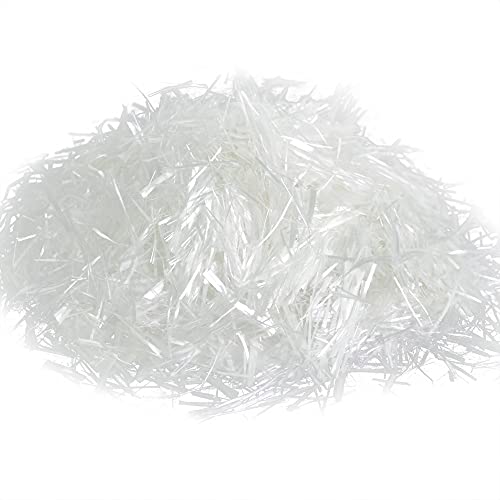
UPTTHOW 19 mm Fiberglass, 1 lb pairs a 19 mm strand length with a 1-pound pack and is described for cement mortar, including basements, ponds, and exterior walls. That makes it distinct from the larger packages and from the shorter-fiber option. The maker says the fibers help inhibit fine cracks and penetration. Its use guidance calls for mixing the fiber evenly with sand and cement before adding water. The specifications offer other length and weight options, but this entry is specifically 19 mm and 1 pound. It is not a substitute for a waterproofing system where the project requires one.
Bottom line: Choose this when a 19 mm fiber and a 1-pound amount fit the planned mortar work.
UCEHIPAW Chopped Fiberglass, 11 lb

UCEHIPAW Chopped Fiberglass, 11 lb is the shorter-strand, largest-package choice: the product name gives 1/4-inch (6 mm) fibers and an 11-pound pack. It is described for cement and mortar reinforcement in walls, gardens, and floors. The maker says the fibers are intended to help resist cracking and seepage. Confirm the exact fiber length and required amount before batching, especially since the product name also mentions 9 mm.
Bottom line: Pick this when you need a large amount of shorter chopped fiber.
How to choose fiberglass reinforcement for concrete
Choose by strand length, project quantity, and the mix requirements—not by package weight alone. These products range from 1 to 11 pounds, and strand lengths range from 1/4 inch to 3/4 inch where specified. Fiber dosage is usually calculated by volume of concrete, so a sack’s weight does not tell you how much belongs in a batch. Confirm the intended dosage and compatibility with the cement product before mixing. For structural work, use reinforcement specified by the design; dispersed fibers should not be treated as a replacement for rebar or welded wire reinforcement unless the design explicitly allows it. If the project needs a documented performance value or dosage, choose a fiber with that specification available.
Mixing fiberglass into mortar and concrete
Disperse chopped fiber throughout the dry ingredients or mix using the product’s recommended sequence; concentrated clumps can leave unevenly reinforced areas and visible fiber balls. Add fibers gradually while the mixer is moving, rather than dumping the full amount into one spot. Concrete water content also matters: adding extra water to improve flow can lower strength, so use an appropriate plasticizer instead when the mix design permits. Fiber length and mixing equipment affect dispersion, particularly in small batches. Wear gloves, eye protection, and a dust mask when handling loose fibers, and avoid breathing dust or rubbing fibers into skin. Keep fibers out of drains and clean spills without dry sweeping.
Fiber reinforcement versus structural reinforcement
Chopped fibers are distributed through the cement mix, while rebar and welded wire reinforcement are placed in planned locations to resist designed loads. The two approaches serve different purposes: fibers can help control certain small cracks, but they do not automatically supply the tensile capacity or crack-bridging behavior of steel reinforcement. Concrete also shrinks as it cures; joints, base preparation, curing, and mix proportions remain important to crack control. Use engineered plans for slabs, retaining walls, load-bearing members, and other structural applications. For a nonstructural mortar or patch, match fiber type and dose to the cement product and conditions rather than assuming that adding more fiber will improve the result.
Check fiber length and cement compatibility
Fiber dimensions need to suit both the mix and the finish. Longer 3/4-inch strands and shorter 1/4-inch strands are not interchangeable in every application; long fibers may be harder to spread evenly in a small or fine-textured batch. Fiberglass used in cement should be intended for the alkaline environment of cement, so confirm that compatibility with the manufacturer before using a product whose fiber grade is not identified. For exposed concrete, make a small sample to check the surface finish and whether fibers are visible. Follow the project’s curing method and protect fresh concrete from rapid drying; fibers do not eliminate the need for proper curing or control joints.
Frequently Asked Questions
Can fiberglass replace rebar in a concrete slab?
No, not by default. Chopped fibers are dispersed through the mix, whereas rebar is positioned to meet a structural design; use the specified reinforcement for any load-bearing slab.
How much fiberglass should I add to concrete?
Use the fiber maker’s dosage per volume of concrete, not the package weight as a mixing measure.
When should concrete fibers be added to a mix?
Add fibers gradually while the mixer is running so they disperse instead of forming clumps. Follow the fiber’s mixing sequence, since batch size and equipment affect dispersion.
Are all fiberglass fibers suitable for cement?
No; cement is highly alkaline, so the glass fiber grade needs to be compatible with that environment. Confirm cement suitability and dosage before mixing.
Do concrete fibers prevent every crack?
No. Fibers may help control some crack formation, but they do not prevent all cracking caused by shrinkage, poor curing, weak base preparation, or missing joints. Use proper curing and joint layout as well.