
Finger Protection for Cutting: Guards Compared by Fit

For kitchen slicing, SLXDEX Adjustable Stainless-Steel Finger Guard is the closest match because its adjustable stainless-steel ring is designed as a knife guide; finger protection for cutting also includes sleeves for broader tasks.
Choose a cut-resistant cot instead if you need a fabric cover for gardening or crafts, and choose CHENGU 9-Piece Finger Guard Set if you want several guide pieces plus an onion holder.
We earn a commission if you buy through links on this page. As an Amazon Associate I earn from qualifying purchases. Products are compared on manufacturer specifications, not hands-on testing.
- Best overall: SLXDEX Adjustable Stainless-Steel Finger Guard – Its adjustable open ring and stainless-steel guard are made for guiding fingers while chopping.
- Best for multi-task coverage: Honoson Reusable Cut-Resistant Finger Cots – Twenty reusable 2.2-inch HPPE finger cots suit kitchen, gardening and craft tasks.
- Best for a prep set: CHENGU 9-Piece Finger Guard Set – The nine-piece set includes different guards, a vegetable slicing guide and an onion holder.
| Product | Best for | Style | Material | Quantity | Shop |
|---|---|---|---|---|---|
| SLXDEX Adjustable Stainless-Steel Finger Guard | Kitchen slicing | Adjustable open ring | Stainless steel | 2 pieces | Check Price on Amazon |
| Honoson Reusable Cut-Resistant Finger Cots | Multi-task coverage | Finger cots | HPPE | 20 pieces | Check Price on Amazon |
| CHENGU 9-Piece Finger Guard Set | Multiple prep tools | Mixed guard set | Stainless steel | 9 pieces | Check Price on Amazon |
| BlingKingdom Cut-Resistant Finger Covers | Thumb protection | Finger sleeves | HPPE and fabric | 10 pieces | Check Price on Amazon |
Finger Protection for Cutting Compared
Choose between a rigid knife guide and flexible finger cots based on the task and coverage you need.
SLXDEX Adjustable Stainless-Steel Finger Guard
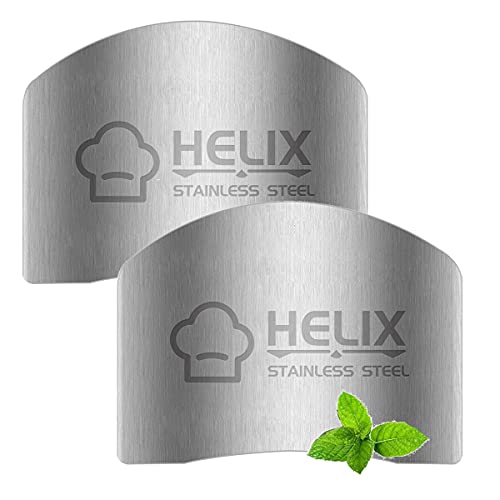
Unlike fabric finger cots, this guard places a rigid stainless-steel surface between fingers and the knife during kitchen prep. The two-piece set has a 6.5 cm size and an open ring that adjusts around a finger, making it a direct match for someone seeking a guide while slicing or chopping. Its single-finger design is compact, but it does not provide the broad fingertip coverage of a sleeve; cooks who need protection for gardening or varied craft work may prefer a cut-resistant cot.
Bottom line: Pick this for a reusable metal guide during kitchen chopping.
Honoson Reusable Cut-Resistant Finger Cots

These flexible, sewn HPPE cots differ from rigid metal guides by covering individual fingers for a range of tasks. Each cot measures 2.2 inches, and the 20-piece set is reusable; the maker says the material has five levels of cut resistance. That makes the set useful for buyers who want spare sleeves for kitchen work, gardening, carving or DIY crafts. Unlike an adjustable steel guard, a cot covers the finger rather than offering a hard guide surface, so it may not suit someone specifically seeking a slicing guide.
Bottom line: Choose these if you need multiple reusable sleeves across varied tasks.
CHENGU 9-Piece Finger Guard Set
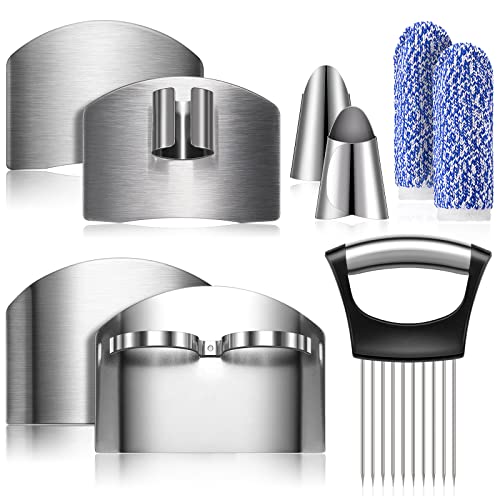
Where SLXDEX Adjustable Stainless-Steel Finger Guard is a single style of adjustable ring, this nine-piece set combines different finger guards with a vegetable slicing guide and an onion holder. It includes two-finger and single-finger protectors in different sizes, so it suits cooks who want several forms of hand positioning for food prep or replacements to share. The set is bulkier than a lone guard, and its mixed pieces may be more than needed if you only want one simple finger ring for routine chopping.
Bottom line: Pick this for a varied kitchen-prep set rather than one guard.
BlingKingdom Cut-Resistant Finger Covers

These 2.2-inch sleeves are specifically sized for thumb use, distinguishing them from the more general finger-cot set in Honoson Reusable Cut-Resistant Finger Cots. The maker says the HPPE-and-fabric covers are grade 5 cut-resistant, breathable, washable and reusable, with a 5.2 cm circumference. Their ten-piece count suits buyers looking for thumb covers for kitchen, gardening, carving or craft work. They are soft sleeves rather than a rigid knife guide, so someone who wants a metal surface to help guide a blade should choose a guard style instead.
Bottom line: Choose these when thumb-sized sleeves are the priority.
How to choose finger protection for cutting
Choose a rigid guard for blade-guiding during kitchen prep and a sleeve when you want flexible coverage for several hand tasks. Metal guards create a physical barrier and can help keep fingertips curled behind the guide; cut-resistant textiles add a layer over the finger but do not make a hand cut-proof. A useful decision rule is to choose a cot if you need the same style for gardening or crafts, and a metal guide if your main task is repetitive slicing at a cutting board. The products here include stainless-steel guards and HPPE-based sleeves, so match the form to the work rather than comparing material names alone. Keep fingers behind any guard and use a stable board; protective gear does not replace careful knife handling.
Finger guard sizes and fit
Fit matters because a loose guide can shift and a tight sleeve can restrict movement. The adjustable ring style has an open band that can be resized, while the textile cot examples measure 2.2 inches long; the thumb covers specify a 5.2 cm circumference. A buyer with a smaller or larger finger should prioritize an adjustable ring or verify the sleeve’s fit before ordering. For metal prep guards, the CHENGU set provides two-finger and single-finger forms, with dimensions of 76 x 55 mm and 63 x 55 mm. Keep the guard clean and dry after food prep, and inspect seams or edges before use; replace a sleeve or guard that is damaged or no longer stays securely in place.
Finger guards and cut-resistant cots compared
Finger guards and cut-resistant cots solve related but different problems: guides provide a firmer surface during slicing, while cots cover fingers for varied work. Compare the intended task before choosing a set.
| Style | Best suited to | Trade-off |
|---|---|---|
| Adjustable metal ring | Knife-guided kitchen slicing | Limited to the guarded finger |
| Multi-piece prep set | Different food-prep holds | More pieces to keep together |
| Cut-resistant finger cot | Kitchen, garden and craft tasks | Flexible cover, not a rigid guide |
Textile cut resistance is not the same as puncture protection or immunity to cuts. Use sleeves only for tasks within their intended scope, and do not put a covered hand near powered cutting equipment unless the tool and safety guidance specifically allow it.
Using and caring for cutting finger protection
Use finger protection as a backup layer, not as permission to move faster or place fingers near a blade. A curled “claw” grip keeps fingertips behind the knuckles, while a stable board and a sharp, controlled knife reduce slipping during food prep. Wash hands and food-contact guards after kitchen use, then dry metal pieces to limit moisture buildup and inspect adjustable joints for movement. Reusable textile sleeves should be cleaned and fully dried between uses; follow the maker’s care directions when available. Do not use damaged, stretched or loose-fitting protection, and keep sleeves away from heat and powered blades unless expressly rated for that use.
Frequently Asked Questions
Can finger cots stop every knife cut?
No, cut-resistant sleeves reduce exposure but do not make fingers cut-proof or protect against every puncture. Keep the guarded hand behind the knife edge and use a controlled grip.
How do I hold food while using a knife guard?
Use a curled claw grip, with fingertips tucked behind the knuckles and the guard facing the blade. Keep the cutting board stable so food does not slide as you slice.
Are metal finger guards adjustable for different fingers?
An open-ring design can be adjusted to fit a range of finger sizes, but it still needs to sit securely without pinching or shifting. Try the fit with the knife set down before beginning prep.
Can reusable finger sleeves be used for gardening?
Some cut-resistant sleeves are intended for gardening as well as kitchen and craft tasks. A sleeve’s cut-resistance claim does not establish puncture protection, so avoid thorn contact and sharp tools beyond its intended use.
How should I clean finger protection after cooking?
Wash food-contact guards after use and dry metal pieces thoroughly to reduce moisture buildup. Clean reusable textile sleeves according to their maker’s care directions and let them dry completely before wearing.