
Flower Patches for Clothes: 3 Sets Compared by Style

For flower patches for clothes, Daisy Iron-On Patches, 32-Piece Set is the best fit if you want daisy designs in four sizes, from 0.79 to 1.97 inches. Choose another set if you need mixed motifs, a larger stated patch size, or more pieces for a multi-patch project.
Iron-on appliques are fabric decorations with heat-activated adhesive; some can also be sewn on. For repairs, check that a patch fully covers the damaged area and choose a secure attachment method for the garment fabric.
We earn a commission if you buy through links on this page. As an Amazon Associate I earn from qualifying purchases. Products are compared on manufacturer specifications, not hands-on testing.
- Best overall: Daisy Iron-On Patches, 32-Piece Set – Offers daisy embroidery in four stated sizes from 0.79 to 1.97 inches.
- Best for distinct flowers: Colorful Embroidered Flowers, 16-Piece Set – Includes 16 unique floral designs, each about 2.5 to 2.8 inches.
- Best for color selection: Flower Iron-On Patches, 36-Piece Set – Provides 36 flower patches in nine colors and four sizes.
| Product | Best for | Piece count | Designs | Patch size | Shop |
|---|---|---|---|---|---|
| Daisy Iron-On Patches, 32-Piece Set | Daisy projects | 32 | Daisies | 0.79–1.97 in | Check Price on Amazon |
| Colorful Embroidered Flowers, 16-Piece Set | Large flower accents | 16 | 16 flower designs | 2.5–2.8 in | Check Price on Amazon |
| Flower Iron-On Patches, 36-Piece Set | Color variety | 36 | Flowers | Four sizes; up to 1.97 in | Check Price on Amazon |
Flower Patches for Clothes Compared
Compare the motifs and sizes to match a patch set to your garment and project.
Daisy Iron-On Patches, 32-Piece Set
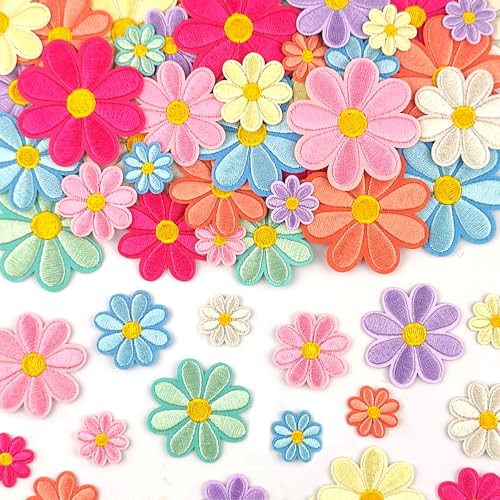
Four stated sizes make this set a fit for layouts that mix small and larger daisies. The 32 embroidered patches have laser-cut edges and a heat-resistant adhesive backing, and the maker gives an iron-on method using a covered patch, no steam, and a 370–390°F setting. That temperature range is high, so check the garment’s care label and fabric suitability before applying heat. The set is aimed at clothing and accessories such as denim, hats, bags, and shoes; it may not suit a buyer who wants assorted flower shapes rather than daisies.
Bottom line: Pick this set for daisy designs that need several patch sizes.
Colorful Embroidered Flowers, 16-Piece Set

At about 2.5 to 2.8 inches each, these 16 distinct flowers are larger than the patches in the daisy set, making them suitable as visible single accents. The set uses layered stitching and tightly woven polyester fabric with reinforced stitching; its name says it can be sewn on or ironed on. It is a focused choice for flower-only decoration on jeans, shirts, backpacks, or vests. The larger stated size leaves less room for dense arrangements, so choose smaller appliques if you plan to cluster many motifs on a narrow area.
Bottom line: Choose these for prominent individual floral accents.
Flower Iron-On Patches, 36-Piece Set

Nine colors distinguish this 36-piece flower set, while four sizes allow some variation in a coordinated floral layout. The largest patch dimension is 1.97 inches, useful for adding accents to tote bags, hats, or clothes without relying on a single large applique. A shopper needing large, distinct flowers may prefer the 2.5-to-2.8-inch designs in another set.
Bottom line: Pick this set when color choice and several sizes matter most.
How to choose flower patches for clothes
Match the patch size and attachment method to the fabric and the area you want to decorate. Small motifs under 1 inch work for compact accents, while patches around 2 inches or larger are easier to see on a jacket or bag. For a repair, measure the hole or worn area and leave an intact margin around it; a patch that only matches the opening can leave weak edges exposed. Iron-on adhesive needs heat, so check the garment care label first. If the fabric cannot take the required heat, a sew-on method is a better option when the patch supports it.
Embroidery thickness also matters: raised stitching can feel bulky on thin shirts or sit awkwardly over seams. Avoid placing appliques across closures, pockets, or high-flex areas where repeated movement can stress the edge.
Iron-on versus sew-on flower appliques
Iron-on patches use heat-activated adhesive, while sew-on patches attach through stitches around the edge or through the embroidered base. Iron-on application is quicker, but heat-sensitive synthetics and coated fabrics can be damaged by a hot iron. Sewing takes longer and requires access to the back of the fabric, but avoids applying direct heat. Some sets offer both attachment options; others emphasize iron-on use, so select a method the patch is designed to support.
For garments that are washed often, secure the full perimeter rather than relying on a few stitches or a small bonded area. Let adhesive cool fully before flexing the cloth, and test heat on a hidden spot when the care label permits ironing.
Patch size and placement guide
Use the patch footprint, not just its motif, to decide where it fits. Leave about 0.25 inch of clear fabric around a patch when practical, especially near a seam or garment edge, so the border can lie flat. A small patch can disappear visually on a broad denim panel, while a large flower may bunch on a narrow sleeve or cap panel. Measure the target area before arranging multiple appliques.
The chart gives a practical starting point for planning; placement depends on the usable flat fabric area and whether the garment stretches.
| Project area | Useful patch scale | Planning note |
|---|---|---|
| Small accent | Under 1 in | Works for compact spaces |
| Visible single motif | About 2 in | Measure clearance from seams |
| Large floral accent | 2.5 in or larger | Needs a broad, flat area |
Applying and caring for decorated clothes
Heat settings and application time vary by adhesive and fabric, so do not assume one patch’s method works for another. For the daisy set, the maker specifies 370–390°F, no steam, and ironing through a cloth for 20–30 seconds; that is hot enough to warrant checking fabric compatibility first. Keep the iron moving only as directed by the maker, and avoid touching the adhesive or hot patch while it cools.
After application, inspect the edges before washing. If an edge lifts, reinforce it with stitching when the patch supports sewing. Turn decorated garments inside out for laundering and avoid aggressive scrubbing over embroidered edges to reduce snagging.
Frequently Asked Questions
Can flower patches go on stretchy clothing?
They can, but stretch can pull at the patch edge and adhesive bond. On a stretchy knit, use a sew-on patch or stitch around an iron-on patch if the patch supports sewing.
How much larger should a repair patch be?
Aim for at least 0.25 inch of intact fabric beyond the damaged area on every side when the patch shape allows. A patch that barely covers a hole can leave weakened fabric exposed at its edge.
Can I use steam when applying an iron-on patch?
The daisy set’s maker specifies no steam and a covered application at 370–390°F for 20–30 seconds. Methods differ by adhesive, so use the patch-specific method and verify the garment can tolerate that heat.
How should I wash clothes with embroidered patches?
Turn the garment inside out and use a gentle wash cycle to reduce abrasion on embroidered edges. Check the perimeter after washing and reinforce any lifting edge before wearing or laundering again.
Can I sew a patch that has iron-on adhesive?
Some patches support both sewing and ironing, including sets here identified for both methods. Use small, even stitches around the border and avoid pulling the fabric so tightly that it puckers.