
FreeStyle Libre 3 Sensor Covers: 5 Options Compared

AZEN Transparent Sensor Covers, 100-Pack suits shoppers who want a clear adhesive cover in a 100-pack. Choose a different option if you prefer cotton, a hard cap, or an overpatch designed to stay on for more than 15 days.
Sensor covers are adhesive patches that help hold a continuous glucose monitor (CGM) sensor in place; some add a cap to shield it from bumps.
We earn a commission if you buy through links on this page. As an Amazon Associate I earn from qualifying purchases. Products are compared on manufacturer specifications, not hands-on testing.
- Best overall: AZEN Transparent Sensor Covers, 100-Pack – The 100-pack provides transparent adhesive covers made for Libre 3.
- Best for cotton: Ceeport Cotton Adhesive Patches, 30-Pack – The patch uses cotton and has no glue in the center.
- Best for bump protection: Amolyfe Hard-Cap Covers, 20-Pack – A hard cap adds a physical layer over the sensor.
- Best for extended wear: Not Just a Patch Air, Beige, 20-Pack – The maker says the overpatch is designed to hold for 15+ days.
| Product | Best for | Pack size | Material or style | Added protection | Shop |
|---|---|---|---|---|---|
| AZEN Transparent Sensor Covers, 100-Pack | Clear adhesive patches | 100 covers | Transparent adhesive | — | Check Price on Amazon |
| Ceeport Cotton Adhesive Patches, 30-Pack | Cotton patch feel | 30 patches | Natural cotton | No-glue center | Check Price on Amazon |
| Amolyfe Hard-Cap Covers, 20-Pack | Bump protection | 20 patches + 1 cap | Adhesive patch | Hard cap | Check Price on Amazon |
| Not Just a Patch Air, Beige, 20-Pack | Long wear claim | 20 patches | Non-woven micropore | — | Check Price on Amazon |
| HECHUAN Transparent Overpatches, 50-Pack | Center without adhesive | 50 patches | Transparent adhesive | No-glue center | Check Price on Amazon |
FreeStyle Libre 3 Sensor Covers Compared
Compare pack size, patch construction and added protection to find the cover that fits your priorities.
AZEN Transparent Sensor Covers, 100-Pack

AZEN Transparent Sensor Covers, 100-Pack stands out for its 100-count pack of transparent adhesive covers made for Libre 3. The maker says the patches are waterproof and breathable, and identifies the material as latex-free and hypoallergenic. The clear design keeps the patch visually understated, while the larger pack suits anyone who wants multiple replacements on hand. The limitation is that this is an adhesive-only cover, so it does not add a hard shell over the sensor; choose another style if a physical barrier against bumps is your priority.
Bottom line: Choose this if you want a clear, adhesive-only cover in a 100-pack.
Ceeport Cotton Adhesive Patches, 30-Pack

Ceeport Cotton Adhesive Patches, 30-Pack differs from the transparent options with a tan natural-cotton patch and a no-glue center. The maker says the patch is waterproof and sweatproof, dries quickly, and uses latex-free, hypoallergenic adhesive. Its compatibility includes Libre 1, 2, 3 and Plus, along with select Enlite and Guardian sensors, so it may suit someone comparing patches across devices. The 30-count pack is smaller than the 50- and 100-count choices, and the tan color is less discreet on some skin tones than a transparent cover.
Bottom line: Pick this if a cotton patch and glue-free center matter most.
Amolyfe Hard-Cap Covers, 20-Pack
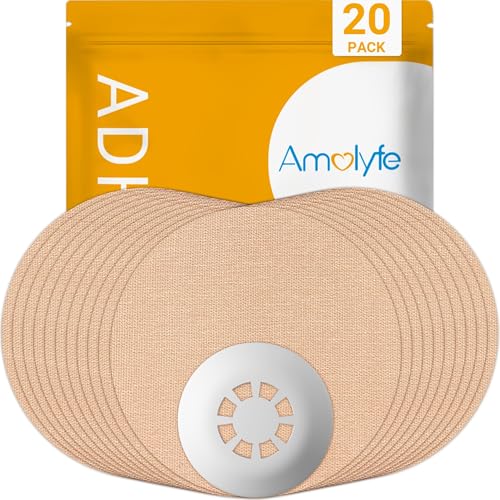
Amolyfe Hard-Cap Covers, 20-Pack is the only option here that pairs adhesive patches with a hard cap, making it the distinct choice for shoppers seeking a physical shield over the sensor. The maker says the patches are waterproof, breathable, latex-free and made with medical-grade adhesive; it also says application can be done one-handed. The pack includes 20 patches and one hardshell. A cap adds bulk compared with a thin overpatch, so this style may be less appealing if you prefer a low-profile cover that simply adheres around the sensor.
Bottom line: Choose this if protecting the sensor from bumps is your main concern.
Not Just a Patch Air, Beige, 20-Pack

Not Just a Patch Air, Beige, 20-Pack is a thin, flexible beige overpatch with a non-stick center and edge-to-edge adhesive, rather than a hard cap or transparent tape. The maker says the design is intended for Libre 3 and Libre 3 Plus and is designed to hold for 15+ days through workouts, sweat and swimming. That stated wear duration makes this option notable for shoppers seeking longer-lasting coverage. It remains an adhesive overpatch, not a shell; anyone prioritizing impact protection should consider the cap style instead.
Bottom line: Consider this if you prefer a flexible overpatch with a 15+ day hold.
HECHUAN Transparent Overpatches, 50-Pack

HECHUAN Transparent Overpatches, 50-Pack offers a 50-count pack of transparent overpatches with no adhesive in the center, a useful distinction for people who want the patch to surround rather than stick over the sensor area. The maker says the covers are designed for Libre 3 Plus and claims they last up to 14 days without affecting sensor readings. The product name also references Libre 3, but the feature emphasizes Libre 3 Plus, so confirm compatibility with your specific sensor before choosing this option.
Bottom line: Pick this if you want a transparent patch with a no-glue center and 50 in the pack.
How to Choose a Libre 3 Sensor Cover
Start with the kind of protection you want: an adhesive overpatch holds around the sensor, while a hard cap adds a physical cover. Compare pack size next, since these options range from 20 to 100 patches. Then consider the patch construction: transparent adhesive, tan cotton, or non-woven material each has a different look and feel. Adhesive wear claims also differ; some makers describe a 14-day or longer hold, but that is not a guarantee for every person or activity. If you want extra impact protection, choose the hard-cap style; if low profile and flexibility matter more, choose an adhesive-only patch. Match the sensor model as well, especially when a cover also names Libre 3 Plus.
Libre 3 Sensor Fit and Wear Timing
Libre 3 sensors are designed for up to 14 days of wear, while Libre 3 Plus is designed for up to 15 days. An overpatch advertised for 15+ days may outlast the sensor wear period, but its claimed duration does not extend the sensor’s own service life. Choose a cover explicitly compatible with your sensor model, and make sure the patch layout leaves the sensor’s opening and surrounding skin unobstructed. Sweat, water exposure, friction from clothing and skin preparation can affect how well adhesive holds. A cover that starts peeling or causes irritation is a reason to reassess the patch rather than adding layers indiscriminately.
Adhesive Patches Compared With Hard Caps
Adhesive patches primarily provide a broader surface to help hold a sensor in place; a hard cap also provides a physical layer over it. The practical choice depends on the problem you are trying to solve: choose a patch for attachment support and choose a cap if bumps or snags are a concern. None of these covers changes the sensor’s specified wear period or replaces its instructions for placement and use. Patch labels such as waterproof or breathable are maker claims and do not mean every application will stay secure through every activity. Keep the sensor’s approved placement and access needs in mind when choosing a cover.
| Need | Cover style | Trade-off |
|---|---|---|
| Clear, adhesive-only coverage | Transparent patch | No hard impact barrier |
| Physical bump shield | Patch with hard cap | More bulk than a patch alone |
| Patch without center adhesive | No-glue-center overpatch | Compatibility varies by named sensor |
Applying and Removing Sensor Covers
Clean, dry skin gives an adhesive patch a better starting surface than lotion-covered or damp skin. Avoid placing the cover where clothing repeatedly rubs the sensor, and smooth the adhesive down without stretching the skin. Remove an overpatch slowly, supporting the skin and easing the adhesive back rather than pulling it sharply upward. If the skin becomes irritated, stop using that patch and ask a healthcare professional about suitable alternatives. People with sensitive skin should pay attention to adhesive materials and remove any cover that causes discomfort. Do not let a cover interfere with sensor placement or access to the device’s usual functions.
Frequently Asked Questions
How long should a Libre 3 sensor cover last?
Libre 3 is designed for up to 14 days of sensor wear, so a cover only needs to last through the sensor’s intended use. Individual adhesive hold can vary with sweat, friction, skin preparation and activity.
Can Libre 3 sensor covers get wet?
Some covers are described by their makers as waterproof, but that claim does not guarantee that every patch will stay attached during swimming or showering. Dry skin before application and check the cover after water exposure for lifted edges.
What is the difference between a sensor patch and cap?
An adhesive patch holds around the sensor, while a hard cap adds a physical layer over it. Choose a cap when bump protection is the priority and an adhesive-only cover when a lower-profile style matters more.
Can I use a Libre 3 Plus cover on Libre 3?
Compatibility is product-specific: some covers name both Libre 3 and Libre 3 Plus, while others emphasize one model. Confirm the cover’s fit for your exact sensor before applying it.
How should I remove an adhesive sensor cover?
Peel the cover slowly while supporting the nearby skin, easing the adhesive back instead of pulling sharply upward. Stop using a patch if it irritates your skin and consult a healthcare professional about alternatives.