
Respirators for Epoxy Resin: 5 Options Compared

No specific respirator model is named in “respirator for epoxy resin”; among these choices, BEESAFETY RD-518 Half Face Respirator Kit pairs A1 organic vapor filters with P2 dust filters and safety goggles. Choose another option if you need a different kit configuration, but first verify that its respirator and filters are approved for your exact task and hazards.
We earn a commission if you buy through links on this page. As an Amazon Associate I earn from qualifying purchases. Products are compared on manufacturer specifications, not hands-on testing.
- Best overall: BEESAFETY RD-518 Half Face Respirator Kit – Includes two A1 organic vapor cartridges, eight P2 dust filters and safety goggles.
- Best for a gray mask kit: BEESAFETY RD-510 Half Face Respirator Kit – Pairs two A1 organic vapor filters with eight P2 dust replacement filters.
- Best for a two-count pack: Blue Half Facepiece, Two Count – The maker specifies a two count pack of blue half facepieces.
| Product | Best for | Filter setup | Eye protection | Pack count | Shop |
|---|---|---|---|---|---|
| BEESAFETY RD-518 Half Face Respirator Kit | Vapor and dust | 2 A1 vapor; 8 P2 dust filters | Safety goggles included | 1 count | Check Price on Amazon |
| BEESAFETY RD-510 Half Face Respirator Kit | Gray filter kit | 2 A1 vapor; 8 P2 dust filters | — | 1 count | Check Price on Amazon |
| Reusable Dual-Filter Respirator Set | General DIY tasks | Activated carbon and dust cotton | — | 1 count | Check Price on Amazon |
| Blue Half Facepiece with Goggle | Goggle bundle | Double filter system; filter type — | Goggle included | 2 count | Check Price on Amazon |
| Blue Half Facepiece, Two Count | Two-piece pack | Double filter system; filter type — | — | 2 count | Check Price on Amazon |
Respirators for Epoxy Resin Work
Compare the filter configurations and included gear, then confirm that the exact respirator and cartridges match the hazards in your work area.
BEESAFETY RD-518 Half Face Respirator Kit
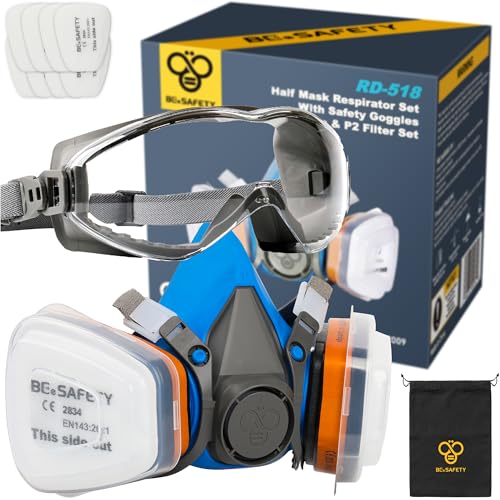
BEESAFETY RD-518 Half Face Respirator Kit is the only kit here whose contents explicitly combine A1 organic vapor cartridges, P2 dust filters and safety goggles. The reusable half face mask kit includes two A1 cartridges and eight replacement P2 filters, making its included eye protection a useful distinction for work that can also send particles toward the eyes. The maker describes the kit for resin work, painting and sanding. The limitation is that its maker does not establish approval for a particular epoxy formulation or exposure level; verify the respirator and cartridge approvals against the product SDS and task.
Bottom line: Choose it if you want goggles and both vapor and particle filters in one kit.
BEESAFETY RD-510 Half Face Respirator Kit
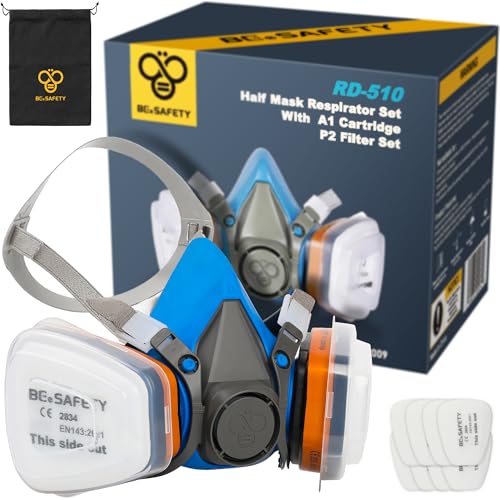
BEESAFETY RD-510 Half Face Respirator Kit offers the same A1 organic vapor and P2 particle-filter quantities as the other BEESAFETY kit, but the mask is gray and its contents focus on the respirator and replacement filters. The maker says it is intended to reduce exposure to solvent and resin fumes as well as dust. That combination is relevant when a project includes both liquid-resin work and sanding after cure. Its limitation is that the specifications do not identify eye protection or establish a fit-test or approval status, so check those before relying on it for a specific job.
Bottom line: Choose it if the A1/P2 filter combination is your priority and you will source eye protection separately.
Reusable Dual-Filter Respirator Set
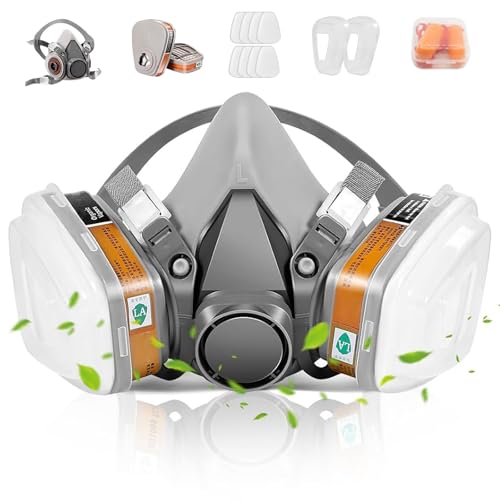
Reusable Dual-Filter Respirator Set uses an activated-carbon filter and dust-proof cotton rather than the named A1 and P2 filter combination in the BEESAFETY kits. The maker describes the reusable half face mask for chemicals, painting, spraying, epoxy resin and dust, and its maker identifies a single set. This may suit a buyer comparing a general DIY kit with replacement-filter bundles.
Bottom line: Choose it only after confirming its filter ratings match the epoxy task.
Blue Half Facepiece with Goggle

Blue Half Facepiece with Goggle differs from the other blue half face option by including a goggle, and its maker identifies a two count pack. The maker describes a reusable, washable silicone facepiece with an adjustable headband and a double-filter system for work including epoxy resin, spray painting and sanding. That makes the included eye protection and stated pack size the useful points to compare.
Bottom line: Choose it if you need a two count bundle with a goggle, after verifying its filter ratings.
Blue Half Facepiece, Two Count

Blue Half Facepiece, Two Count is the blue half face option without a goggle in its name, and its maker identifies a two count pack. The maker describes a washable, reusable silicone facepiece with an adjustable strap and double-filter system for epoxy resin work, painting and sanding. Compared with the goggle bundle, this option centers on the facepieces rather than including eye protection in its name.
Bottom line: Choose it if a two count pack matters and you can verify filters and eye protection separately.
How to Choose a Respirator for Epoxy Resin
Choose filters for the exposure, not just the word “epoxy”: uncured resin work can involve vapors, while sanding cured epoxy creates particles. Organic vapor cartridges and particulate filters address different hazards, so a kit’s combination matters when both occur. In the United States, look for NIOSH approval markings on the respirator and compatible cartridges; A1 and P2 labels alone do not establish NIOSH approval. Read the safety data sheet (SDS) for each resin and hardener, because formulations and hazards differ. For workplace use, OSHA requires a respiratory protection program when respirators are required, including medical evaluation and fit testing. If a product’s approval or filter identity cannot be verified, do not assume it is suitable for the task.
Match Vapor Filters to Sanding Dust
Use an organic-vapor cartridge for the vapor hazard only when its approval and compatibility match the chemicals identified on the SDS; use a particulate filter for airborne sanding dust. A combined setup may be needed when both hazards are present, but filter labels do not by themselves prove that a respirator is appropriate for every epoxy operation. Keep ventilation and dust control in place: a respirator is not a substitute for controlling exposure at the source. For sanding, use local extraction and avoid dry sweeping, which can put settled dust back into the air. Replace cartridges according to the manufacturer’s change schedule; odor or increased breathing resistance is not a dependable replacement schedule.
Fit and Eye Protection for Half Face Respirators
A tight seal is essential: facial hair, eyewear arms, or a poor size match can create leakage around a half face respirator. In a required workplace program, a fit test is needed before use and at least annually; users also perform a seal check each time the respirator is donned. Half face respirators do not cover the eyes, so add chemical splash goggles when liquid resin or hardener can splash. The kits that include goggles offer that item in the package, but the specifications do not establish a goggles’ splash rating. Match eye protection to the SDS and task, and do not rely on a goggle bundle as proof that vapor or splash protection is adequate.
When to Replace Epoxy Respirator Filters
Change cartridges on a planned schedule based on the chemical, concentration, humidity, work duration and cartridge instructions; there is no universal safe number of hours for epoxy work. Particulate filters may load with dust, and increased breathing resistance is a reason to stop and replace them, not a cue to keep working. Store reusable cartridges sealed between jobs, away from vapors, so they do not continue absorbing contaminants while idle. Discard a facepiece or filter that is damaged, dirty beyond cleaning instructions, or unable to maintain a seal. For these kits, confirm the replacement-filter part numbers and approvals before buying spares; a physically compatible filter is not necessarily an approved match.
Frequently Asked Questions
Can an epoxy respirator protect against sanding dust?
Only when it uses a suitable, approved particulate filter for that dust. Cured-epoxy sanding also calls for dust capture and eye protection; do not assume an organic-vapor cartridge alone filters particles.
Do I need a respirator while mixing epoxy resin?
The need depends on the resin and hardener and the work conditions, so check their safety data sheets and maintain ventilation. A respirator and cartridge must be approved for the identified hazard; a generic “epoxy” claim does not establish that match.
How often should epoxy respirator cartridges be changed?
Use a change schedule based on the chemical, concentration, humidity, duration and manufacturer guidance; there is no universal number of hours. Replace particulate filters when loaded or breathing resistance rises, and do not use odor as the only warning.
Can facial hair affect a half face respirator seal?
Yes, facial hair crossing the sealing surface can prevent a reliable seal. Workplace respirator programs require fit testing before use and at least annually, with a user seal check each time the mask is donned.
Are safety goggles included with every respirator kit?
No; the specifications identify goggles with some options but not all. Half face respirators leave the eyes exposed, so use suitable splash goggles when liquid resin or hardener could reach the eyes.