
Games for 12 Year Olds: 5 Picks by Play Style

For a 12-year-old who wants variety, Flip 7 Card Game is the best starting point because its press-your-luck card play adds strategic choices without requiring a handheld device. Choose a different game if the player prefers solo puzzles, electronic challenges, or trivia in a group.
We earn a commission if you buy through links on this page. As an Amazon Associate I earn from qualifying purchases. Products are compared on manufacturer specifications, not hands-on testing.
- Best overall: Flip 7 Card Game – Press-your-luck rounds and a 200-point winning goal give the card game a clear risk-and-score loop.
- Best for solo puzzles: Educational Insights Kanoodle – It includes 228 challenges in 2D and 3D configurations.
- Best for groups: Mount Cleverest Original Edition – The trivia game supports groups of up to 30 players.
- Best for handheld play: Moose Games Flipslide – Four modes cover speed, multiplayer, level and memory play.
| Product | Best for | Play style | Players or modes | Challenges or goal | Shop |
|---|---|---|---|---|---|
| Flip 7 Card Game | Risk-and-score rounds | Press-your-luck cards | — | First to 200 points | Check Price on Amazon |
| Educational Insights Kanoodle | Solo logic puzzles | 2D and 3D puzzles | Single player | 228 puzzles | Check Price on Amazon |
| Mount Cleverest Original Edition | Group trivia play | True-or-false trivia | Up to 30 players | 30 betting discs | Check Price on Amazon |
| Moose Games Flipslide | Handheld mode variety | Electronic color puzzle | 4 modes | Speed, multiplayer, level, memory | Check Price on Amazon |
| Stickflip Electronic Flip Challenge | Movement-based challenges | Electronic flip challenge | 10 games | 7.85 inches tall | Check Price on Amazon |
Games for 12 Year Olds
Compare the play format and challenge style to match a game to the player and setting.
Flip 7 Card Game

Flip 7 is the card-based choice here for a 12-year-old who likes weighing a decision against the chance of busting. Players draw cards and try not to reveal the same number twice; points are based on the number values in front of them, and the goal is to reach 200 points first. The deck includes numbered cards and special cards such as Flip Three, Freeze and Second Chance. Its limitation is the shared card-table format: choose another pick if the player wants a solo activity or movement-based play.
Bottom line: Pick this for a player who enjoys risk decisions and score-based card rounds.
Educational Insights Kanoodle
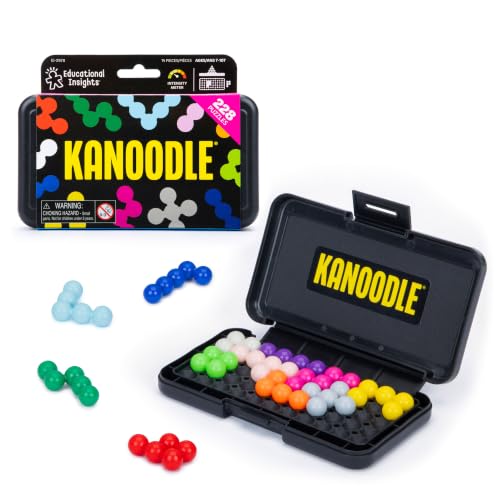
Kanoodle stands apart as the solo option: its 228 challenges ask players to arrange pieces to complete 2D and 3D puzzles. The set includes 12 puzzle pieces, a compact case that doubles as the board, and a guide, making the format self-contained for travel. The challenge range runs from beginner to expert, so it can suit a player who wants to work independently at different difficulty levels. It is less suitable when the goal is a social group game, since the format is single-player.
Bottom line: Choose this for independent spatial puzzles rather than a group activity.
Mount Cleverest Original Edition
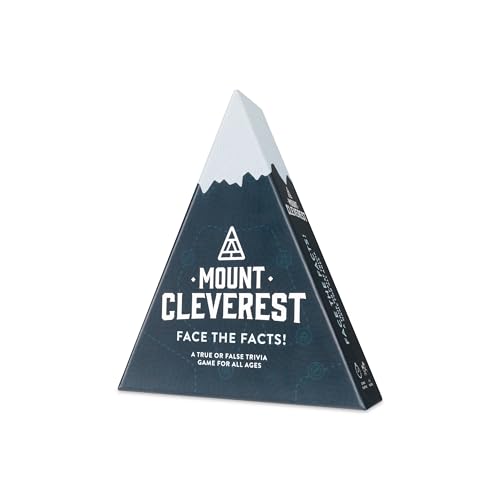
Mount Cleverest is the group-focused pick, built around true-or-false trivia and bets made with discs. It comes with triangular cards and 30 discs, and the maker says it can accommodate groups of up to 30, which makes it a fit for a large family gathering or party. A player does not need specialized knowledge to participate in every question because each answer is a binary choice. The trade-off is its trivia format: players who prefer solving a puzzle alone or competing through quick physical actions should look elsewhere.
Bottom line: Choose this when a larger group wants a shared trivia activity.
Moose Games Flipslide
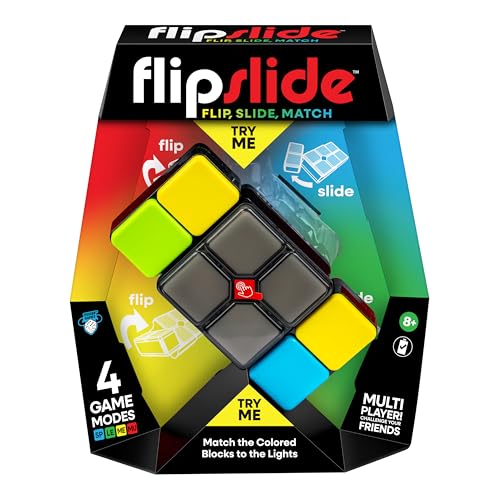
Flipslide gives an electronic handheld puzzle format with four modes—speed, multiplayer, level and memory—rather than a deck or tabletop puzzle. The maker describes play as flipping to find a color and sliding to match lights; batteries are included. Its age range is 8–13, which includes 12-year-olds. The device is a better match for someone who wants a quick, tactile challenge and mode changes, but less so for a player seeking extended strategy, open-ended building, or a large-group trivia session.
Bottom line: Pick this for a player who wants a handheld puzzle with several modes.
Stickflip Electronic Flip Challenge

Stickflip is the movement-based option: the maker says it counts full 360-degree flips with sound and LED feedback, across 10 games with high scores to beat. Its compact 7.85-inch height distinguishes it from a card or board format, and the age range begins at 8. It suits a 12-year-old who wants to practice a physical skill and chase a score, especially with friends. Because play involves flipping the device, it is not the right choice for a quiet activity or a setting where there is little clear space.
Bottom line: Choose this when active, score-chasing play is the priority.
How to choose games for 12 year olds
Start with the play setting: solo, two or more players, or a larger group. A solo puzzle such as a 228-challenge set fits independent play; trivia that supports up to 30 is designed for a different kind of gathering. Next, decide whether the player wants to think through choices, solve spatial arrangements, respond quickly, or move while playing. A useful rule is to choose a game with an age range that includes 12, then match its player format to the number of people who will actually join. Age guidance is a starting point, not a measure of skill: a beginner may prefer gradual puzzle levels, while a confident player may value harder challenges or score targets.
Card, trivia, puzzle and electronic games compared
Game format predicts the kind of interaction better than the word “fun”: card games center on turns and decisions, while handheld electronic games use device feedback and modes. A trivia game prompts shared answers, and a logic puzzle focuses attention on arranging pieces. Use this comparison to narrow the format before choosing a specific game.
| Need | Format to consider |
|---|---|
| Play alone | Single-player logic puzzle |
| Make risk decisions | Press-your-luck cards |
| Include a large group | Group trivia |
| Move and chase scores | Electronic flip challenge |
For a group larger than the player count, select another activity rather than assuming everyone can join the same round. For electronic or movement-based play, consider whether the setting allows room to handle the device safely.
Choosing a challenge level and play length
Choose a challenge with a visible progression when a player may tire of repeating the same task. Numbered goals, multiple modes, or beginner-to-expert puzzles provide different ways to vary play, but they do not guarantee a particular session length. A concrete rule: for someone who wants to play alone, prefer a format explicitly marked single-player; for a party, prioritize a group capacity. A 200-point target gives a card game a defined overall goal, while a list of 228 puzzles offers many separate tasks. These are different measures, so puzzle count should not be mistaken for the number of rounds or minutes of play.
Safe setup for movement-based games
Movement games need clear space around the player, especially when an object is repeatedly flipped. Keep the play area away from faces, pets, breakable objects, and people walking through; stop if the device becomes damaged. A practical decision rule is to use a tabletop card or puzzle game whenever the room cannot provide an unobstructed area for handling a handheld toy. Electronic games also need age-appropriate supervision and care around batteries: do not let children access loose batteries, and keep damaged or leaking batteries away from skin and eyes. These precautions matter more than trying to improve a score in a crowded setting.
Frequently Asked Questions
What kinds of games do 12 year olds enjoy?
Many options fit this age, including card strategy, trivia, spatial puzzles and electronic skill challenges. Match the format to whether the player wants solo play, a group activity or movement.
Are single-player games good for a 12-year-old?
Yes, a single-player format can suit a child who wants to solve problems independently. For example, a puzzle set with 228 challenges offers many tasks without requiring another player.
How many people can play a group trivia game?
Capacity depends on the game; Mount Cleverest says it supports groups of up to 30. For a larger group, split into teams or choose an activity with a suitable stated capacity.
What should I consider for a handheld game?
Check whether its modes and age range suit the player, and leave clear space for handling it. Movement-based play should stay away from faces, pets and fragile objects.
Do puzzle games for this age need multiple difficulty levels?
Multiple levels help a player move from easier to harder challenges, but they are not essential. A set with beginner-to-expert puzzles offers a progression, while a player may also enjoy one consistent difficulty.