
Filippo Berio Olive Oil: 4 Types Compared by Use

For a mild, all-purpose cooking oil, choose Filippo Berio Pure Olive Oil, 33.8 fl oz; its gentle olive notes suit frying, grilling and roasting. Filippo Berio Extra Light Olive Oil, 1 gallon is a better fit when you want a delicate taste for baking, while Filippo Berio Extra Virgin Olive Oil, 1 gallon is the extra virgin choice for dressings and dipping.
Filippo Berio sells several olive oil styles rather than one formula, so choose by flavor and intended use. Anyone seeking a specifically robust, finishing-style oil should favor the extra virgin option over the milder pure oils.
We earn a commission if you buy through links on this page. As an Amazon Associate I earn from qualifying purchases. Products are compared on manufacturer specifications, not hands-on testing.
- Best overall: Filippo Berio Pure Olive Oil, 33.8 fl oz – Its mild flavor and suggested uses cover frying, grilling, roasting and everyday cooking.
- Best for baking: Filippo Berio Extra Light Olive Oil, 1 gallon – Its delicate flavor is intended to let other ingredients shine.
- Best for finishing: Filippo Berio Extra Virgin Olive Oil, 1 gallon – The extra virgin oil has a robust, balanced flavor for dressings, dipping and drizzling.
| Product | Best for | Oil style | Flavor | Suggested uses | Shop |
|---|---|---|---|---|---|
| Filippo Berio Pure Olive Oil, 33.8 fl oz | Everyday cooking | Pure olive oil | Mild, gentle olive notes | Frying, grilling, roasting | Check Price on Amazon |
| Filippo Berio Extra Light Olive Oil, 1 gallon | Mild baking | Extra light olive oil | Delicate, subtle olive notes | Baking, frying, sautéing | Check Price on Amazon |
| Filippo Berio Pure Olive Oil, 101.4 fl oz | Large-batch cooking | Pure olive oil | Mild, balanced olive notes | Basting, roasting, sautéing | Check Price on Amazon |
| Filippo Berio Extra Virgin Olive Oil, 1 gallon | Dressings and dipping | Extra virgin olive oil | Robust, balanced flavor | Dressings, dipping, marinades | Check Price on Amazon |
Filippo Berio Olive Oils Compared
The main differences are oil style, flavor intensity and the cooking or finishing uses each one is suited to.
Filippo Berio Pure Olive Oil, 33.8 fl oz

For a mild, multipurpose option, this pure olive oil is positioned for cooking across several methods. Filippo Berio describes its flavor as gentle, making it a match for frying, grilling and roasting when a stronger olive taste is not the goal. The 33.8-fluid-ounce tin is a single-unit size. Its limitation is flavor intensity: cooks looking for the more robust taste of extra virgin olive oil should choose a different style.
Bottom line: Choose this for one mild oil that can cover several everyday cooking methods.
Filippo Berio Extra Light Olive Oil, 1 gallon

For the most delicate flavor among these options, this extra light olive oil is intended for baking as well as frying and sautéing. Filippo Berio says its naturally high smoke point makes it suitable for high-heat cooking; that performance claim belongs to the maker, and smoke behavior can vary with the food and pan. The gallon container suits kitchens that use oil regularly. Its mild profile is not the pick for cooks who want a pronounced olive flavor in a dip or dressing.
Bottom line: Pick this when delicate flavor and a large container suit your cooking routine.
Filippo Berio Pure Olive Oil, 101.4 fl oz
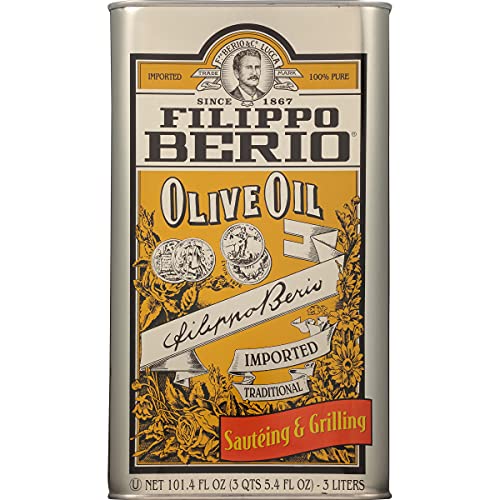
This larger pure olive oil tin pairs a mild flavor with uses that include basting, roasting and sautéing. Filippo Berio also suggests it for pizza dough, focaccia, fish and vegetables, giving it a broad role from preparation to a finishing drizzle. The 101.4-fluid-ounce size is the key distinction from the smaller pure-oil tin. It is less suited to someone who wants extra virgin flavor or a compact container for occasional use.
Bottom line: Choose this for frequent cooking that benefits from a larger supply of mild pure oil.
Filippo Berio Extra Virgin Olive Oil, 1 gallon
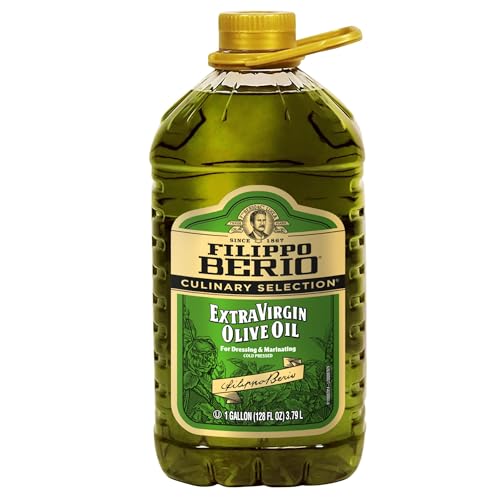
Unlike the milder pure oils, this extra virgin olive oil is described by Filippo Berio as robust and balanced, with intended uses that include cooking, finishing, dipping and dressings. The maker says it is cold pressed and naturally contains polyphenols; these are product claims, not a guarantee of a particular taste preference. Its one-gallon container is suited to households that use EVOO often. The stronger flavor may be less suitable when a recipe calls for oil that stays unobtrusive.
Bottom line: Pick this for extra virgin flavor in dressings, marinades, dipping and finishing.
How to choose olive oil by flavor and use
Choose the oil style by how much olive flavor you want in the finished food. Pure and extra light oils are positioned here for milder flavor, while extra virgin is the robust option for dipping, dressings and drizzling. Olive oil is made from olives; extra virgin is the highest grade under recognized U.S. identity standards and is not interchangeable with a refined oil style in every recipe. For high-heat cooking, use an oil specifically suited to the method and avoid letting oil smoke; visible smoke signals that it is overheating. A practical rule: choose the extra virgin option when the oil itself is prominent, such as in bread dipping, and a milder style when other ingredients should lead.
How olive oil styles differ in the kitchen
Pure, extra light and extra virgin describe different styles, not simply different container sizes. Extra virgin olive oil retains a more pronounced olive character, so it often works well uncooked or as a finishing oil. Milder styles can be more neutral in baked goods and everyday pan cooking. “Extra light” refers to a light taste, not fewer calories; oils are calorie-dense fats, so measure them as you would other cooking oils. This table maps the styles to common uses without implying that one oil suits every recipe.
Use the intended flavor and cooking role as the first filter:
| Style | Flavor direction | Common role |
|---|---|---|
| Extra virgin | More pronounced | Dressings, dipping, finishing |
| Pure | Mild | Roasting, sautéing, everyday cooking |
| Extra light | Delicate | Baking and mild-flavored cooking |
How to store olive oil after opening
Store olive oil tightly closed in a cool, dark cupboard, away from the stove, oven and direct sunlight. Heat, light and air speed oxidation, which can dull fresh aroma and flavor; a dark container or cupboard helps limit light exposure. Buy a container size that you can use at a steady pace rather than keeping a large opened supply near a heat source. Keep oil in its original container when it protects it from light, and pour only what you need instead of leaving the cap off during cooking. If the oil develops a stale, waxy or crayon-like odor, its flavor has likely deteriorated and it is better replaced.
Frequently Asked Questions
Does extra light olive oil have fewer calories?
No; “extra light” refers to taste, not calorie content. Olive oil is a fat, so a measured tablespoon is roughly 120 calories, regardless of whether the flavor is delicate or robust.
Can olive oil be used for deep frying?
Olive oil can be used for frying, but avoid heating it until it smokes. Keep the oil below its smoke point, and discard it if it becomes dark, foamy or develops an off odor after repeated frying.
How can I tell if olive oil has gone rancid?
Rancid oil often smells stale, waxy or like crayons rather than fresh or fruity. Heat, light and air accelerate deterioration, so keep the container capped in a cool, dark place.
Should extra virgin olive oil be refrigerated?
Refrigeration is not necessary for routine storage; a cool, dark cupboard is suitable. Cold can make olive oil cloudy or partly solid, and it returns to liquid as it warms.
Is extra light olive oil a lower-fat oil?
No, extra light olive oil is not lower in fat than other olive oils; the name refers to its mild taste. Measure it by the same portion you would use for another cooking oil.