
Grinding Tools for the Drill: 5 Types Compared

For drill-mounted grinding, choose the JUNLIXN stones for multiple shapes or the DEWALT point for a single aluminum oxide tip with a 1/4-inch hex shank. Grinding attachments are abrasive accessories held in a drill chuck or driver; rotary-tool sets are better suited to fine work, while burr bits in a drill are described as not optimal.
Choose a different attachment if you need a dedicated high-speed rotary tool, a carbide burr assortment, or a specific point shape.
We earn a commission if you buy through links on this page. As an Amazon Associate I earn from qualifying purchases. Products are compared on manufacturer specifications, not hands-on testing.
- Best overall: JUNLIXN 10-Piece Aluminum Oxide Stones – Ten aluminum oxide stones have 1/4-inch hex shanks for regular and impact driver drills.
- Best for a single point: DEWALT DWA4972 Aluminum Oxide Grinding Point – The 1-inch by 1/2-inch aluminum oxide grinding point has a 1/4-inch hex shank.
- Best for burr shapes: 20-Piece Carbide Burr Bits, 1/8-Inch Shank – The 20-piece carbide burr set has 1/8-inch round shanks and is described as not optimal for a 3-jaw drill chuck.
| Product | Best for | Shank | Abrasive or material | Included pieces | Shop |
|---|---|---|---|---|---|
| JUNLIXN 10-Piece Aluminum Oxide Stones | Multiple stone shapes | 1/4-inch hex | Aluminum oxide | 10 | Check Price on Amazon |
| DEWALT DWA4972 Aluminum Oxide Grinding Point | Single grinding point | 1/4-inch hex | Aluminum oxide | 1 | Check Price on Amazon |
| 20-Piece Carbide Burr Bits, 1/8-Inch Shank | Burr shaping work | 1/8-inch round | Tungsten carbide | 20 | Check Price on Amazon |
| Sworker 10-Piece Carbide Burr Set | Rotary-tool burrs | 1/8-inch round | Carbide | 10 | Check Price on Amazon |
| HARDELL Mini Cordless Rotary Tool, 69-Piece Kit | Fine cordless work | Rotary tool, not a drill shank | — | 69 accessories | Check Price on Amazon |
Grinding Tools for the Drill
Match the attachment’s shank to your drill or driver, then choose the abrasive and shape for the work.
JUNLIXN 10-Piece Aluminum Oxide Stones

The JUNLIXN set is the broadest drill-oriented assortment here, with 10 mounted aluminum oxide stones and 1/4-inch hex shanks. The maker says the shank fits most rotary tools, impact and regular driver drills, die grinders, and hand drills; the stones are intended for grinding, shaping, polishing, deburring, and rust removal. It suits buyers who want multiple stone shapes for varied surfaces. The feature calls out cylindrical shapes, so confirm the specific shape needed for tight corners or a profile-matching job before choosing this set.
Bottom line: Choose this set when you want several hex-shank stones for different drill tasks.
DEWALT DWA4972 Aluminum Oxide Grinding Point
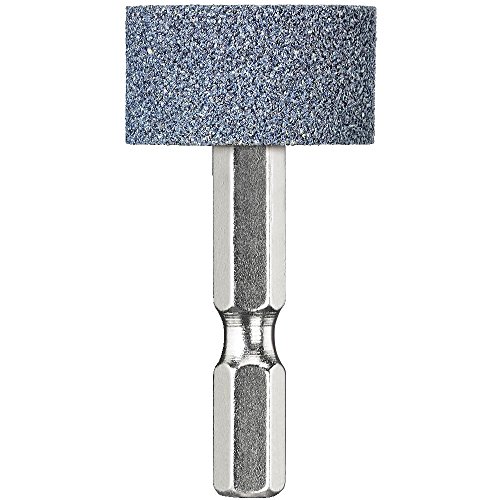
The DEWALT DWA4972 is a single 1-inch by 1/2-inch mounted grinding point, unlike the assorted stone sets. It has a 1/4-inch hex shank and an aluminum oxide tip; the maker says it is for deburring, shaping, and grooving ferrous metal. That makes it a focused choice for metalwork where the point’s size suits the area. It is not an assortment, and the maker identifies ferrous metal use rather than general-purpose use on every material, so choose another attachment for a broader set of shapes or nonferrous jobs.
Bottom line: Pick this point for a defined ferrous-metal grinding task.
20-Piece Carbide Burr Bits, 1/8-Inch Shank

The 20-piece kit offers more burr shapes than the single-point options, but its 1/8-inch cylindrical shank is a different fit from the 1/4-inch hex attachments. The maker describes double-cut tungsten carbide bits for carving, engraving, deburring, and shaping hard metal, wood, stone, and plastic, and calls a high-speed rotary tool the optimal use. The same features say a 3-jaw chuck drill can be used but is not optimal. Choose it when the assortment matters and your drill can securely hold its round shank; a hex-shank stone is the more direct choice for a driver drill.
Bottom line: Choose these burrs for varied shaping when your drill accepts a 1/8-inch round shank.
Sworker 10-Piece Carbide Burr Set

The Sworker set is a 10-piece carbide burr assortment for rotary-tool work, with 1/8-inch cylindrical shanks compatible with 1/8-inch rotary-tool accessories, according to the maker. Its smaller assortment differs from the 20-piece option, and its product name also positions it for metal, wood, stone, and steel grinding, carving, and cutting. It suits a buyer prioritizing burrs over mounted stones. The features do not identify drill-chuck compatibility, so this is less direct for a drill-focused purchase than a 1/4-inch hex-shank attachment.
Bottom line: Pick this set when rotary-tool compatibility matters more than direct drill fit.
HARDELL Mini Cordless Rotary Tool, 69-Piece Kit

The HARDELL kit is a cordless rotary tool rather than a drill-mounted attachment, so it suits fine DIY work when you want a separate powered tool. It has five speed settings from 5,000 to 18,000 rpm, a 2,000 mAh battery, USB-C charging, an LED light, and 69 accessories; the maker describes it for sanding, grinding, polishing, carving, and drilling. The maker also cautions that it is not for heavy-duty projects. Choose a drill attachment instead if your goal is to use a drill or driver you already have.
Bottom line: Choose this when a dedicated cordless rotary tool is preferable to a drill attachment.
How to choose a drill grinding attachment
Start by matching the shank to the tool’s chuck: a 1/4-inch hex shank is made for a compatible driver, while a 1/8-inch round shank needs a chuck that can grip it securely. Then select the abrasive and shape for the material and contact area. Aluminum oxide points are commonly used on ferrous metals; carbide burrs are shaped cutters rather than bonded abrasive stones. A short point can reach a small area, while a broader stone contacts more surface. For a driver drill, the 1/4-inch hex attachments here are the most direct fit; for fine, controlled craft work, a rotary tool may make more sense. Never rely on a loose or slipping shank to hold an abrasive attachment.
Shank fit for drills and driver drills
Shank fit decides whether an attachment can be held securely, so check the chuck type before selecting an abrasive. A three-jaw chuck closes around round or hex shanks within its capacity; a 1/4-inch hex driver accepts compatible hex accessories. Round 1/8-inch rotary-tool shanks are not interchangeable with hex accessories, and the burr-kit maker specifically calls drill-chuck use less than optimal. Stop if an attachment wobbles, slips, or cannot be clamped firmly. A decision rule: if your driver uses a 1/4-inch hex holder, select a 1/4-inch hex attachment rather than assuming a round rotary-tool bit will fit. Also check that the attachment’s speed rating, if provided by its maker, covers the tool’s operating speed.
Grinding stones, points, and carbide burrs compared
Grinding stones and points abrade a surface, while carbide burrs cut with flutes; the right type depends on whether you need surface removal or a shaped cut. Use the comparison below as a task-to-type guide, then confirm fit and material suitability for the particular job. A mounted stone or point is generally easier to apply across a surface, while burr shapes can reach edges and contours. Neither attachment type is automatically suitable for every metal: for example, the DEWALT point is identified for ferrous metal. Begin with light contact and keep the workpiece secured; forcing a small attachment can make control harder.
| Need | Attachment type | Fit cue |
|---|---|---|
| Multiple grinding shapes | Mounted aluminum oxide stones | 1/4-inch hex for listed set |
| Focused metal deburring | Aluminum oxide point | 1/4-inch hex |
| Carving or contour shaping | Carbide burr | Round shank and secure chuck |
Safe use and common grinding mistakes
Eye protection is essential when grinding because abrasive fragments and workpiece particles can become airborne. Clamp or otherwise secure the workpiece, keep hands clear of the rotating attachment, and avoid side-loading a point or stone beyond its intended use. Check the accessory’s maximum rated speed against the tool before operation; a tool’s available speed does not mean every attachment is rated for it. Start with light pressure, especially on small attachments, and stop if the tool vibrates or the shank loosens. A frequent mistake is choosing by abrasive alone while overlooking shank fit, material suitability, or speed compatibility. Use only an attachment whose fit and operating limits match the tool.
Frequently Asked Questions
Can I use rotary tool bits in a regular drill?
Only if the drill chuck can clamp the round shank securely. A 1/8-inch rotary-tool shank is not the same as a 1/4-inch hex shank, and the carbide-burr maker says 3-jaw drill use is not optimal.
What does a 1/4-inch hex shank fit?
A 1/4-inch hex shank fits a compatible 1/4-inch hex driver holder, and some chuck-style tools can also grip hex shanks. Confirm the holder type and secure engagement before running the attachment.
Which grinding point works on steel?
The DEWALT aluminum oxide point is identified for ferrous metal, which includes common steels. Match the point’s dimensions and shank to the access and holder for the job.
How fast should a drill run a grinding stone?
Use a speed at or below the accessory’s maximum rated rpm, and do not assume the drill’s top speed is safe for every stone. If the attachment has no speed rating available, verify the permitted speed before operation.
Do I need eye protection when grinding with a drill?
Yes, wear safety glasses or goggles because grinding can throw abrasive fragments and workpiece particles. Secure the workpiece and stop if the attachment wobbles or slips.