
Grout Seal After Using Mapei Ultracolor: What to Know

MAPEI Ultracolor Plus FA says no sealer is required, so most buyers using that grout do not need to add a separate grout sealer. If your goal is a color refresh rather than routine sealing, choose MAPEI UltraCare Grout Refresh, Eggshell; MAPEI UltraCare Grout Sealer, 32 oz is a separate penetrating sealer for cementitious joints.
We earn a commission if you buy through links on this page. As an Amazon Associate I earn from qualifying purchases. Products are compared on manufacturer specifications, not hands-on testing.
- Best overall: MAPEI Ultracolor Plus FA, Moonbeam – Ultracolor Plus FA is explicitly described as requiring no sealer.
- Best for color refresh: MAPEI UltraCare Grout Refresh, Eggshell – The colorant also seals grout and comes in Eggshell.
- Best for added stain protection: MAPEI UltraCare Grout Sealer, 32 oz – Water-based penetrating sealer is intended for common stains on cementitious joints.
| Product | Best for | Form | Size (oz) | Use | Shop |
|---|---|---|---|---|---|
| MAPEI Ultracolor Plus FA, Moonbeam | No extra sealer | Powder grout | 160 oz | No sealer required | Check Price on Amazon |
| MAPEI Ultracolor Plus FA, Eggshell | Eggshell grout | Powder grout | 160 oz | No sealer required | Check Price on Amazon |
| MAPEI Ultracolor Plus FA, Frost | Frost grout | Powder grout | 160 oz | No sealer required | Check Price on Amazon |
| MAPEI UltraCare Grout Sealer, 32 oz | Penetrating seal | Water-based sealer | 32 oz | Cementitious grout | Check Price on Amazon |
| MAPEI UltraCare Grout Refresh, Eggshell | Color restoration | Colorant-sealer | 8 oz | Sanded and unsanded grout | Check Price on Amazon |
Grout Seal After Using Mapei Ultracolor
These MAPEI products cover the distinction between grout that needs no additional sealer and products intended to seal or recolor joints.
MAPEI Ultracolor Plus FA, Moonbeam

MAPEI Ultracolor Plus FA is the grout itself, rather than a separate sealer; its product claim says no sealer is required. The 10-pound bag is Moonbeam, and the fine aggregate is described as suitable for narrow joints. It is the direct match for someone asking whether to seal after installing this grout. Its limitation is that it will not recolor an existing joint or provide an extra sealer layer for someone seeking that specific change.
Bottom line: Pick this if you are choosing the grout and want to avoid a separate sealing step.
MAPEI Ultracolor Plus FA, Eggshell
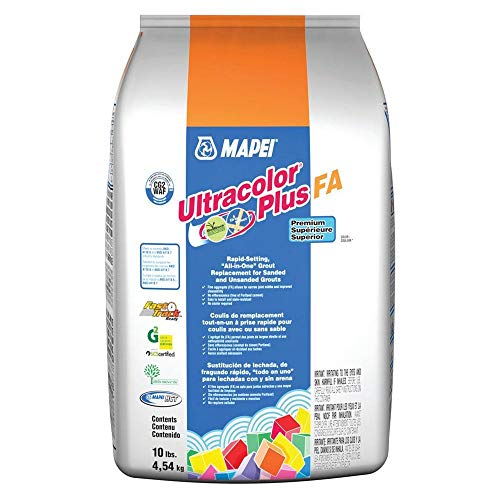
The Eggshell version offers the same no-sealer-required grout formulation as the Moonbeam bag, with the color being the key distinction. MAPEI describes the fine aggregate as suitable for narrow joints and the grout as stain-resistant. This is a fit-led choice for a new installation where Eggshell is the desired shade, not a follow-up sealer. Because the product is powder grout, it is not a ready-to-use coating for existing joints; the bag specifies mixing with 1 to 1.1 quarts of water.
Bottom line: Choose it for a new Eggshell grout installation, not as a sealer.
MAPEI Ultracolor Plus FA, Frost
The Frost option changes the grout color while retaining the Ultracolor Plus FA format and its no-sealer-required claim. The 10-pound powder is meant for making grout, not coating joints already in place. Its fine aggregate supports narrow joint widths, according to the product features, and the grout is described as stain-resistant. The main limitation is color-specific: Frost makes sense only when that shade fits the tile and joint design, and it does not serve as a colorant for installed grout.
Bottom line: Pick this when Frost is the intended grout color for a new installation.
MAPEI UltraCare Grout Sealer, 32 oz

Unlike Ultracolor Plus FA, this is a separate water-based penetrating sealer for cementitious grout joints. MAPEI says it protects against most common stains and can also be used as a pre-grouting sealer; the 32-ounce container covers sanded and nonsanded joints. It suits buyers who specifically want an added sealing product rather than relying on the grout’s no-sealer-required claim. The features do not give a cure interval or application coverage, so verify those directions before applying it over newly installed grout.
Bottom line: Choose it only if you specifically want a separate penetrating sealer for cementitious joints.
MAPEI UltraCare Grout Refresh, Eggshell

Grout Refresh differs from a clear penetrating sealer because it is a colorant and sealer combined. The 8-ounce bottle has an applicator tip and the shade is 5220 Eggshell; MAPEI describes it for restoring or changing grout color while sealing against stains and moisture. It is useful when installed joints need a color change, not simply because Ultracolor Plus FA was used. The limitation is shade matching: an Eggshell finish may not suit existing grout in another color, so compare the color before treating the full area.
Bottom line: Pick this for Eggshell color restoration when a color-changing product is wanted.
Does Ultracolor Plus FA need grout sealer
MAPEI Ultracolor Plus FA says no sealer is required, so adding a separate sealer is not necessary for the product’s use. Cementitious grout is porous by nature, but some grout formulations are designed with stain resistance built in; a separate sealer is an optional layer, not an automatic step. Distinguish new grout from old grout: a colorant-sealer changes an existing joint’s appearance, while a penetrating sealer is intended to enter the joint. Do not assume every MAPEI product called a sealer is meant for every grout formula; the UltraCare sealer specifies cementitious joints, while Ultracolor Plus FA gives its own no-sealer-required direction.
Choose between sealer and colorant
Choose a clear penetrating sealer when the goal is added stain protection without changing grout color; choose a colorant-sealer when an existing joint needs a new shade. The 32-ounce UltraCare product is water-based and is intended for common stains on cementitious grout. Grout Refresh comes as an 8-ounce colorant-sealer in Eggshell, so color is central to the decision. A practical rule is to use a colorant only when its shade is an intentional match or contrast; for a grout color you want to preserve, do not choose a tinting product. Neither category makes the grout itself unnecessary to clean or maintain.
New grout versus existing grout
New powder grout and a post-installation sealer serve different stages: the powder is mixed and installed as the joint material, while a sealer or colorant is applied to an existing joint. Ultracolor Plus FA’s bag specifies 1 to 1.1 quarts of water per 10 pounds, a useful distinction from ready-to-use liquid treatments. Allow new grout to cure according to its package instructions before applying any additional product; cure timing varies with temperature, humidity, and joint conditions, so confirm the required interval before ordering or using a separate treatment. Applying too early can interfere with the intended finish, and a colorant cannot replace missing or damaged grout.
How to avoid a poor grout-sealing result
Test a treatment on a small, inconspicuous grout area first, especially when matching an existing shade or working near textured tile. Porous cement grout and smoother, less absorbent surfaces take treatments differently, and residue left on tile can be difficult to remove after drying. Keep sealers and colorants off surfaces not intended for treatment, and ventilate the work area while applying a liquid product. The key mistake is treating “no sealer required” as proof that any extra product is compatible or needed; Ultracolor Plus FA already carries that claim, while UltraCare Grout Sealer is specifically described for cementitious joints.
Frequently Asked Questions
How long should Ultracolor Plus FA cure before sealing?
Use the cure interval on the grout and sealer instructions rather than applying a generic waiting time. Temperature, humidity, and joint depth can change drying, so confirm the required interval before applying a separate treatment.
Can I use Grout Refresh on Ultracolor Plus FA?
Grout Refresh is described for sanded and unsanded grout and combines colorant with sealer. Because it changes color, test a discreet area first and use it only when the Eggshell shade is intended.
Does grout sealer make grout waterproof?
No; a grout sealer is for stain or moisture resistance, not a guarantee that a tiled assembly is waterproof. Waterproofing behind tile is a separate system, especially in showers and other wet areas.
Should I seal cement grout every year?
There is no universal annual interval that fits every grout and sealer combination. The appropriate reapplication timing depends on the product directions and exposure; heavy-use or frequently wet joints may need closer attention than dry, low-traffic areas.
Can I apply grout sealer over tile too?
Apply the product to the intended grout joints and avoid leaving residue on tile. Textured or porous tile can hold sealer, so a small test patch and prompt cleanup help prevent a visible film.