
Hada Labo Face Wash: 3 Foaming Cleansers Compared

Hada Labo Tokyo Gentle Hydrating Cleanser is the Hada Labo face wash to consider first if you want a 5-ounce, fragrance-free cleanser described for sensitive skin. Choose one of the 160 mL options instead if that bottle size or its particular foaming format better fits your routine.
Foaming face wash is a rinse-off cleanser used to remove surface dirt and oil; a gentle wash still needs to suit how your skin feels after cleansing.
We earn a commission if you buy through links on this page. As an Amazon Associate I earn from qualifying purchases. Products are compared on manufacturer specifications, not hands-on testing.
- Best overall: Hada Labo Tokyo Gentle Hydrating Cleanser – Its 5-ounce formula is fragrance-free and includes hyaluronic acid and amino-acid cleansers.
- Best for Japan-made option: Hada Labo Gokujyn Hyaluronic Acid Cleansing Foam – The 160 mL cleanser is made in Japan and foams instantly.
- Best for twice-daily use: Hada Labo Goku-jyun Foaming Face Wash – The maker says this 160 mL foaming wash is fragrance-free and intended for twice-daily cleansing.
| Product | Best for | Size | Fragrance | Notable feature | Shop |
|---|---|---|---|---|---|
| Hada Labo Tokyo Gentle Hydrating Cleanser | Sensitive-skin routine | 5.0 oz | Fragrance-free | Hyaluronic acid; amino acids | Check Price on Amazon |
| Hada Labo Gokujyn Hyaluronic Acid Cleansing Foam | Japan-made cleanser | 160 mL (5.41 fl oz) | — | Instantly foaming | Check Price on Amazon |
| Hada Labo Goku-jyun Foaming Face Wash | Twice-daily cleansing | 160 mL (5.4 fl oz) | Fragrance-free | Super Hyaluronic Acid; no oil or alcohol | Check Price on Amazon |
Hada Labo Face Wash Options
Compare the three Hada Labo cleansers by size, fragrance and the features that distinguish each formula.
Hada Labo Tokyo Gentle Hydrating Cleanser

Unlike the two 160 mL options, this cleanser comes in a 5-ounce bottle and is specifically described for sensitive skin. The maker says its soft foam removes dirt, oil and impurities, while Hyaluronic Acid Plus and Hyaloveil-P help maintain moisture after rinsing; natural amino acids provide cleansing. It is fragrance-free and described as suitable for all skin types. Choose it if you want those stated features in a single cleanser. Its main tradeoff is the larger 5-ounce size, which may be less convenient if you specifically want a 160 mL bottle.
Bottom line: Choose this if fragrance-free cleansing and the sensitive-skin features matter most.
Hada Labo Gokujyn Hyaluronic Acid Cleansing Foam
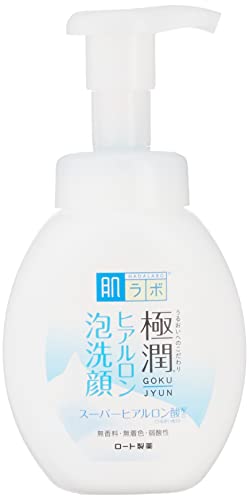
This is the only option whose features specify that it is made in Japan, and it comes in a 160 mL bottle. The maker describes it as instantly foaming and easy to massage, so it suits someone who prefers a ready-foaming cleanser rather than creating lather by hand. The product name identifies hyaluronic acid, but the features do not describe its role or provide other formula claims. Choose this option for its origin and format; the tradeoff is that fewer skin-care attributes are provided for comparing it with the other cleansers.
Bottom line: Pick this when a Japan-made, instantly foaming 160 mL cleanser is your priority.
Hada Labo Goku-jyun Foaming Face Wash

This cleanser is the clearest match if you want a fragrance-free wash whose maker recommends twice-daily use. Its 160 mL bottle is close in size to Hada Labo Gokujyn Hyaluronic Acid Cleansing Foam, while the formula features include Super Hyaluronic Acid and no oil or alcohol. The maker says the foaming lather moisturizes as it cleanses and that the wash suits all skin types. Consider it for a routine centered on those specific formula claims. Its limitation is that the features do not identify sensitive skin as a particular focus, unlike Hada Labo Tokyo Gentle Hydrating Cleanser.
Bottom line: Choose this for a fragrance-free 160 mL wash with a twice-daily routine.
How to Choose a Hada Labo Face Wash
Choose by the features that matter to your skin and routine, not by the shared foaming format alone. Fragrance sensitivity is a useful first filter: Hada Labo Tokyo Gentle Hydrating Cleanser and Hada Labo Goku-jyun Foaming Face Wash are described as fragrance-free, while Hada Labo Gokujyn Hyaluronic Acid Cleansing Foam has no fragrance claim in the specifications. Bottle sizes also separate the options: Hada Labo Tokyo Gentle Hydrating Cleanser is 5 ounces, while the other two are 160 mL each. A cleanser should leave skin comfortable rather than tight; if a wash repeatedly causes tightness, stinging or visible irritation, stop using it and reassess the formula. For sunscreen or makeup, a cleanser may not remove every product in one pass, so check whether residue remains and use a suitable first cleanse when needed.
Foaming Cleanser Size and Routine Fit
For a bottle around 5.4 fluid ounces, either 160 mL option is the closest fit; 160 mL converts to about 5.41 US fluid ounces. The 5-ounce cleanser is slightly smaller, so it may suit someone prioritizing its distinct stated features over matching the other bottle size. A measurable decision rule is simple: if you want a bottle of at least 5.4 fluid ounces, choose one of the 160 mL products, not the 5-ounce one. Face wash is typically used on damp skin and rinsed thoroughly; avoid scrubbing hard or using very hot water, both of which can worsen dryness or irritation. The specifications do not establish a required amount per wash, so start with the pump or package directions.
What to Know About Foaming Face Wash
Foam describes the cleanser’s lather, not a guarantee that it is gentler or more effective. A foaming wash can work for oily, combination or normal skin, but dry or reactive skin may prefer a mild, non-stripping formula and less frequent cleansing if twice daily feels uncomfortable. Skin surface pH is typically mildly acidic, around 4.5 to 5.5; a cleanser’s pH cannot be inferred from words such as hydrating or gentle. Avoid choosing on pH assumptions alone. Test a new wash on a small area first if your skin reacts easily, and stop if burning or persistent redness occurs. For acne-prone skin, a cleanser is only one part of a routine; avoid aggressive scrubbing and introduce other active products gradually.
How Often to Wash Your Face
Many people wash once in the morning and once at night, with an additional rinse after heavy sweating when needed. Twice-daily washing is not mandatory for every skin type: if morning cleansing leaves dry or tight skin, rinsing with lukewarm water may be enough before applying other products. At night, cleanse to remove the day’s buildup, sunscreen and makeup; heavy or water-resistant products may need a dedicated first-cleanse step. Keep water lukewarm and use fingertips rather than a rough cloth. If irritation starts after adding a cleanser, pause it instead of increasing washing frequency, and seek medical advice for persistent discomfort or a rash.
Frequently Asked Questions
Should I wash my face twice a day?
Twice daily is a common routine, but sensitive or dry skin may do better with one cleanser wash at night and a water rinse in the morning. Reduce frequency if cleansing leaves persistent tightness or irritation.
Does foaming face wash remove sunscreen?
A cleanser may remove some sunscreen, but water-resistant formulas can need a separate first-cleanse step. Check for residue after rinsing rather than assuming foam alone removed every layer.
How much face wash should I use?
Use the package directions as your starting point; cleanser concentration and dispenser size differ. A small amount is generally enough to spread over a damp face, and rubbing harder does not improve cleansing.
Can I use face wash around my eyes?
Keep ordinary facial cleanser out of the eyes, since foaming surfactants can sting. For eye makeup, use a product intended for that area and rinse promptly if cleanser gets into an eye.
What water temperature is best for washing your face?
Lukewarm water is the practical choice; hot water can aggravate dryness and irritation. Rinse thoroughly and pat skin dry rather than rubbing with a towel.