
Hangkai 12 HP Outboard Motor: 3 Models Compared

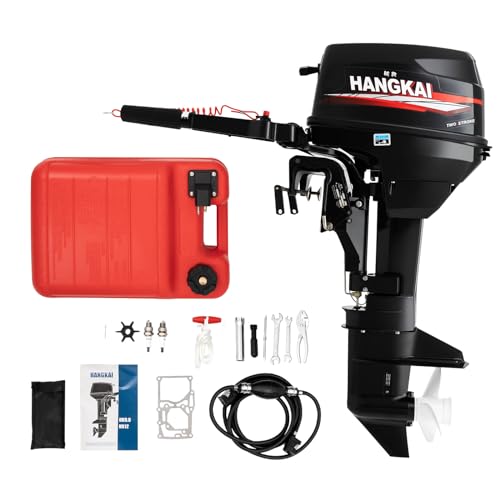
HANGKAI 12HP 169CC Short Shaft is the closest match to a Hangkai 12 hp outboard motor, with a 169 cc two-stroke engine, short shaft, and forward, neutral, and reverse gears. Choose another option if your priority is a lighter stated weight or a claimed speed range; confirm your boat’s transom height matches a short shaft before ordering.
A small outboard mounts to a boat’s transom and steers from a tiller, so shaft fit and load capacity matter as much as horsepower.
We earn a commission if you buy through links on this page. As an Amazon Associate I earn from qualifying purchases. Products are compared on manufacturer specifications, not hands-on testing.
- Best overall: HANGKAI 12HP 169CC Short Shaft – A 169 cc, 12 hp short shaft motor with forward, neutral, and reverse selection.
- Best for lighter listed weight: BJTDLLX 12 HP 169CC Short Shaft – At about 59.5 lb, its weight makes it the lightest of the three exact-fit options.
- Best for a stated speed range: LIWBYYG 12 HP 169CC Short Shaft – The maker claims a speed range of 8–30 km/h for this 12 hp motor.
| Product | Best for | Weight | Shop |
|---|---|---|---|
| HANGKAI 12HP 169CC Short Shaft | All-around match | 72.75 lb | Check Price on Amazon |
| BJTDLLX 12 HP 169CC Short Shaft | Lower stated weight | 59.5 lb | Check Price on Amazon |
| LIWBYYG 12 HP 169CC Short Shaft | Stated speed range | — | Check Price on Amazon |
12 hp outboard motors
These short shaft, two-stroke motors share a 12 hp rating, but their gear features and stated weights vary.
HANGKAI 12HP 169CC Short Shaft

Forward, neutral, and reverse gears distinguish this HANGKAI 12 hp motor from the other 12 hp options here. Its 169 cc two-stroke engine uses water cooling and CDI ignition, with a throttle handle for speed control. The short shaft format suits a boat with a transom designed for that shaft length, and the weight is 72.75 lb. The maker describes flexible steering and cruise control, but the maker gives no fuel-tank capacity, so buyers planning longer outings should confirm their fuel arrangement before choosing.
Bottom line: Choose this if you want three gear positions in a 12 hp short shaft motor.
BJTDLLX 12 HP 169CC Short Shaft

A weight of about 59.5 lb makes this the lighter documented choice among the three motors, which can matter when lifting an outboard onto a transom or storing it between trips. The 169 cc, 12 hp two-stroke has tiller control, water cooling, and CDI ignition. The maker claims 661–1,763 lb of thrust and 8–30 km/h speed, and describes it for small boats up to 19.69 feet and 661 lb. Those claims do not replace checking the boat maker’s horsepower and load limits; buyers with boats outside those stated bounds should choose a correctly rated motor.
Bottom line: Choose this when its lower stated weight suits your handling needs and your boat meets the limits.
LIWBYYG 12 HP 169CC Short Shaft
The maker gives this LIWBYYG motor a claimed speed range of 8–30 km/h, a performance figure not provided for the HANGKAI option. The 169 cc, 12 hp two-stroke uses water cooling and CDI ignition, and the housing is aluminum alloy with anti-corrosion paint. Its short shaft setup is intended for boats with a matching transom; the clamp is described as suitable for transoms up to 17.32 inches. That clamp limit is not a substitute for confirming shaft-to-transom alignment, so buyers should measure the transom before selecting this motor.
Bottom line: Choose this if the maker’s speed range and clamp limit suit your boat.
How to match a short shaft outboard to a boat
A short shaft typically measures about 15 inches from the transom bracket to the anti-ventilation plate; long shafts are typically about 20 inches. Measure from the top of the transom to the bottom of the hull, then compare that height with the motor’s shaft specification rather than relying on the product name alone. A mismatch can put the propeller too high or too low, reducing control and encouraging ventilation. For a small boat, use the boat maker’s maximum horsepower and load rating as hard limits; a 12 hp rating does not establish that a motor suits every inflatable or dinghy. If the transom height is near the short shaft limit, confirm the motor’s actual shaft measurement before choosing.
What to compare in a 12 hp two-stroke motor
Gear selection changes maneuvering: forward, neutral, and reverse are useful for docking, while a tiller throttle lets the operator steer and adjust speed at the motor. Two-stroke engines generally require the correct gasoline-and-oil mixture, but the required ratio varies by engine; never assume a ratio based on horsepower or another motor. Water cooling also depends on a clear intake and adequate water supply. Use this comparison as a starting point, then match the control arrangement and manufacturer’s fuel-mix requirements to your boat and operating plan.
| Need | What to prioritize |
|---|---|
| Frequent docking or reversing | Forward, neutral, and reverse selection |
| Handling the motor ashore | Lower stated weight, with lifting help as needed |
| Matching a shallow transom | Measured shaft-to-transom fit |
| Longer outings | Verified fuel mixture and suitable fuel capacity |
Safe setup and operation for small outboards
Keep the cooling-water intake submerged whenever the engine runs; running a water-cooled outboard dry can quickly damage the water pump. Attach the emergency-stop lanyard to the operator, wear a properly sized U.S. Coast Guard-approved life jacket, and keep passengers seated and distributed within the boat maker’s load limit. A motor’s horsepower, thrust, and speed claims do not determine safe passenger capacity. Before starting, check that the motor is clamped securely, the propeller area is clear, and fuel is handled away from ignition sources. Never exceed the hull’s rated horsepower or weight capacity, even if the motor physically mounts to the transom.
Frequently Asked Questions
How do I know whether a short shaft will fit my boat?
Measure from the top of the transom to the hull bottom and compare that measurement with the motor’s shaft length. A short shaft is typically about 15 inches, but transom geometry and motor design can change the needed fit.
Can a 12 hp outboard power any inflatable boat?
No; the boat’s rated maximum horsepower and weight capacity decide whether 12 hp is suitable. Check both limits, including passengers, gear, fuel, and the motor’s weight.
Does a water-cooled outboard need water before starting?
Yes, keep the cooling intake submerged while the engine runs so water can circulate. Dry running can damage the water pump quickly, even during a brief test.
Do all two-stroke outboards use the same fuel mix?
No, the gasoline-to-oil ratio is engine-specific, so use the ratio specified for that exact motor. Do not infer a mix from another 12 hp engine or from fuel consumption.
What safety gear should I use with a small outboard?
Wear a properly fitted U.S. Coast Guard-approved life jacket and connect the emergency-stop lanyard to the operator. Keep the propeller clear before shifting and never exceed the boat’s rated load or horsepower.