
HEAD Tour Pro Racket: Tennis Models Compared

The HEAD Tour Pro suits recreational players who want a forgiving frame, with its 110-square-inch head creating a larger target area. Choose a different racket if you want a smaller 98-square-inch head or a different grip size.
A tennis racket’s head size affects its hitting area, while grip size affects how securely it sits in your hand.
We earn a commission if you buy through links on this page. As an Amazon Associate I earn from qualifying purchases. Products are compared on manufacturer specifications, not hands-on testing.
- Best overall: HEAD Tour Pro Tennis Racket – Its 110-square-inch head gives recreational players a larger sweet spot.
- Best for smaller head size: HEAD Radical Pro Tennis Racquet – The 98-square-inch head is smaller than the Tour Pro’s 110-square-inch head.
- Best for 4 3/8-inch grip: Wilson Tour Slam Lite – Its grip size matches the Tour Pro’s 4 3/8-inch grip.
| Product | Best for | Head size | Grip size | Shop |
|---|---|---|---|---|
| HEAD Tour Pro Tennis Racket | Recreational players | 110 sq in | 4 3/8 in | Check Price on Amazon |
| Wilson Tour Slam Adult | Smaller grip | — | 4 1/4 in | Check Price on Amazon |
| HEAD Radical Pro Tennis Racquet | Compact head size | 98 sq in | 4 3/8 in | Check Price on Amazon |
| Wilson Tour Slam Lite | Beginning players | — | 4 3/8 in | Check Price on Amazon |
Head Tour Pro Racket and Tennis Alternatives
Compare the head size, weight, and grip information to find the racket that matches your play and fit needs.
HEAD Tour Pro Tennis Racket

The HEAD Tour Pro stands out for its 110-square-inch head, a larger hitting area than the 98-square-inch HEAD Radical Pro. The frame weighs 9.7 ounces and is 27 inches long, with a 4 3/8-inch grip. It comes pre-strung with synthetic gut 16-gauge string and uses Nano Titanium technology. HEAD describes its head-light balance as helping reduce vibration and aid stability. The larger head suits casual players who want a more forgiving target; players seeking a smaller head for a more compact hitting area should consider another option.
Bottom line: Choose this for recreational play and a larger 110-square-inch head.
Wilson Tour Slam Adult

The Wilson Tour Slam differs from the HEAD Tour Pro with its smaller 4 1/4-inch grip. Its frame uses AirLite Alloy, while the maker describes Volcanic Frame Technology as providing power and stability. Longer Power Strings and V-Matrix technology are intended to add power and forgiveness, and Stop Shock Pads reduce vibration. It comes pre-strung. This racket may suit an adult recreational player who needs the smaller grip; the maker does not give a head size or frame weight for a direct comparison on those points.
Bottom line: Choose this if a 4 1/4-inch grip is the priority.
HEAD Radical Pro Tennis Racquet

The HEAD Radical Pro has a 98-square-inch head, notably smaller than the Tour Pro’s 110-square-inch head. It is 27 inches long and has a 315-millimeter balance point, with a 16-by-19 string pattern. The racquet is strung at mid tension with Velocity 16-gauge string, and the name gives a 4 3/8-inch grip. Its smaller head may better suit a player seeking a more compact hitting area than the recreational Tour Pro offers.
Bottom line: Choose this for a 98-square-inch head and mid-tension stringing.
Wilson Tour Slam Lite
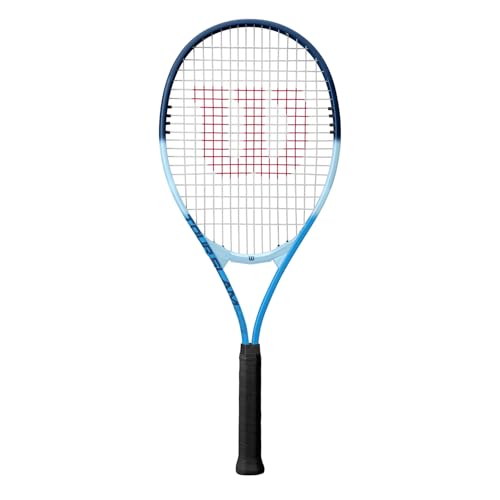
The Wilson Tour Slam Lite is presented as an easy-to-use option for beginners, unlike the HEAD Tour Pro’s recreational-player positioning. It has a 4 3/8-inch grip and features Stop Shock Sleeves at 3 and 9 o’clock to reduce string vibration. Wilson says its V-Matrix throat geometry creates a larger sweet spot, while the Power Bridge creates longer main strings for rebound speed and power. The maker also describes the frame as extra length, but the measurements do not establish a reliable standard racket length comparison; verify length if court coverage is a deciding factor.
Bottom line: Choose this if you are beginning tennis and want a 4 3/8-inch grip.
How to choose a tennis racket
Start with grip fit and head size, then compare frame weight and length. Adult rackets are commonly 27 inches long; longer frames can add reach but may feel less maneuverable. Head sizes around 95 to 105 square inches are common among many adult performance frames, while larger heads can provide a broader hitting area. A practical fit check is to hold the racket normally: there should be roughly a finger’s width between your fingertips and palm. If the handle feels loose or cramped, try a different grip size rather than relying on head size to solve a control issue.
For a recreational player still developing consistent contact, a larger head can make the usable hitting area more forgiving. Players prioritizing a compact feel may prefer a smaller head, but technique and string setup also affect the response.
What racket grip size should you choose
Choose a grip that lets you hold the handle securely without squeezing hard. A common quick check leaves about one finger’s width between the fingertips and palm when you wrap your hand around the grip. The 4 1/4-inch and 4 3/8-inch sizes differ by 1/8 inch, enough to change how a handle feels in the hand.
Grip circumference is measured around the handle, not across the racket head. Overgrips add thickness, so account for them if you regularly use one. If you fall between sizes, many players start with the smaller handle because an overgrip can build it up; avoid choosing a handle that already feels too large to close your hand comfortably.
How head size changes racket feel
Head size describes the string bed’s area, usually in square inches. A larger head gives the player a wider contact zone, while a smaller head makes the striking area more compact. That difference is useful when comparing recreational frames with performance-oriented designs, but head size alone does not determine power or control.
String tension and string type also change the response: lower tension generally allows more string movement and a livelier feel, while higher tension tends to make the bed feel firmer. Tension is commonly measured in pounds, and the suitable range depends on the specific frame and string. Use the frame’s recommended tension range rather than choosing tension from head size alone.
Racket stringing and routine care
Pre-strung rackets are ready to play, but strings lose tension and resilience over time. A commonly used rule of thumb is to restring as many times per year as you play each week; a player on court three times weekly might restring about three times yearly. Heavy hitters and frequent players may need more frequent restringing, while occasional players may need less.
Store a racket away from prolonged heat, such as a hot car trunk, because temperature changes can affect strings and frame materials. Check the strings for fraying or broken strands before play, and replace strings when they break or the response changes noticeably. Use the racket’s specified tension range for restringing; strings pulled beyond the frame’s limits can damage the frame.
Frequently Asked Questions
Is the HEAD Tour Pro suitable for a beginner?
The HEAD Tour Pro is described for recreational play and has a 110-square-inch head. That larger head provides a broader hitting area than a 98-square-inch frame, which may suit a player still building consistent contact.
What is the difference between 4 1/4 and 4 3/8 grip size?
The sizes differ by 1/8 inch in handle circumference. A grip that is too small can encourage squeezing, so use a secure hold with about a finger’s width between your fingertips and palm.
How often should tennis racket strings be replaced?
A common rule of thumb is to restring as many times per year as you play each week. For example, a player who plays three times weekly may restring around three times a year, with frequent heavy hitting increasing the need.
Does a larger tennis racket head add more power?
A larger head provides a broader string-bed area, but it does not guarantee more power by itself. String type and tension, racket weight, and the player’s swing also affect the response.
Can I use a tennis racket in hot weather?
Yes, but avoid leaving a racket for long periods in a hot car, where heat can affect strings and frame materials. Inspect the strings before play and restring broken or badly frayed strings.