
Highest Rated No Bark Collars: 5 Models Compared

For a no-shock option, No-Shock Sound & Vibration Collar stands out because it uses sound and vibration and fits dogs from 6 to 120 pounds. Choose another model if you want a two-collar pack, static feedback, or a specific set of training modes.
These collars detect barking and deliver selected feedback; they are training aids, not substitutes for identifying why a dog is barking.
We earn a commission if you buy through links on this page. As an Amazon Associate I earn from qualifying purchases. Products are compared on manufacturer specifications, not hands-on testing.
- Best overall: No-Shock Sound & Vibration Collar – It combines sound and vibration feedback with a fit range of 6–120 pounds.
- Best for two dogs: Koguzl Two-Collar Pack – The package includes two collars and lists five training modes.
- Best for mode choice: Kollgux Four-Mode Collar – It offers four feedback modes, including adjustable static stimulation.
| Product | Best for | Feedback modes | Dog weight range | Sensitivity levels | Shop |
|---|---|---|---|---|---|
| No-Shock Sound & Vibration Collar | No-shock training | Sound, sound + vibration | 6–120 lb | — | Check Price on Amazon |
| Koguzl Two-Collar Pack | Two-dog households | 5 modes | 11–120 lb | 7 | Check Price on Amazon |
| Kollgux Four-Mode Collar | Feedback flexibility | 4 modes | — | Adjustable | Check Price on Amazon |
| Oliry Five-Mode Smart Collar | Five-mode selection | 5 modes | — | 5 | Check Price on Amazon |
| FAFAFROG Smart Collar | Visible status display | 4 modes | — | 5 | Check Price on Amazon |
No Bark Collars Compared
Compare the feedback options and fit ranges to choose a collar that matches your training approach and dog.
No-Shock Sound & Vibration Collar

Unlike collars that include static stimulation, this model uses sound or sound plus vibration for feedback. It fits dogs from 6 to 120 pounds and adjusts for necks from 6 to 25 inches, giving buyers both weight and neck measurements to check. The maker says its detection system is designed to distinguish the dog’s bark from common noises such as traffic and television. Choose it if you want a no-shock setup. Its two modes offer less feedback variety than collars with beep-only, vibration-only, or static combinations.
Bottom line: Pick this if you want sound and vibration without static stimulation.
Koguzl Two-Collar Pack
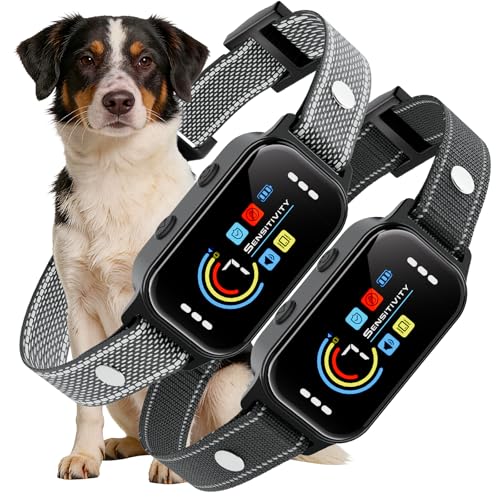
The two-collar package is the main distinction here, making it a practical match for households training two dogs. Koguzl offers five training modes and seven sensitivity levels, with a one-button mode control. The maker says the unit has an automatic pause after three activations in 45 seconds and an IP67 waterproof rating. Its weight range is 11 to 120 pounds, so it is not the best fit for dogs under 11 pounds; confirm that your dog’s weight and collar fit fall in range before choosing it.
Bottom line: Choose this pack when you need two collars and your dogs weigh at least 11 pounds.
Kollgux Four-Mode Collar

This Kollgux model stands apart with four selectable feedback modes: beep, vibration, beep plus vibration, and adjustable static stimulation. Its automatic bark detection and digital display give owners visible status and power information. The maker says the collar is rechargeable and waterproof, but the specifications do not give a weight or neck-size range, so verify the fit before ordering. This is the option to consider when you want static available alongside non-static feedback; it may not suit buyers who want a strictly no-shock collar.
Bottom line: Pick this if multiple feedback types, including adjustable static, matter most.
Oliry Five-Mode Smart Collar

Oliry distinguishes itself with five modes, including beep, vibration, combined feedback, and two static combinations, plus five sensitivity levels. The maker says its bark recognition responds in 0.01 seconds. The collar is rechargeable and has an IP67 waterproof rating. Its mode set includes static feedback, which makes it a poor choice for buyers who want sound and vibration only; the additional combinations are useful only when they match your training plan.
Bottom line: Choose this when you want five modes and adjustable sensitivity.
FAFAFROG Smart Collar

The FAFAFROG collar pairs four working modes and five sensitivity levels with a color display for working status and power level. The maker says its bark recognition uses continued barking and vocal-cord vibration as activation conditions, and its protection mode pauses for 30 seconds after six activations. Its size is given as 27 inches, but the fields do not clarify whether that is a maximum neck fit, so check the sizing before choosing it. The pause feature may also interrupt feedback during repeated barking.
Bottom line: Pick this if a display and a pause after repeated activations are priorities.
How to Choose a No Bark Collar
Choose a collar by feedback type first, then by fit and trigger controls. Sound-only or sound-and-vibration models avoid static feedback; other collars combine beep, vibration, and static settings. Start with the least intrusive feedback that suits your training plan, and do not leave an electronic collar on continuously: inspect the neck regularly and remove it if you see irritation. A bark collar cannot explain or resolve the reason for barking, which may be alarm, fear, boredom, or separation distress. Pair any collar with reward-based training for quiet behavior rather than relying on correction alone.
Fit matters as much as the mode menu. Measure the dog’s neck where the collar will sit and compare it with the range; a weight range alone does not ensure the strap will fit. Supervise initial use so you can stop if the dog shows distress.
Bark Collar Fit and Neck Sizing
Measure neck circumference with a flexible tape and leave enough room for a comfortable fit; a common fit check is to slide two fingers beneath the strap. Keep the contact points positioned as the maker intends, with no pinching or excessive pressure. Fur thickness, neck shape, and how the strap sits can change fit even when a dog is within a weight range. A collar listed for 6 to 120 pounds can still be unsuitable if the neck measurement falls outside its 6 to 25-inch range.
Use this fit-first rule: if the dog’s neck is outside the range, do not choose that collar based on weight alone. For models without a usable neck range in the specifications, confirm the permitted neck measurement before ordering rather than guessing from the collar’s overall length.
No-Shock and Multi-Mode Bark Collars
No-shock collars in this group rely on sound and vibration, while multi-mode models may also include static stimulation. Bark detection and sensitivity controls are intended to limit unwanted activation, but no sensor can be assumed to identify every bark correctly from the features alone. Start with sound or vibration when a model offers those settings, and supervise the dog’s response.
The table compares feedback selection rather than a promise of training results. If the dog reacts with fear, attempts to escape, or shows discomfort, stop using the collar and address the barking trigger with a qualified trainer or veterinarian. Avoid using a correction collar as a substitute for exercise, enrichment, or gradual training around the cause.
| Feedback setup | Typical choice | Best match |
|---|---|---|
| Sound and vibration | No static mode | Owners avoiding static feedback |
| Several combinations | Beep, vibration, and optional static | Owners needing selectable feedback |
Safe Use and Bark-Trigger Checks
Check the dog’s neck at least once daily during initial use, and remove the collar when the dog is crated or unsupervised if the manufacturer does not permit continuous wear. Repeated pressure and moisture can irritate skin, while a collar snagged on a fence or crate can create a hazard. Keep collar training sessions supervised and pair quiet behavior with rewards.
Before using a bark collar, identify when barking happens: record the trigger, time, and duration for several days. If barking occurs mainly when the dog is alone, a collar does not address separation-related distress; gradual alone-time training is more relevant. If barking is new or accompanied by other behavior changes, consult a veterinarian before treating it as a training issue.
Frequently Asked Questions
How tight should a no bark collar fit?
A common fit check is to slide two fingers beneath the strap without pinching the skin. Measure the dog’s neck circumference and stay within the collar’s neck range; weight alone does not confirm fit.
Can a bark collar trigger around other dogs?
It can be possible for any bark-detection device to respond in a noisy setting, even when a model is designed to filter other sounds. Supervise the first sessions around nearby dogs and discontinue use if the collar activates repeatedly without your dog’s bark.
How long should a dog wear a bark collar?
Use a bark collar only during supervised training periods and inspect the neck daily for redness or rubbing. Do not leave it on continuously unless the maker explicitly permits that wear schedule.
Should I use a bark collar for separation barking?
A bark collar does not address the distress that can drive barking when a dog is alone. Track how long the dog can remain calm and use gradual alone-time training; seek veterinary or qualified behavior help if distress is pronounced.
What should I do if the collar activates repeatedly?
Stop the session if the collar repeatedly activates without an obvious bark or the dog shows distress. Check the fit and surroundings, then resume only under supervision after addressing the trigger.