
Holistic Honey Eye Drops: 3 Options Compared by Formula

For honey-based eye drops, choose by the formula and whether the product is intended for use in the eye; Optimel Manuka Dry Eye Drops identifies both a manuka honey extract and 0.2% glycerin.
These options are not interchangeable: compare the ingredients and bottle size, and seek clinical advice for persistent eye irritation or pain.
We earn a commission if you buy through links on this page. As an Amazon Associate I earn from qualifying purchases. Products are compared on manufacturer specifications, not hands-on testing.
- Best overall: Optimel Manuka Dry Eye Drops – Its formula specifies manuka honey extract and 0.2% glycerin.
- Best for tear-like moisture: ZOXY Manuka Honey Eye Drops – Its maker says the formula is designed to mimic natural tears.
- Best for a larger bottle: MELIPONA BEE Honey Eye Drops – The product is sold in a 1 fl oz size.
| Product | Best for | Formula | Bottle size | Preservative claim | Shop |
|---|---|---|---|---|---|
| Optimel Manuka Dry Eye Drops | Specified formula | Manuka extract, 0.2% glycerin | 10 mL | Preservative-free | Check Price on Amazon |
| ZOXY Manuka Honey Eye Drops | Tear-like moisture | Manuka honey; tear-replenishing formula | 0.68 fl oz | Paraben-free; preservative claim | Check Price on Amazon |
| MELIPONA BEE Honey Eye Drops | Larger bottle | Honey eye drops | 1 fl oz | — | Check Price on Amazon |
Holistic Honey Eye Drops
Compare the intended use and stated formula before choosing a honey-based eye drop.
Optimel Manuka Dry Eye Drops

Optimel Manuka Dry Eye Drops gives the clearest ingredient and concentration information among these honey eye drops: its formula includes manuka honey extract and 0.2% glycerin, in a 10 mL bottle. The maker says the drops hydrate and soothe dry, irritated eyes and support lid-margin hygiene. This option suits shoppers who want a glycerin percentage alongside the honey ingredient. The limitation is the small 10 mL bottle, which may not suit someone prioritizing a larger container; choose based on the bottle size you prefer, not the product’s comfort claims alone.
Bottom line: Choose this if a glycerin concentration and preservative-free formula matter to you.
ZOXY Manuka Honey Eye Drops

ZOXY Manuka Honey Eye Drops stands out for its tear-replenishing purpose and 0.68 fl oz bottle. The maker says the formula is intended to mimic natural tears and provide moisture for dryness associated with environmental factors, screen use, or contact lens wear. That positioning may appeal to someone looking for a moisture-focused manuka option. Buyers who need to check compatibility with contact lenses should confirm that point with a clinician or the manufacturer before use.
Bottom line: Choose this if you want a tear-replenishing manuka formula in a 0.68 fl oz bottle.
MELIPONA BEE Honey Eye Drops
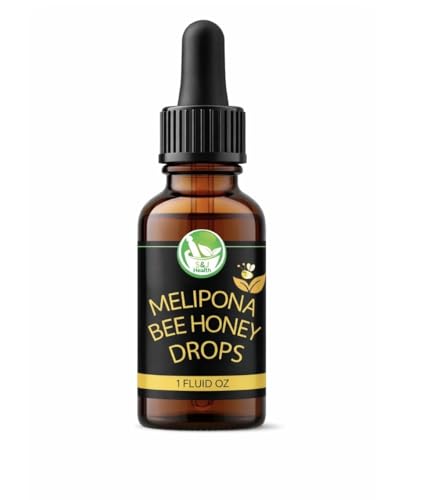
MELIPONA BEE Honey Eye Drops is identified as honey eye drops and comes in a 1 fl oz bottle, making bottle size its clear differentiator here. That larger stated volume may suit a buyer who values having more product per container. Eye drops must be intended and prepared for ocular use; do not substitute a skin-care honey product. If a specific ingredient or preservative is important, verify the formula before choosing this option.
Bottom line: Choose this if the 1 fl oz bottle size is your priority.
How to compare honey eye drop formulas
Start with ingredients and intended use, not broad words such as “natural” or “soothing.” Eye drops are formulated for the eye’s surface, while creams and serums around the eye are skin products; never put a skin product into the eye. Glycerin is a humectant used in some lubricating drops, and Optimel Manuka Dry Eye Drops specifies 0.2% glycerin alongside manuka extract. Honey content and concentration matter when comparing formulas, but ZOXY Manuka Honey Eye Drops and MELIPONA BEE Honey Eye Drops do not give a comparable honey percentage. A useful decision rule: if you need to avoid a particular preservative or ingredient, select only a formula that names it clearly or verify the ingredient list before use. Marketing language does not establish that a drop suits a specific eye condition.
Eye drops versus under-eye serum
An eye drop goes onto the eye’s surface; an under-eye serum is applied to skin and is not a substitute. The tear film has three interacting components—an oily outer layer, a watery middle layer, and a mucin-rich inner layer—and different dry eye patterns can involve different components. That is why a skin moisturizer cannot be assumed to lubricate the eye. Use products only for their intended application site, and stop using a product that causes significant irritation. Persistent pain, vision changes, or pronounced redness warrants prompt professional advice rather than trying another cosmetic product.
How bottle size and use affect your choice
Bottle size is a practical comparison, but it does not tell you how many doses a container provides: drop size and the labeled directions affect that total. The sizes here range from 10 mL to 1 fl oz; 1 fl oz is about 29.6 mL, nearly three times 10 mL. Preservative-free drops can be relevant for people who need frequent dosing, but the label and clinician’s guidance should determine suitability. Avoid touching the dropper tip to the eye, fingers, or another surface because that can contaminate the contents. Do not share eye-drop containers. If you wear contact lenses, check the product’s lens-use directions rather than assuming every lubricating drop is compatible.
When to seek care for eye irritation
Persistent or severe eye symptoms call for professional assessment, not reliance on a honey-based product’s general comfort claims. Dryness can come from environmental exposure, prolonged screen time, medication effects, or other eye conditions, and the cause changes the appropriate care. Sudden vision changes, severe pain, or marked redness are reasons to seek prompt medical care. For mild irritation, reduce direct airflow and take regular screen breaks; blinking spreads the tear film across the eye. Contact lens wearers should remove lenses if discomfort begins and follow their eye-care professional’s advice. Do not use a bottle past its labeled discard period or if the solution looks changed, and follow the package’s storage and hygiene directions.
Frequently Asked Questions
Can honey eye drops be used with contact lenses?
Compatibility depends on the specific formula and its directions. Check the package or confirm with an eye-care professional before applying drops while lenses are in.
Are under-eye honey serums the same as eye drops?
No. An under-eye serum is a skin-care product and should not be placed on the eye’s surface; use only products intended for ocular use.
How much larger is a 1 fl oz bottle than 10 mL?
One fluid ounce is about 29.6 mL, so it is nearly three times the volume of a 10 mL bottle.
When should I get medical advice for dry eyes?
Seek prompt care for severe eye pain, pronounced redness, or vision changes. Ongoing dryness also merits professional advice because several different causes can produce similar symptoms.