
Fishing Hook Removal Tools: 4 Dehookers Compared

Booms Fishing XW20 9.6-inch Dehooker suits anglers targeting medium or larger fish because its hook range covers treble hooks from #6 to #1 and single hooks from 1/0 to 9/0. Choose a different tool if you need several lengths in one set or a 13.6-inch reach.
A fishing dehooker helps remove a hook while keeping fingers away from the fish’s mouth; the trigger or jaw engages the hook so it can be backed out.
We earn a commission if you buy through links on this page. As an Amazon Associate I earn from qualifying purchases. Products are compared on manufacturer specifications, not hands-on testing.
- Best overall: Booms Fishing XW20 9.6-inch Dehooker – Its hook range covers treble hooks #6 to #1 and single hooks 1/0 to 9/0.
- Best for varied reach: SNAIL TRAIL 4-Piece Hook Remover Set – The four-piece set includes tools from 5.1 to 11.5 inches.
- Best for extra reach: CRAZY SHARK 13.6-inch Aluminum Remover – Its 13.6-inch design provides the longest reach among these tools.
| Product | Best for | Length | Material | Design | Shop |
|---|---|---|---|---|---|
| Booms Fishing XW20 9.6-inch Dehooker | Medium, large fish | 9.6 in | Aluminum; PP + TPR | Squeeze trigger; lanyard | Check Price on Amazon |
| Booms Fishing R2 10-inch Remover | One-hand operation | 10 in | Anodized aluminum; plastic | Squeeze-out; ergonomic handle | Check Price on Amazon |
| SNAIL TRAIL 4-Piece Hook Remover Set | Multiple tool lengths | 5.1–11.5 in | Stainless steel; PP plastic | Four sizes; serrated jaw | Check Price on Amazon |
| CRAZY SHARK 13.6-inch Aluminum Remover | Longer reach | 13.6 in | Aviation-grade aluminum; stainless steel | Long reach; three-step use | Check Price on Amazon |
Fishing Hook Removal Tools Compared
Compare the reach, construction and design to match a dehooker to your fishing needs.
Booms Fishing XW20 9.6-inch Dehooker

For anglers targeting medium or larger fish, this 9.6-inch squeeze-out dehooker stands apart with a compatible range: treble hooks #6 to #1 and single hooks 1/0 to 9/0. Its PP and TPR textured handle is designed for a firm hold, including with wet or gloved hands, and it has a lanyard. The maker says it is intended for saltwater and freshwater and for removing deeply embedded hooks with less harm to fish. The hook range is useful for matching tackle, but anglers using hooks outside it should choose another tool.
Bottom line: Pick this if your hooks fall within its range and you want a squeeze trigger.
Booms Fishing R2 10-inch Remover

The R2 combines a 10-inch reach with anodized aluminum, making it a straightforward choice for anglers who want a single-hand squeeze-out tool. Its ergonomic plastic handle is shaped for palm fit and wrist twisting, while the long tool is intended to keep fingers farther from sharp-toothed fish such as trout and snapper. The maker says it can remove deeply embedded hooks with less harm to fish, including in catch-and-release situations. Unlike the four-piece kit, this is one tool rather than a set of different lengths, so it may not suit anglers who want several reach options.
Bottom line: Choose this for a single-hand tool with a 10-inch reach.
SNAIL TRAIL 4-Piece Hook Remover Set

This four-piece set offers the broadest choice of lengths here, with tools measuring 5.1, 6.1, 6.5 and 11.5 inches. The stainless-steel and PP-plastic construction is intended for saltwater use, and the maker describes the serrated jaw as suitable for a range of lure types, including spinnerbaits, swimbaits, flies and soft baits. The long, sturdy jaw is designed for one-hand hook removal without touching the fish’s mouth. A set is useful when reach varies by situation, but it takes more storage space than carrying one dehooker.
Bottom line: Pick the set if you want four lengths for different hook-removal situations.
CRAZY SHARK 13.6-inch Aluminum Remover
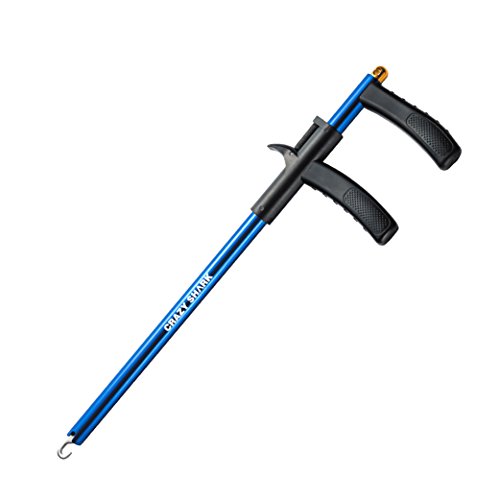
The 13.6-inch reach distinguishes this aluminum dehooker from the shorter individual tools in this group. It pairs an aviation-grade aluminum tube with a stainless-steel hook, and its plastic handle is shaped for a comfortable grip and wrist twisting. The maker describes a three-step removal process and says the construction is corrosion-resistant in saltwater. The longer handle may help anglers who need more distance between their hand and a fish’s mouth, but its 13.6-inch length is less compact than a shorter tool for anglers prioritizing small tackle storage.
Bottom line: Choose this when extra reach matters more than compact storage.
How to choose a fishing hook removal tool
Match the tool’s reach and hook engagement style to the fish and hooks you handle. A longer shaft keeps your hand farther from the mouth, while a squeeze trigger can let you control the tool with one hand. For sharp-toothed fish, avoid reaching into the mouth with fingers; use a dehooker or long-handled pliers and keep the fish secured. Hook size compatibility matters too: compare the maker’s range with the hooks on your lures, especially for treble hooks. A tool’s advertised range is not a substitute for a secure grip on an active fish. Keep a backup pair of pliers available for hooks the dehooker cannot engage safely.
Reach and fish handling for dehookers
Choose more reach when a fish’s mouth or hook position makes hand clearance the priority; choose a shorter tool when compact carry matters more. Fishing dehookers use a shaft and a hook-engaging end to guide or pull a hook back out, while pliers grip the hook directly. Keep the fish supported and close to the water when possible, and avoid squeezing its gills or eyes. For a deeply embedded hook, do not force a tool that cannot catch the bend or shank securely; a loose hold can slip toward your hand. Barbed hooks resist backing out, so steady pressure and a controlled angle matter more than speed.
Dehooker materials and saltwater care
Saltwater accelerates corrosion on exposed metal, so rinse a tool with fresh water after each saltwater outing and dry it before storage. Aluminum shafts and stainless-steel components are common in fishing tools, but mixed materials can still have joints or surfaces that need cleaning. Check the moving trigger, jaw and any pivot for grit or salt buildup before the next trip; debris can interfere with smooth control. Lubricate a moving joint only with a product suitable for the tool’s materials, and keep oil away from the fish-handling surface. Store a dehooker dry and separated from wet tackle to reduce corrosion and protect its grip.
Hook removal mistakes to avoid
Do not pull a hook straight against its entry path when the barb is engaged; that can tear more tissue. Keep the line slack enough to control the hook, then rotate or back the hook out along its entry angle with a secure tool grip. Avoid putting fingers near a fish’s mouth, and never wrap line around a hand to control a fish or hook. If the hook cannot be reached or removed without forcing it, cutting the line close to the hook can be safer for the angler than repeated attempts; local fish-handling rules may also affect what to do next. Handle the fish over water and minimize time out of it.
Frequently Asked Questions
How do you use a fishing hook remover?
Engage the hook securely with the remover, then guide it back along the path it entered rather than tugging blindly. Keep fingers outside the fish’s mouth and control the line so the hook does not swing.
Are fishing hook removers safe for saltwater?
Some are made with corrosion-resistant materials, but salt and moisture can still collect around moving parts. Rinse with fresh water and dry the tool after each saltwater trip.
What is the difference between a dehooker and fishing pliers?
A dehooker engages the hook with a shaft and hook-removal end, while pliers grip the hook directly. A longer dehooker can keep your hand farther from the fish’s mouth, while pliers offer direct control when the hook is accessible.
How should I remove a barbed hook from a fish?
Back a barbed hook out along its entry angle with a secure grip rather than pulling straight against the barb. If the hook is too deep to reach without forcing it, avoid repeated attempts and consider cutting the line close to it.
How long should a fishing hook remover be?
Choose enough reach to keep your hand clear of the fish’s mouth while maintaining control of the hook. A longer shaft adds distance, but a shorter tool is easier to carry when extra reach is not needed.