
Hydraulic Oil for Log Splitters: 5 Options Compared

For a log splitter, Super S AW32 Log Splitter Oil is the most direct match because it is identified for log and wood splitters and uses AW32 fluid. Choose another option only if the splitter manual calls for its grade or you need a different container size; hydraulic viscosity requirements vary by machine and operating temperature.
We earn a commission if you buy through links on this page. As an Amazon Associate I earn from qualifying purchases. Products are compared on manufacturer specifications, not hands-on testing.
- Best overall: Super S AW32 Log Splitter Oil – The product is explicitly identified for log and wood splitters and uses AW32.
- Best for AW46: CAM2 Promax AW 46, 1 Gallon – This one-gallon hydraulic oil is AW46 grade.
- Best for larger supply: CAM2 Promax AW 32, 5 Gallons – The AW32 oil comes in a five-gallon pail.
| Product | Best for | Viscosity grade | Container size | Intended fit | Shop |
|---|---|---|---|---|---|
| Super S AW32 Log Splitter Oil | Splitter-specific use | AW32 | 1 gallon | Log and wood splitters | Check Price on Amazon |
| CAM2 Promax AW 46, 1 Gallon | AW46 requirement | AW46 | 1 gallon | General hydraulic systems | Check Price on Amazon |
| TRIAX Powerflow AW 46, 1 Gallon | Severe service | AW46 multi-viscosity | 1 gallon | General hydraulic systems | Check Price on Amazon |
| CAM2 Promax Premium AW 32, 1 Gallon | AW32 top-offs | AW32 | 1 gallon | General hydraulic systems | Check Price on Amazon |
| CAM2 Promax AW 32, 5 Gallons | Larger maintenance supply | AW32 | 5 gallons | General hydraulic systems | Check Price on Amazon |
Hydraulic Oil for Log Splitters
Match the fluid grade to your splitter manual before choosing among these oils.
Super S AW32 Log Splitter Oil

Unlike the general-purpose hydraulic oils here, this AW32 product is identified for log and wood splitters. Its uses also include gear and compressor oil, and it offers rust and corrosion protection. That makes it the most direct match for a splitter owner whose manual calls for AW32 fluid. The limitation is grade: AW32 should not replace AW46 or another specified fluid just because the machine is a log splitter. Check the manual’s viscosity requirement and operating-temperature guidance before filling or topping off.
Bottom line: Choose this if your splitter calls for AW32 and you want a fluid identified for log splitters.
CAM2 Promax AW 46, 1 Gallon
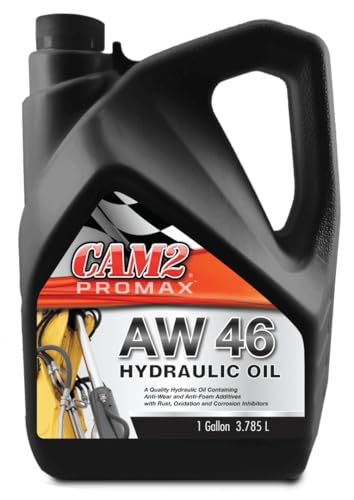
The key distinction here is AW46 viscosity, rather than the AW32 grade used by several other options. The one-gallon container suits a smaller maintenance quantity, and the product is intended for hydraulic systems, power steering units, and hydraulic equipment requiring AW46. CAM2 says its formula includes anti-wear and anti-foam additives plus rust, oxidation, and corrosion inhibitors. Its limitation for splitter owners is that it is not identified specifically for log splitters; use it only if the machine’s manual permits AW46.
Bottom line: Pick this when the splitter manual specifies AW46 and a one-gallon container is suitable.
TRIAX Powerflow AW 46, 1 Gallon
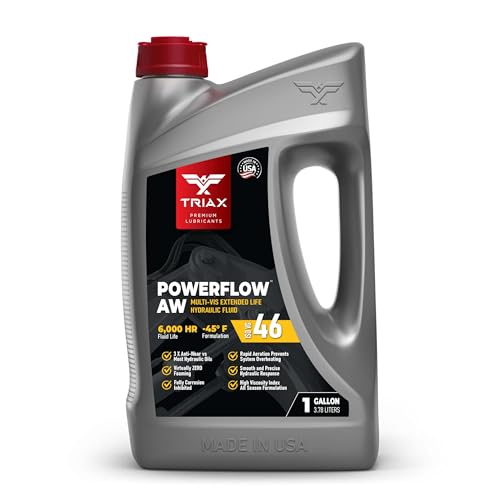
This is the AW46 option that emphasizes extended service and a broad operating-temperature range. The manufacturer says it is designed for 6,000-hour severe service, has a high viscosity index, and remains pourable down to -40°F. Those claims may matter for equipment exposed to demanding conditions, but they do not establish compatibility with a particular log splitter. The one-gallon size is the same as the other gallon options, while its multi-viscosity formulation distinguishes it. Confirm the required fluid grade in the splitter manual before use.
Bottom line: Consider this for demanding conditions only when your splitter permits AW46 fluid.
CAM2 Promax Premium AW 32, 1 Gallon

This general-purpose AW32 oil shares its grade and container size with the splitter-specific Super S option, but its applications are industrial equipment, construction equipment, and hydraulic lifts. CAM2 says the oil includes anti-wear and anti-foam additives and protection against rust, oxidation, and corrosion. Do not infer compatibility from viscosity grade alone if the manual requires a particular fluid specification.
Bottom line: Choose this if AW32 is permitted and general-purpose hydraulic oil fits your needs.
CAM2 Promax AW 32, 5 Gallons

The five-gallon pail sets this AW32 option apart from the one-gallon containers. CAM2 says it contains anti-wear and anti-foam additives and rust, oxidation, and corrosion inhibitors; the product is intended for a range of hydraulic systems. A larger quantity is useful only when the machine’s required grade matches and you have a suitable way to store and handle the remaining fluid. This product is not specifically identified for log splitters, so verify AW32 is the grade your splitter manual calls for before buying or filling.
Bottom line: Pick this if your splitter requires AW32 and you need a five-gallon quantity.
How to choose hydraulic oil for a log splitter
Choose by the viscosity grade and fluid specification in the splitter manual, not by the machine category alone. AW32 and AW46 correspond to ISO viscosity grades 32 and 46; at 40°C, ISO VG 32 spans 28.8–35.2 cSt and ISO VG 46 spans 41.4–50.6 cSt. AW32 is thinner at that reference temperature, while AW46 is thicker. Ambient temperature and the splitter’s design affect the correct choice, so a colder climate does not automatically make a different grade acceptable. If your manual permits both grades, use its temperature chart to decide; if it specifies one grade, do not substitute another based only on season.
AW32 and AW46 viscosity differences
AW32 and AW46 are not interchangeable labels: the numbers indicate different viscosity ranges measured at 40°C. A thinner fluid may flow more readily during cold starts, while a thicker grade may be specified for warmer operating conditions or a particular hydraulic design. Actual suitability still depends on the pump, seals, and manufacturer’s recommendations. Use this comparison as a starting point, then apply the splitter manual’s required grade and temperature range.
| Grade | Viscosity at 40°C | Practical decision |
|---|---|---|
| ISO VG 32 / AW32 | 28.8–35.2 cSt | Use when the manual calls for AW32 or permits it. |
| ISO VG 46 / AW46 | 41.4–50.6 cSt | Use when the manual calls for AW46 or permits it. |
Filling and handling splitter hydraulic oil
Hydraulic systems can retain pressure after the engine stops, and a pinhole leak can inject fluid through skin. Shut the splitter down, allow hot parts to cool, and release stored pressure using the procedure in the manual before opening the reservoir; never use a hand to search for leaks. Keep dirt and water out of the fill opening because contamination can damage pumps and valves. Use a clean funnel and clean containers, and avoid mixing different fluid types unless the manufacturer allows it. If fluid penetrates skin, seek emergency medical care immediately, even when the wound looks small.
When to change log splitter hydraulic oil
Use the splitter maker’s service interval and fluid condition rather than assuming every machine needs oil at the same hours. Heat, heavy use, and contamination can shorten fluid life; milky oil can indicate water contamination, while burnt odor or visible debris can signal a problem that merits service. Keep the reservoir at the specified level and inspect hoses and fittings for leaks during maintenance. Do not overfill: the correct level depends on the machine’s reservoir and cylinder position, so check it in the configuration described by the manual.
Frequently Asked Questions
Can I use AW46 oil in a log splitter?
Yes, if the splitter manual specifies AW46 or permits it. AW46 has a higher viscosity range at 40°C than AW32, so do not substitute it for a manual that calls for AW32.
Is AW32 hydraulic oil thinner than AW46?
Yes. At 40°C, ISO VG 32 is 28.8–35.2 cSt, while ISO VG 46 is 41.4–50.6 cSt; use the grade specified for your splitter.
Can I mix AW32 and AW46 hydraulic oil?
Avoid mixing grades unless the splitter manufacturer says they are compatible. Blending changes viscosity, and the resulting fluid may not match the machine’s required operating range.
How do I check hydraulic oil on a log splitter?
Check the level with the cylinder positioned as directed in the manual, since cylinder position changes the fluid level in the reservoir. Shut down the machine and release stored pressure before opening a fill cap.
How often should log splitter hydraulic oil be changed?
Use the service interval in the splitter manual because the interval varies by model and duty cycle. Frequent heavy use, overheating, or contaminated oil can justify inspection sooner than routine service.