
Infrared Chicken Coop Heater: 3 Radiant Panels Compared

For a flexible large panel with app and panel controls, PETNF Foldable 180W Radiant Heater is the closest fit; its 30 × 12-inch radiant heater folds and adjusts to fit the coop. Choose another option if you need automatic temperature adjustment or a smaller panel.
Radiant heaters warm nearby birds and surfaces rather than relying only on warming all the coop air, so placement and a safe, dry installation matter.
We earn a commission if you buy through links on this page. As an Amazon Associate I earn from qualifying purchases. Products are compared on manufacturer specifications, not hands-on testing.
- Best overall: PETNF Foldable 180W Radiant Heater – The 30 × 12-inch foldable panel offers app and panel controls plus wall-mount or floor-stand placement.
- Best for automatic adjustment: Smart 200W Sensor Radiant Panel – Its built-in sensor adjusts output toward a selected temperature, with a 70–190°F range.
- Best for timer compatibility: HOPOCO 200W Radiant Panel – It works with separate outlet timers and thermostatic plugs and retains prior settings.
| Product | Best for | Power | Panel dimensions | Shop |
|---|---|---|---|---|
| PETNF Foldable 180W Radiant Heater | Large adjustable panel | 180 W | 30 × 12 in | Check Price on Amazon |
| Smart 200W Sensor Radiant Panel | Sensor temperature control | 200 W | 16 × 11 in | Check Price on Amazon |
| HOPOCO 200W Radiant Panel | Timer plug compatibility | 200 W | 15.9 × 5.5 in | Check Price on Amazon |
Infrared chicken coop heaters
Compare the panel size, controls and installation options before choosing a radiant heater for your coop.
PETNF Foldable 180W Radiant Heater

The 30 × 12-inch foldable design makes this the largest panel in this group by dimensions. Its two panels unfold to 180°, and the heater can be wall-mounted or used with a floor stand; the angle can also be adjusted for a corner. App and panel controls handle heat settings and a timer. This suits keepers who want broad panel coverage and flexible positioning. The tradeoff is its larger footprint, which may be awkward in a compact coop; measure the mounting area and keep the heater clear of bedding.
Bottom line: Choose this when the coop has room for a wide panel and you want app or panel control.
Smart 200W Sensor Radiant Panel
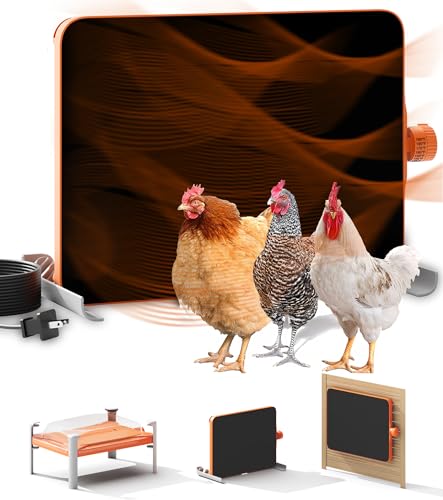
The built-in temperature sensor sets this panel apart: the maker says it adjusts output in response to surrounding temperature to maintain the selected setting. The heater measures 16 × 11 inches and can stand, lie flat or mount on a wall. Its 70–190°F range supports different settings, but a selectable maximum is not a safe target for every bird or setup. This is a fit for keepers who want sensor-based adjustment in a smaller panel. Confirm the target setting and placement for the birds’ age, and keep the heater away from combustible litter.
Bottom line: Choose this if sensor-based temperature adjustment matters more than a large panel.
HOPOCO 200W Radiant Panel

Compatibility with separate outlet timers and thermostatic plugs distinguishes this panel; those devices are not included. It measures 15.9 × 5.5 inches and has a memory function for prior temperature settings, operating modes and power state. The maker says it can automatically turn back on after power is restored and gives a maximum temperature of 191°F. This suits keepers who already use compatible plug controls. The narrow panel may provide less coverage than a wider unit, so position it for the intended warm area rather than assuming it will heat the whole coop.
Bottom line: Choose this if you want a compact panel that can work with external timer or thermostat plugs.
How to choose an infrared chicken coop heater
Choose by the area you want to warm, the control method and the mounting position—not wattage alone. Radiant panels direct heat toward nearby birds and surfaces, while room-air heaters are intended to warm a larger volume of air; coop drafts and ventilation affect comfort either way. Measure the available wall or floor area before comparing panel dimensions. As a practical rule, if the intended mounting spot is narrower than the panel, choose a smaller unit or a different location rather than covering or crowding it. Compare controls too: a timer schedules operation, while a sensor-based control responds to temperature. Neither removes the need to observe the birds and maintain a safe setup.
Brooder temperatures and age
Start newly hatched chicks near 95°F at chick level during the first week, then reduce the brooding temperature by about 5°F each week as they grow. Chicks’ age and behavior matter: crowding directly under heat can indicate they are cold, while avoiding the warm area can indicate it is too hot. A brooder needs a warm zone and a cooler area so chicks can move away from heat. Measure temperature at chick height, not at the ceiling or heater surface. Adult chickens have different needs from newly hatched chicks, so do not treat a panel’s maximum temperature as a recommended setting for the flock.
Radiant panels and coop heaters compared
Radiant panels warm a directed area; a ceramic air heater is a different type intended to warm surrounding air. The wattage does not by itself establish safe coverage or the temperature birds will experience, since coop size, insulation, ventilation and mounting position all affect results. For a focused warm zone, compare panel dimensions and mounting options. For broader air warming, evaluate the heater’s intended use and installation requirements rather than assuming a radiant panel will heat the entire coop. The table summarizes the difference by heating approach.
| Type | Heating approach | Consider when |
|---|---|---|
| Radiant panel | Directs heat toward nearby birds and surfaces | You need a focused warm area |
| Ceramic air heater | Warms surrounding air | You are considering broader air warming |
Safe placement and electrical setup
Keep heaters away from bedding, dust, water and anything that can fall against a hot surface. Poultry litter and feathers are combustible, and coop dust can accumulate around electrical equipment; mount and maintain the unit as directed by its maker. Use an appropriate protected electrical connection for the coop environment, keep cords secured where birds cannot peck or tangle in them, and do not use damaged cords or plugs. Radiant heat can create a hot spot even when the rest of the coop feels cool, so check temperatures where birds actually stand. If the heater or outlet becomes wet or damaged, disconnect power before handling it.
Frequently Asked Questions
How warm should a chicken brooder be for new chicks?
Newly hatched chicks generally need about 95°F at chick level in their first week. Reduce the target by about 5°F weekly as they grow, while providing a cooler area they can move into.
Do infrared heaters warm the whole chicken coop?
Radiant panels primarily warm nearby birds and surfaces rather than evenly heating all the air. Coop size, drafts, insulation and panel placement affect how much of the space feels warm.
Can a radiant heater be used for adult chickens?
A radiant panel can provide supplemental warmth, but adult birds should be able to move away from the heated area. Do not use a unit’s maximum temperature as the flock’s target setting.
Where should I mount a chicken coop heater?
Mount a heater where birds can benefit from its warmth without contacting the hot surface, and keep it clear of bedding and other combustibles. Measure the spot first and secure cords away from pecking and tangling.
How often should I check a coop heater?
Check the heater, plug and cord regularly for damage, and recheck placement when bedding or coop equipment shifts. Monitor temperature at bird level, especially after changing a setting or moving the heater.