
Intelligent Reading Glasses: 4 Models Compared

For an all-in-one pair, CEJIJK Rimless Auto Focus Readers, 4-Pack combines multifocus lenses with photochromic tinting and comes with four pairs; choose another option if you want a different pack size or frame material. These glasses are marketed as automatic-focus readers, but the maker does not explain how focus changes, so don’t assume they replace prescription eyewear.
Reading glasses magnify nearby text; multifocal designs may also include zones for intermediate or farther viewing.
We earn a commission if you buy through links on this page. As an Amazon Associate I earn from qualifying purchases. Products are compared on manufacturer specifications, not hands-on testing.
- Best overall: CEJIJK Rimless Auto Focus Readers, 4-Pack – Four pairs, multifocus lenses, photochromic tinting and rimless metal frames make it the most broadly equipped option.
- Best for frame material: AQOYNQ Auto Zoom Readers, 2-Pack – Its PC lenses and TR-and-metal frame materials are identified, and the two-pair set includes lens cloths and pouches.
- Best for stated focus range: Auto Focus Smart Glasses, 3-Pack – Its maker describes an adaptive range of 100° to 700°; confirm the lens range suits your vision before ordering.
| Product | Best for | Pack size | Lens features | Frame or lens material | Shop |
|---|---|---|---|---|---|
| CEJIJK Rimless Auto Focus Readers, 4-Pack | Multiple spare pairs | 4 pairs | Multifocus, photochromic | Metal frame | Check Price on Amazon |
| AQOYNQ Auto Zoom Readers, 2-Pack | Named materials | 2 pairs | Automatic focus, anti-blue-light | PC lenses; TR and metal frame | Check Price on Amazon |
| Auto Focus Smart Glasses, 3-Pack | Stated focus range | 3 pairs | Adaptive focus, blue-coated lenses | — | Check Price on Amazon |
| Lfjcspp Auto Smart Glasses, 2-Pack | Light-control claims | 2 pairs | Automatic focus, photochromic | Resin lenses | Check Price on Amazon |
Intelligent Reading Glasses Compared
Compare each pair’s lens features and included set, then match its claims to the distances and vision correction you need.
CEJIJK Rimless Auto Focus Readers, 4-Pack

Four pairs and photochromic multifocus lenses distinguish this set from the two- and three-pair options. The maker describes lenses that tint outdoors and clear indoors, with multifocus zones for near reading and room-distance viewing. The rimless metal frames have silicone nose pads and anti-slip temple ends; pouches are included. This set may suit someone who wants pairs for several locations, but four pairs do not ensure a proper prescription or fit. The maker does not establish a prescription range, so confirm the lens range before ordering if you need corrective lenses.
Bottom line: Choose this set if you want four pairs with multifocus and photochromic features.
AQOYNQ Auto Zoom Readers, 2-Pack

Identified frame and lens materials set this pair apart: PC lenses sit in a frame made from TR and metal. The maker says the glasses adjust focus for reading, computer use and television viewing; the set includes two mirror bags and two lens cloths. Its gradient-blue color and 5.71-inch size are also specified. This option may suit buyers who prioritize those materials and accessories, but the maker does not give a measurable focus range or explain the adjustment mechanism. Don’t rely on the autofocus claim to supply a needed prescription.
Bottom line: Pick this pair if its frame materials and included care accessories fit your needs.
Auto Focus Smart Glasses, 3-Pack
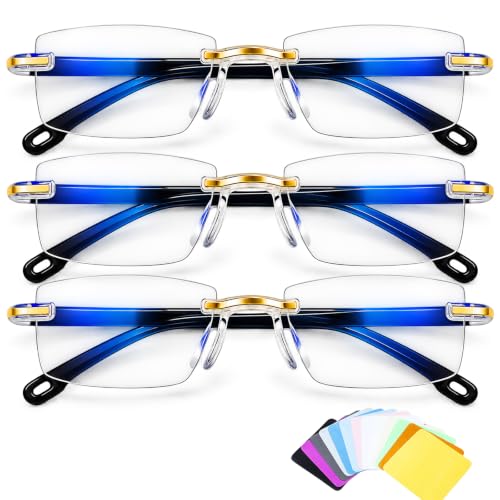
An adaptive range of 100° to 700° is the distinguishing specification here; the maker also describes near-to-far focus adjustment and blue-coated lenses. The three-pair set may appeal if you want extras and are comparing products by a range. Confirm that the intended correction matches your vision needs, and use a separate prescribed pair when appropriate.
Bottom line: Choose this set if the focus range is relevant to your vision needs.
Lfjcspp Auto Smart Glasses, 2-Pack

Photochromic lenses and a two-pair set distinguish these glasses; the maker says the lenses darken outdoors and clear indoors. The maker also describes automatic focus for near and far vision, resin lenses, and blue-light filtering. These features may appeal if changing outdoor light is a priority. Photochromic lenses may remain relatively clear behind a car windshield because many windshields block ultraviolet light.
Bottom line: Consider this pair if photochromic lenses and two included pairs are your priorities.
How to Choose Intelligent Reading Glasses
Start with the distance you need to see clearly, not the word “intelligent.” Most people hold reading material about 14 to 16 inches away, while computer screens are commonly 20 to 28 inches away; a lens suited to one distance may not be comfortable at the other. Fixed-power readers use one magnification throughout, while progressive lenses provide changing zones for near, intermediate and farther vision. A practical rule: if you need clear focus at both a book distance and a desk-monitor distance, look for a multifocal design and test those distances with the glasses. “Autofocus” alone does not explain the lens construction or confirm a prescription match.
How Multifocal Lenses Work
Multifocal lenses divide the viewing area into zones, so shifting gaze rather than changing glasses can bring different distances into focus. Progressive lenses typically transition gradually from distance through intermediate to near power, without a visible dividing line; the corridor width and lens placement affect how easily the zones are found. New wearers may need to move their head to keep a target in the intended zone, especially when looking down stairs. Avoid driving or operating equipment if a new lens design makes distance vision unclear. Product claims about auto-adjustment are not the same as a prescription or a description of how lens power changes.
Photochromic and Blue-Light Features
Photochromic lenses darken in response to ultraviolet light and generally clear again indoors, but tinting is not the same as polarized glare reduction. Many car windshields block much of the ultraviolet light that activates photochromic lenses, so they may darken less inside a vehicle. Blue-light filtering describes a lens treatment or material property, not a guarantee of less eye strain. For screen comfort, positioning the monitor about 20 to 28 inches away, reducing glare and taking regular distance-viewing breaks are practical measures. Compare these features separately from magnification: tint response or blue-light filtering does not tell you whether the lens power matches your eyes.
Reading Glasses Fit and Safety
Frame fit affects whether the optical zones sit in front of your eyes: nose pads should not pinch, and temples should rest without squeezing. Rimless designs reduce visible frame area but still need secure, even positioning for multifocal zones to line up. Over-the-counter readers are intended for simple near magnification, not every prescription need; people with unequal vision between eyes, astigmatism or persistent blurred vision should seek an eye-care professional’s guidance. Never use a pair that leaves distance vision blurred for driving. For any product advertised as self-adjusting, distinguish a marketing phrase from a known lens power, a measurable range and a fit suited to your actual reading distance.
Frequently Asked Questions
What distance should reading glasses focus at?
Most reading is done about 14 to 16 inches from the eyes, but a computer monitor is often 20 to 28 inches away. Choose lens power for the task distance rather than assuming one pair will be comfortable at both.
Can photochromic glasses darken inside a car?
They may darken less behind a windshield because many windshields block much of the ultraviolet light that activates photochromic lenses. Do not treat photochromic tint as a substitute for sunglasses designed for driving.
How do progressive lenses differ from readers?
Basic readers have one magnifying power across the lens, while progressive lenses transition through zones for different distances. The progressive corridor can feel narrow, so new wearers may need to move their head to find the clearest zone.
Are blue-light filtering lenses necessary for screens?
Blue-light filtering is a lens feature, not proof that a pair matches your prescription or prevents eye problems. A monitor about 20 to 28 inches away, reduced glare and regular breaks are practical screen-comfort measures.
Can self-adjusting readers replace prescription glasses?
A self-adjusting claim does not establish a prescription match or explain how focus changes. If you have unequal vision, astigmatism or persistent blur, get guidance from an eye-care professional rather than relying on general-purpose readers.