
Kitchen Mats for Wood Floors: 3 Types Compared

For cushioned standing comfort on a wood floor, StepRite 2-Piece Kitchen Mats is the strongest starting point because it combines a two-piece set, 0.4-inch cushioning and a backing described as non-slip on wood.
Kitchen mats are floor coverings that can cushion a standing area or protect a wider zone. Before placing any mat on wood, confirm that its backing is approved for your floor finish; some backing materials can discolor wood.
We earn a commission if you buy through links on this page. As an Amazon Associate I earn from qualifying purchases. Products are compared on manufacturer specifications, not hands-on testing.
- Best overall: StepRite 2-Piece Kitchen Mats – Two cushioned sizes and a backing described as suitable for wood floors.
- Best for thick cushioning: Extra Support Mat, 20 × 39 in – Its 0.75-inch thickness is greater than the other standing mats.
| Product | Best for | Size | Thickness | Material or surface | Shop |
|---|---|---|---|---|---|
| StepRite 2-Piece Kitchen Mats | Two-area standing | 17.3 × 30 in; 17.3 × 47 in | 0.4 in | Material not identified | Check Price on Amazon |
| Cushioned PVC Foam Mat, 17.3 × 28 in | Single small station | 17.3 × 28 in | 0.5 in | PVC foam | Check Price on Amazon |
| Extra Support Mat, 20 × 39 in | Thick standing cushion | 20 × 39 in | 0.75 in | Material not identified | Check Price on Amazon |
Kitchen Mats for Wood Floors
Choose first between cushioning a standing spot and covering a larger area, then confirm the backing suits your floor finish.
StepRite 2-Piece Kitchen Mats
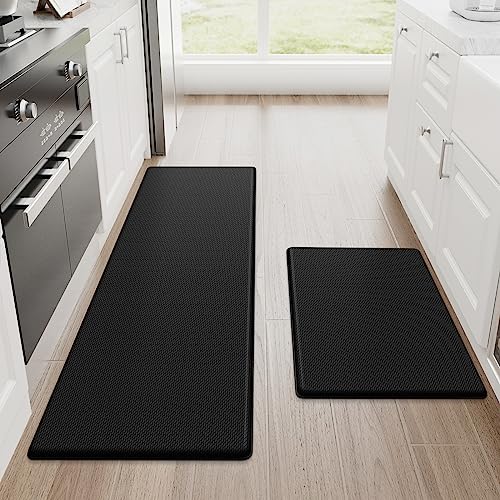
StepRite 2-Piece Kitchen Mats is the only option here supplied as two separate mats, so it can cover two standing areas or one longer work zone. The set includes 17.3-by-30-inch and 17.3-by-47-inch pieces, each 0.4 inch thick, with a stain-resistant surface that can be wiped with a damp cloth. The maker says the non-slip backing works on wood, among other hard surfaces. This set suits someone who wants cushioning at more than one kitchen station. The material is not identified, so confirm backing compatibility with your wood-floor finish before use.
Bottom line: Pick this set if you want two cushioned kitchen standing zones and have confirmed floor compatibility.
Cushioned PVC Foam Mat, 17.3 × 28 in

Cushioned PVC Foam Mat, 17.3 × 28 in is a single compact mat with a 0.5-inch PVC foam cushion, making it a straightforward choice for one sink or counter station. Its diamond-patterned underside and beveled edge distinguish it from the other single-piece standing mats. The surface is water-resistant and can be wiped, swept or vacuumed. This size suits a narrow standing area where a small footprint matters more than broad coverage.
Bottom line: Choose this for a single narrow station if its backing is suitable for your wood floor.
Extra Support Mat, 20 × 39 in

Extra Support Mat, 20 × 39 in has the greatest thickness among the standing mats at 0.75 inch, paired with a 20-by-39-inch footprint. Its taupe wood-grain look may coordinate with wood flooring, but the color pattern does not establish that the backing is safe for a particular floor finish. The maker describes it as waterproof and non-slip for kitchen, office, garage and laundry use. This mat is for buyers who prioritize a thicker cushion at one standing spot.
Bottom line: Pick this if a thicker cushion matters most and its underside is cleared for your floor.
How to choose a kitchen mat for wood floors
Choose by purpose first: a standing mat cushions one work zone, while a floor-covering mat protects or covers a wider area. A useful sizing rule is to measure the span where you stand and select a mat that covers that span without obstructing cabinet doors or walkways. Thickness is another tradeoff: mats around 0.4 to 0.75 inch offer more cushion than a thin 0.06-inch cover, but their edges create a more noticeable transition underfoot. Check the backing against the floor manufacturer’s care guidance before use; some rubber or vinyl backings can discolor wood finishes. A non-slip label does not guarantee suitability for every finish, so confirm backing material and compatibility rather than relying on appearance.
Keeping a mat safe on hardwood
Keep wood floors dry beneath a mat: moisture trapped against a wood finish can cause damage, so lift the mat periodically and dry the floor after spills. Place mats only on clean, dry, flat flooring; grit trapped underneath can scratch a finish as the mat shifts. Beveled edges can reduce abrupt transitions, but any curled or raised edge remains a trip concern and should be corrected or removed. A decision rule: if a mat slides when you press it sideways by hand, do not use it there until you resolve the movement. Follow the floor maker’s guidance on compatible pads and cleaning products, since finishes differ. Avoid leaving a wet mat in place after wiping the surface.
Standing mats and broad floor covers compared
Standing mats trade broad coverage for cushioning, while vinyl floor covers span more floor with less thickness. Use this comparison to match the format to the task rather than treating every kitchen mat as an anti-fatigue mat.
| Need | Mat type | Decision point |
|---|---|---|
| One standing area | Cushioned mat | Measure the work zone; compare thickness |
| Two standing areas | Two-piece set | Check whether both pieces fit without blocking traffic |
| Wide floor coverage | Thin vinyl cover | Measure the full area and prioritize floor compatibility |
Leave enough exposed floor around a mat for stable steps, and keep door swings and appliance access clear. A thicker mat can provide more cushioning, but thickness alone does not establish comfort or floor safety.
Cleaning and checking a kitchen mat
Clean spills promptly and dry both the mat and the floor beneath it; water-resistant surfaces do not mean moisture should remain trapped underneath. The mats in this selection have wipe-clean or water-resistant features, while one also allows sweeping or vacuuming. Use a damp cloth for routine surface cleanup when the mat’s care guidance permits, and avoid abrasive tools that could damage a surface. Lift the mat during cleaning to remove crumbs and grit from the floor. Inspect the underside and edges after cleaning: a dirty backing may grip less consistently, and a lifted edge can become a tripping hazard. Reposition only when the floor and mat are completely dry.
Frequently Asked Questions
Can kitchen mats damage a wood floor finish?
Yes, some rubber or vinyl-backed mats can discolor certain wood finishes, and trapped moisture can also harm flooring. Confirm backing compatibility with your floor manufacturer and lift the mat periodically to dry the surface.
How thick should a kitchen standing mat be?
The mats here range from 0.4 to 0.75 inch thick, while a thin floor cover is 0.06 inch. Choose a thicker standing mat if cushioning is the priority, but account for its raised edge and check that it does not obstruct doors or create a trip point.
How do I stop a kitchen mat from sliding?
Use the mat only on a clean, dry, flat floor and confirm its backing suits the floor finish. If it shifts under a sideways hand press, remove it until an approved non-slip solution is in place.
How often should I lift a mat on hardwood?
Lift it whenever a spill occurs and periodically during routine floor cleaning so grit and moisture do not remain trapped beneath it. Dry the wood completely before putting the mat back.
What size mat works in front of a kitchen sink?
Measure the clear floor space in front of the sink and compare it with the mat’s width and length, leaving room for safe steps and cabinet access. A roughly 17-inch-wide mat suits a narrower station better than a 36-inch-wide floor cover.