
John Frieda ULTRAfiller for Fine Hair: 3 Options Compared

For most fine-hair routines, John Frieda ULTRAfiller+ Thickening Shampoo is the simplest starting point because it cleanses without silicone and is designed to avoid weighing down delicate strands. Choose John Frieda ULTRAfiller+ Scalp Serum instead if you want a scalp treatment, or John Frieda ULTRAfiller+ Shampoo & Conditioner Set if you need shampoo and conditioner together.
Fine hair refers to strand thickness, while thinning refers to reduced hair density; these products target fuller-looking hair, but their formats serve different routine steps.
We earn a commission if you buy through links on this page. As an Amazon Associate I earn from qualifying purchases. Products are compared on manufacturer specifications, not hands-on testing.
- Best overall: John Frieda ULTRAfiller+ Thickening Shampoo – Its lightweight, silicone-free shampoo is made to cleanse fine hair without weighing it down.
- Best for scalp care: John Frieda ULTRAfiller+ Scalp Serum – The 2-fl-oz serum is a leave-on scalp treatment with biotin, peptides, and caffeine.
- Best for a paired wash: John Frieda ULTRAfiller+ Shampoo & Conditioner Set – The set combines thickening shampoo and conditioner in 8.3-fl-oz sizes.
| Product | Best for | Format | Size | Highlighted ingredients | Shop |
|---|---|---|---|---|---|
| John Frieda ULTRAfiller+ Thickening Shampoo | Lightweight cleansing | Shampoo | 8.3 fl oz | Biotin, hyaluronic acid | Check Price on Amazon |
| John Frieda ULTRAfiller+ Scalp Serum | Scalp treatment | Scalp serum | 2 fl oz | Biotin, peptides, caffeine | Check Price on Amazon |
| John Frieda ULTRAfiller+ Shampoo & Conditioner Set | Paired wash routine | Shampoo and conditioner | 8.3 fl oz each | Biotin, hyaluronic acid | Check Price on Amazon |
John Frieda ULTRAfiller for Fine Hair
Choose by routine step first, then compare the format and size that fit your hair-care habits.
John Frieda ULTRAfiller+ Thickening Shampoo

Unlike the scalp serum or two-step set, this option is a single shampoo for the cleansing step. Its formula is silicone-free and lightweight, and the product is designed to remove buildup without weighing down fine or delicate strands. John Frieda says it helps add volume and create the appearance of thicker, fuller hair. The 8.3-fl-oz bottle suits someone who wants to try the line without adding a scalp treatment or conditioner pairing. The limitation is that shampoo alone does not provide the separate conditioning step that a set includes.
Bottom line: Pick this if a lightweight shampoo is the one routine change you want.
John Frieda ULTRAfiller+ Scalp Serum

This is the only leave-on scalp treatment among these options; the other formats are rinse-off shampoo or a shampoo-and-conditioner pair. The 2-fl-oz serum combines biotin, peptides, and caffeine, and its lightweight, non-greasy formula is designed for fine hair. John Frieda says regular use helps increase visible density and reduce shedding. It suits someone who already has a wash routine and wants to add a scalp-care step. Its limitation is that it does not replace shampoo or conditioner, so it is a poor fit if the main need is cleansing or detangling.
Bottom line: Choose this when scalp care, rather than washing, is the missing step.
John Frieda ULTRAfiller+ Shampoo & Conditioner Set
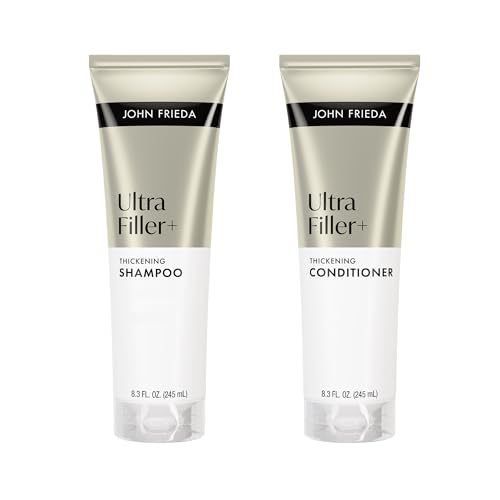
This set differs from the single shampoo by covering both wash and conditioning steps, with one 8.3-fl-oz bottle of each product. The formulas contain biotin and hyaluronic acid and are made for fine hair. John Frieda says the range can plump hair by 200% versus a basic shampoo; that comparison is the brand’s claim, not a guarantee for every routine. The pair suits someone who wants matching shampoo and conditioner rather than mixing products. The limitation is that it provides no scalp serum, so it does not add the leave-on treatment step offered separately.
Bottom line: Pick the set if you want matching shampoo and conditioner in one purchase.
How to choose a fine-hair thickening product
Choose the routine step you need before choosing a thickening product: shampoo cleanses, conditioner helps smooth strands, and scalp serum is a leave-on treatment. Fine hair describes individual strand diameter, while thinning describes lower hair density; a person can have fine strands without thinning. Shampoo is the clearest starting point if buildup or flat roots are the concern, while a conditioner matters if hair feels rough or tangles after washing. A serum adds a different step rather than replacing either wash product. A practical rule: if you already have a shampoo and conditioner that work for you, consider a serum only if scalp care is specifically what you want to add. Avoid expecting a cosmetic thickening routine to change strand diameter or guarantee new growth.
Shampoo, conditioner, and serum serve different jobs
Shampoo removes oil and soil from the scalp and hair; conditioner deposits lubricating ingredients that reduce friction and make combing easier. A leave-on serum stays on the scalp rather than being rinsed away, so its application and purpose differ from a wash product. This table separates the formats by the routine role they fill.
| Format | Routine role | Choose it when |
|---|---|---|
| Shampoo | Cleansing | You need a wash product |
| Shampoo and conditioner | Washing and conditioning | You want both wash steps together |
| Scalp serum | Leave-on scalp care | You want to add a treatment step |
Fine hair can lose lift when heavy styling products or conditioner accumulate near the roots. Keep richer conditioners and oils mainly on mid-lengths and ends when root volume is the priority.
How to use a thickening routine without flattening roots
Apply shampoo mainly to the scalp, where oil and residue collect, and let suds run through the lengths while rinsing; scrubbing the lengths aggressively can increase tangling. Conditioner is generally most useful from mid-lengths to ends when roots flatten easily. Leave-on scalp products should be applied to the scalp, not spread through the hair lengths, and used according to their package directions. A common mistake is layering several new products at once, which makes it harder to identify what causes residue or irritation. Add one product at a time and observe the result over several washes. Stop using a product if it causes burning, persistent redness, or itching, and rinse the area thoroughly.
What thickening claims can and cannot tell you
Cosmetic thickening products can make hair look fuller by improving body, reducing residue, or coating strands, but the appearance of fullness is not the same as increasing the number of hairs. Hair grows in cycles, so visible changes in density are not immediate; a sudden or persistent increase in shedding deserves medical advice rather than relying on shampoo claims. Fine strand diameter and thinning are separate concerns, and both can occur together. Compare products by whether they are rinse-off or leave-on and by the routine step they fill, not by a single percentage claim. If your concern is ongoing hair loss, seek a clinician’s guidance before treating a cosmetic product as a solution.
Frequently Asked Questions
Does fine hair mean the same thing as thinning hair?
No. Fine hair describes the diameter of individual strands, while thinning refers to reduced hair density. Someone may have fine strands and a full head of hair, or thicker strands with visible thinning.
How often should fine hair be shampooed?
There is no fixed schedule that suits every scalp; oiliness, sweat, and styling-product buildup affect how often washing feels necessary. If roots look oily or feel coated, washing more often may help remove residue without relying on extra styling product.
Should conditioner go on fine hair roots?
If roots flatten easily, apply conditioner mainly from mid-lengths to ends rather than coating the scalp. Fine strands can look weighed down when conditioning products accumulate near the roots.
Can a thickening shampoo make hair grow?
A cosmetic shampoo can cleanse and improve the appearance or feel of hair, but it cannot guarantee new growth. Hair grows in cycles, so persistent or sudden shedding should be discussed with a clinician.
When should I stop using a scalp serum?
Stop and rinse it off if you develop burning, persistent redness, or itching. A scalp reaction that continues after rinsing warrants advice from a healthcare professional.