
Weed Wacker With Blade: 3 Cordless Options Compared

For a weed wacker with blade attachments, the 24V model with five blade types is the strongest match when you want options for soft grass and tougher weeds. Choose 21V Cordless String Trimmer, 4-in-1 instead if adjustable reach and a mix of line and blade attachments matter more; blade choice and vegetation determine what each tool can cut.
We earn a commission if you buy through links on this page. As an Amazon Associate I earn from qualifying purchases. Products are compared on manufacturer specifications, not hands-on testing.
- Best overall: 24V Cordless Weed Wacker, 5 Blade Types – Five replaceable blade types include metal and plastic options for different vegetation.
- Best for adjustable reach: 21V Cordless String Trimmer, 4-in-1 – Telescopes from 34 to 48 inches and includes both cutting line and three blade types.
- Best for compact storage: RAXONE 24V 8-Inch Foldable Trimmer – Its 8-inch design folds, with three replaceable blade types and a side wheel assist.
| Product | Best for | Power | Pole length | Shop |
|---|---|---|---|---|
| 24V Cordless Weed Wacker, 5 Blade Types | Mixed vegetation | 24V | 33–47 in. | Check Price on Amazon |
| 21V Cordless String Trimmer, 4-in-1 | Line and blades | 21V | 34–48 in. | Check Price on Amazon |
| RAXONE 24V 8-Inch Foldable Trimmer | Compact storage | 24V | — | Check Price on Amazon |
Cordless Weed Wackers With Blade Attachments
Compare the attachments, reach, and power setup to match a tool to your yard and cutting tasks.
24V Cordless Weed Wacker, 5 Blade Types

Five blade types make this model the most versatile match here for switching between soft grass and tougher weeds. It has metal blades for thick weeds and brambles, plus plastic blades for softer grass and edging. The telescoping pole adjusts from 33 to 47 inches, and the tool includes a wheel. The maker specifies two 4.0Ah batteries. This setup suits yards with varied vegetation and users who want adjustable reach; the specifications do not give a cutting width, so it may be less useful if you need to size the tool to a narrow strip precisely.
Bottom line: Choose it for varied weeds and adjustable reach.
21V Cordless String Trimmer, 4-in-1
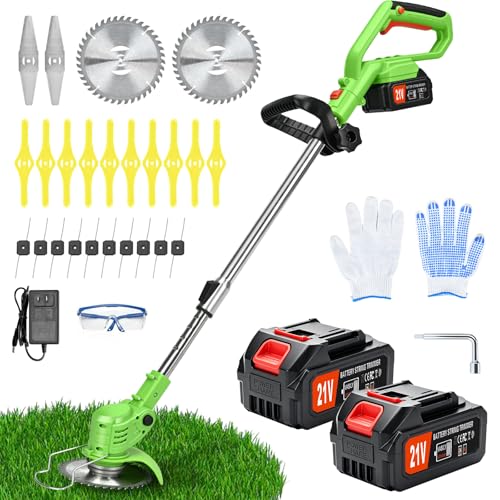
This model is the only one here that pairs cutting line with three blade styles, giving you a choice between fine trimming and heavier brush clearing. Its pole adjusts from 34 to 48 inches, while a 180-degree handle and 90-degree pivoting head support different working angles. The maker describes an 800W motor and includes two 4.0Ah batteries and a charger.
Bottom line: Pick it for adjustable reach and line-or-blade flexibility.
RAXONE 24V 8-Inch Foldable Trimmer

The RAXONE stands out for its compact 8-inch cutting width and foldable design, a useful combination for navigating around flower beds or storing the tool in a smaller space. It comes with three replaceable blades for trimming grass, cutting weeds, and pruning shrubs, plus a side wheel assist. The maker specifies a 24V, 800W motor and up to 50–60 minutes of runtime under light load with two 4.0Ah batteries. Its narrower width means more passes on broad areas than a wider tool would require.
Bottom line: Choose it for a compact tool and narrower trimming paths.
How to choose a weed wacker with blade attachments
Choose by the toughest vegetation you need to cut, then check the attachment type and working width. Plastic blades are generally suited to soft grass, while metal blades are intended for tougher growth; string heads are common for lawn edging and grass. A brush cutter is a trimmer configured for heavier growth, but the label alone does not establish what diameter stems it can handle. Cutting width also changes coverage: a narrower head takes more passes on an open lawn but can be easier to steer around beds. Use this simple rule: for a yard dominated by thick weeds or brambles, prioritize a metal blade; for soft lawn edges, look for line or plastic options. Wear eye protection and sturdy footwear, and keep people clear of the cutting area.
Blade types and what they suit
Blade material and shape affect what a trimmer is intended to cut, but they do not replace a tool’s operating limits. Plastic blades are typically for lighter grass and edging, while metal blades handle denser weeds; circular saw-style blades are intended for woody brush on compatible brush cutters. Never fit an attachment unless the trimmer supports it, and use only the guard specified for that head. This table maps common attachment choices to typical tasks; match it to the tool’s manual and the vegetation, rather than assuming every blade fits every motor.
| Attachment | Typical task | Key fit consideration |
|---|---|---|
| Plastic blade | Soft grass and edging | Confirm compatibility and guard |
| Metal blade | Thick weeds | Check permitted blade style |
| Saw-style blade | Woody brush | Use only on rated brush cutters |
Reach, balance, and cutting width
Pole length and tool balance determine whether a trimmer is comfortable to steer along a fence or around a tree. Adjustable poles in these options span 33–47 inches or 34–48 inches; set the handle so your arms stay relaxed and the cutting head remains near the ground. Wider heads cover more in each pass, while an 8-inch width can be easier to guide through tight beds but takes more passes across open lawn. Before choosing, compare the reach range with your stance and storage space, and check that any wheel or pivoting head does not obstruct the path you need to trim.
Safe use and blade care
Rotating blades can throw stones and cuttings, so eye protection, long pants, and sturdy closed-toe footwear are essential; keep bystanders at least 50 feet away. Inspect the attachment before each use and stop if a blade is cracked, loose, or bent. Disconnect the battery before changing blades or clearing wrapped vegetation, and use the specified guard and fastener. A dull or damaged blade increases vibration and can make control harder. Clear the area of rocks, wire, and branches before starting, and avoid cutting near people, pets, or windows. Do not treat a household cordless trimmer as a chainsaw or use a blade the manufacturer has not approved.
Frequently Asked Questions
Can a weed wacker with a blade cut thick weeds?
A metal blade is generally intended for thicker weeds than a line or plastic blade. The tool and attachment must be compatible, and stem thickness must stay within the manufacturer’s limits.
Are plastic blades safer than metal blades?
Plastic blades can reduce the severity of contact compared with metal, but they still spin fast and can throw debris. Wear eye protection and keep bystanders at least 50 feet from the cutting area.
How wide a cutting path should I choose?
An 8-inch path can be easier to guide in tight spaces, while a wider head covers more ground per pass. Match width to the narrowest area you need to trim and the tool’s capacity.
Can I use any blade on a cordless weed wacker?
No. Use only blade types and sizes approved for the specific trimmer, guard, and mounting system. Disconnect the battery before swapping attachments, and do not remove the guard to fit a different blade.
How should I store a weed wacker with blades?
Remove the battery and store blades covered or secured away from children and pets. Keep the tool dry, and inspect blade edges and fasteners before the next use.