
Kodak AA Batteries: 5 Alkaline Packs Compared

Kodak Xtralife AA, 40-Pack is the closest fit for shoppers seeking Kodak AA batteries, with 40 single-use alkaline cells and a claimed 10-year shelf life. Choose another option if you need a different pack quantity or a specific storage-life claim.
We earn a commission if you buy through links on this page. As an Amazon Associate I earn from qualifying purchases. Products are compared on manufacturer specifications, not hands-on testing.
- Best overall: Kodak Xtralife AA, 40-Pack – A 40-pack of Kodak AA alkaline cells with a claimed 10-year shelf life.
- Best for bulk storage: Amazon Basics AA Alkaline, 500-Count – The 500-count pack comes as five packs of 100 and claims a 10-year leak-free shelf life.
- Best for longer storage: Rayovac High Energy AA, 48-Pack – Rayovac claims up to 12 years of storage power for its 48-count pack.
| Product | Best for | Pack count | Voltage | Shelf-life claim | Shop |
|---|---|---|---|---|---|
| Kodak Xtralife AA, 40-Pack | Kodak 40-pack | 40 | 1.5 V | 10 years | Check Price on Amazon |
| ACDelco AA Super Alkaline, 40-Count | Reclosable storage | 40 | 1.5 V | 10 years | Check Price on Amazon |
| Amazon Basics AA Alkaline, 500-Count | Large reserves | 500 | 1.5 V | 10 years | Check Price on Amazon |
| Rayovac High Energy AA, 48-Pack | Long storage | 48 | — | Up to 12 years | Check Price on Amazon |
| ProCell AA PC1500, 24-Box | Industrial supply | 24 | 1.5 V | — | Check Price on Amazon |
Kodak AA Batteries and Alkaline Alternatives
Compare these AA alkaline options by pack count, voltage, storage claim and the use case each one suits.
Kodak Xtralife AA, 40-Pack

Kodak Xtralife AA, 40-Pack is the Kodak choice in this group, packaged as 40 LR6 AA alkaline batteries. Kodak claims a 10-year shelf life and describes the design as leak-resistant. The pack suits households wanting a moderate supply for remotes, clocks and toys rather than a very large reserve. These are disposable cells, so they are not a fit for devices that require rechargeable batteries; use only the battery type and size specified by the device maker.
Bottom line: Choose this if you want Kodak-branded AA alkaline cells in a 40-pack.
ACDelco AA Super Alkaline, 40-Count

ACDelco AA Super Alkaline, 40-Count offers the same 40-cell quantity as the Kodak option, but its differentiator is reclosable packaging for keeping the remaining cells together. Each AA cell is 1.5 volts, and the maker claims a 10-year shelf life. ACDelco names household and office devices such as mice, clocks, flashlights and controllers as suitable uses. This is a single-use alkaline pack, so it is a poor match if your device calls for NiMH rechargeables or another chemistry.
Bottom line: Pick this for a 40-count pack with reclosable packaging.
Amazon Basics AA Alkaline, 500-Count
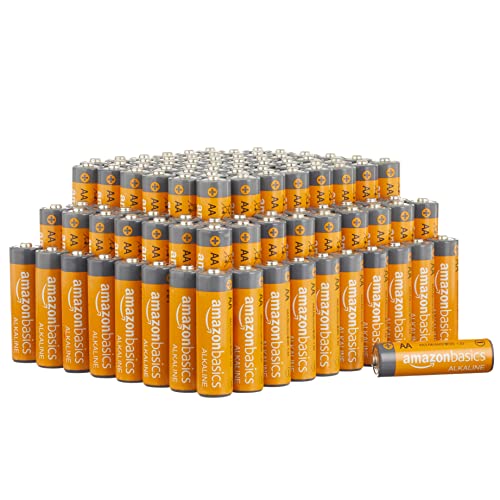
Amazon Basics AA Alkaline, 500-Count is the high-quantity option, with 500 AA cells arranged as five packs of 100. The maker claims a 10-year leak-free shelf life, and the cells provide 1.5 volts. That quantity can suit offices, schools or households with many compatible devices and space to store spare packs. It is single-use alkaline rather than rechargeable, and a large reserve is unnecessary if only a few devices use AA cells; match every replacement to the device’s specified size and chemistry.
Bottom line: Choose this when a 500-cell reserve is useful and storable.
Rayovac High Energy AA, 48-Pack

Rayovac High Energy AA, 48-Pack provides 48 alkaline AA cells, eight more than either 40-count choice. Rayovac claims the cells can hold power for up to 12 years in storage and says the design is intended to prevent damaging leaks. The maker also positions these for frequently used AA devices, including toys, flashlights and remotes. No voltage figure is included here, so buyers whose equipment specifies a voltage should verify compatibility before purchase; the cell size alone does not establish every device requirement.
Bottom line: Consider this for a 48-count pack with a longer stated storage claim.
ProCell AA PC1500, 24-Box

ProCell AA PC1500, 24-Box is the smaller 24-cell option and is identified as an industrial battery, distinguishing it from the larger household-oriented packs. Each battery is 1.5 volts, and the maker notes no added mercury. The compact count can suit buyers who need a modest quantity for compatible equipment rather than a 40-, 48- or 500-cell reserve.
Bottom line: Choose this for an industrially positioned 24-cell AA supply.
How to choose AA alkaline batteries
Start with the device’s required cell size and chemistry, then consider how many cells you use and how long spares may sit. AA alkaline cells are single-use 1.5-volt batteries; rechargeable AA cells are commonly NiMH and have a different nominal voltage, so do not substitute based on size alone. A 40- to 48-count pack is more manageable for occasional household replacements, while a 500-count supply makes sense only if many devices consume AA cells and you can store the reserve properly. For emergency storage, choose a pack with an explicit shelf-life claim and rotate older cells into regular use before their storage period ends.
What shelf-life claims mean for AA batteries
Storage-life claims describe how long a manufacturer expects unused cells to retain power under its conditions; they are not a guarantee that every stored battery will perform identically in every device. Heat accelerates battery aging, so keep alkaline cells in a cool, dry place and avoid leaving them in hot vehicles or damp areas. Store batteries in their original packaging or a nonconductive organizer, away from metal objects that could bridge the terminals. Never mix old and new cells, or different chemistries, in one device: the weaker cell can be over-discharged and may leak.
Pack size and storage tradeoffs
Choose pack size by expected use rather than count alone: a smaller pack reduces the number of spare cells you need to manage, while bulk packs require more storage space and rotation. The pack counts here range from 24 to 500 cells, so the amount of reserve differs substantially. A useful decision rule is to buy only a quantity you can keep in cool, dry storage and use before its shelf-life claim expires. Keep loose cells separated from coins, keys and other conductive objects, especially in drawers or bags, to reduce short-circuit risk.
| Need | Pack-count range | What to prioritize |
|---|---|---|
| Occasional replacements | 24–48 | Manageable quantity and clear storage claim |
| Frequent replacements | 40–48 | Pack organization and routine rotation |
| Many AA devices | 500 | Cool, dry storage and a rotation plan |
Safe handling and common mistakes
AA batteries should match the size, chemistry and polarity shown in the device compartment; reversing cells or mixing types can cause malfunction or leakage. Keep batteries away from children who may swallow them, and seek urgent medical help if a battery is swallowed. Do not recharge single-use alkaline cells, puncture them, or expose them to fire. Remove depleted cells from equipment, particularly devices that will sit unused, because leakage can corrode contacts. Recycle or dispose of used batteries according to local rules rather than placing damaged or leaking cells loose with other household items.
Frequently Asked Questions
Are Kodak AA batteries rechargeable?
No; the Kodak option is a disposable alkaline battery. Use a rechargeable cell only when the device permits that chemistry and voltage.
How long can AA alkaline batteries be stored?
The claims on these packs range from 10 years to up to 12 years, depending on the brand. Store cells in a cool, dry place because heat can shorten practical storage life.
Can I mix old and new AA batteries?
No, replace cells together with new batteries of the same type. Mixing a weak cell with fresh ones can cause over-discharge and leakage.
Can alkaline AA cells replace rechargeable AA batteries?
Not automatically: alkaline AA cells are nominally 1.5 volts, while common NiMH rechargeables are nominally 1.2 volts. Check the device’s permitted chemistry and voltage before swapping.
How should spare AA batteries be stored safely?
Keep spares cool, dry and separated from metal objects such as coins or keys. Original packaging helps keep terminals from contacting conductive items.