
KPCB Mini Sewing Machine: Beginner Options Compared

The KPCB mini sewing machine is the closest fit for beginners who want dual speeds, a finger guard and cotton practice squares in one kit.
We earn a commission if you buy through links on this page. As an Amazon Associate I earn from qualifying purchases. Products are compared on manufacturer specifications, not hands-on testing.
- Best overall: KPCB Tech Mini Sewing Machine – Combines dual speeds and a finger guard with 20 cotton practice squares.
- Best for a work area: CraftBud Mini Sewing Machine – Includes an expandable table and a built-in light.
- Best for stitch variety: 12-Stitch Portable Mini Sewing Machine – Offers 12 built-in stitch patterns and battery or adapter power.
| Product | Best for | Stitch options | Power | Included extras | Shop |
|---|---|---|---|---|---|
| KPCB Tech Mini Sewing Machine | Guided beginners | Double-thread; 2 speeds | US adapter | 20 cotton squares; finger guard | Check Price on Amazon |
| CraftBud Mini Sewing Machine | Tabletop projects | Adjustable speed; stitch count — | AC/DC adapter; dual power | 48-piece kit; extension table; light | Check Price on Amazon |
| 12-Stitch Portable Mini Sewing Machine | Stitch variety | 12 built-in patterns | AC adapter or 4 AA batteries | Foot pedal; LED light | Check Price on Amazon |
KPCB Mini Sewing Machine Alternatives
Compare these beginner machines by stitch features, power setup and the extras included with each kit.
KPCB Tech Mini Sewing Machine
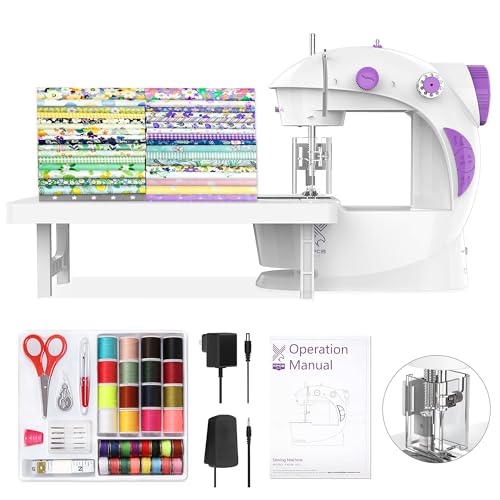
The KPCB stands out for pairing a finger guard with 20 cotton practice squares, making it a focused starter kit. The machine has dual speeds and a double-thread design; the maker also describes tutorial videos as part of the learning support. Its compact body measures about 9.8 × 8.7 × 7.1 inches and weighs 2.97 pounds. The fabric squares are useful for basic practice and patchwork, while the small format suits limited storage. Choose another option if a built-in light or an expandable work surface matters more than practice fabric.
Bottom line: Pick this if you want practice fabric and a finger guard included with a compact beginner machine.
CraftBud Mini Sewing Machine

The CraftBud is the option here with both a built-in light and an expandable table, which can make a tabletop setup more convenient. Its kit includes 48 sewing accessories, a foot pedal, an AC/DC adapter and an illustrated guidebook with project patterns. The maker positions it for adults and kids learning to sew. At 10.4 × 6.5 × 10.2 inches and 2 pounds, it remains portable, though its footprint is taller than the KPCB’s. Choose it for the workspace extras; choose another machine if you specifically want included practice fabric.
Bottom line: Choose this if a built-in light and expandable tabletop are your main priorities.
12-Stitch Portable Mini Sewing Machine

The 12-pattern machine separates itself with a broader set of built-in stitch choices, including straight, zigzag, overlock and buttonhole patterns. It can run from an AC adapter or four AA batteries, and includes a foot pedal, LED light, automatic bobbin winding and reverse stitching. The body measures 12.2 × 11.8 × 5.91 inches. Its feature set is useful for buyers who want more stitch options than a basic straight-seam setup, but the specifications do not identify a finger guard or an included fabric bundle. Check those needs before choosing it for a first-time sewer.
Bottom line: Pick this if access to 12 stitch patterns and battery operation matter most.
How to choose a mini sewing machine
Choose a mini machine by matching its stitch options and work area to the projects you expect to sew. A straight stitch handles most basic seams; zigzag is useful for finishing raw edges and sewing stretch fabrics, while buttonhole and decorative stitches are specialized extras. A foot pedal offers hands-free speed control, and a separate speed setting can help beginners start slowly. For small repairs and simple crafts, prioritize stable fabric handling and easy threading over a long stitch menu. If your projects often involve bulky layers or long seams, a compact machine’s small bed can become restrictive; consider a larger machine with a broader work surface.
What fabric works for a beginner machine
Start with one or two layers of lightweight woven cotton, which is easier to feed evenly than thick or stretchy material. Denim hems and multiple fabric layers add bulk, and lightweight machines may struggle to keep them moving smoothly. Use a fresh needle suited to the fabric: a universal 80/12 needle is a common starting point for medium-weight woven cotton, while thicker or stretch materials call for an appropriate needle type and size. Test the stitch on a scrap of the same fabric before sewing the project. If the fabric bunches or the needle deflects, stop rather than pulling the material through; forcing it can bend or break the needle.
Mini machines compared by project need
For practice sewing, a kit with sample fabric can help you learn before cutting into a project. A built-in light helps illuminate the needle area, while an extension table supports wider fabric as it feeds. Battery operation is useful where an outlet is unavailable, but confirm the required battery type and whether batteries are included before relying on it. A full-size machine generally offers a larger working area and is better suited to frequent sewing or bulky projects. Use the table to match the feature that matters most to your intended use.
| Need | Feature to prioritize |
|---|---|
| Learning basic seams | Slow speed option and easy-to-handle woven fabric |
| Seeing the needle area | Built-in light |
| Supporting wider fabric | Extension table |
| Working away from an outlet | Battery power |
| Frequent or bulky sewing | Larger machine with a wider work surface |
Safe setup and common beginner mistakes
Keep fingers clear of the needle and use a finger guard when one is supplied; turn off or unplug the machine before changing a needle or clearing thread jams. A sewing machine needle moves rapidly, so keep loose clothing and hair away from the needle area. Thread the upper path and bobbin as directed for the machine, then turn the handwheel by hand for the first stitch to confirm the needle moves freely. Avoid pulling fabric from behind the presser foot, which can bend the needle or disrupt stitch formation. Test tension and stitch length on scrap fabric first, especially after rethreading or switching fabric types.
Frequently Asked Questions
Can a mini sewing machine sew denim?
A mini machine may handle a single lightweight denim layer, but thick hems and folded seams are harder because the fabric stacks up. Test on a scrap with a suitable denim needle, and stop if the needle deflects or the fabric stalls.
What is a good first fabric for machine sewing?
Medium-weight woven cotton is a practical first fabric because it usually feeds more evenly than knit or slippery fabric. Try a universal 80/12 needle as a starting point and test on scraps before sewing the project.
Do mini sewing machines need a foot pedal?
A foot pedal lets you control sewing speed while keeping both hands near the fabric. Some machines also provide a speed setting or alternate control, so check which controls suit the intended user.
How should I keep fingers safe while sewing?
Keep fingers out of the needle path and use a finger guard. Turn off or unplug the machine before changing a needle or removing a jam, and never pull fabric through while the needle is moving.
When should I choose a full-size sewing machine?
Choose a full-size model if you sew often, handle bulky layers or need room to support larger pieces of fabric. A mini machine’s compact work area is best suited to small repairs and simple craft projects.