
Laura Geller Baked Foundation: 3 Formulas Compared

Laura Geller Balance-n-Brighten, Light is the best starting point for a natural-looking baked foundation because its multi-toned pigments are made to blend and even tone. Choose Laura Geller Double Take, Fair instead for buildable medium-to-full matte coverage, or Laura Geller Balance-n-Glow, Fair for sheer coverage with a satin glow.
Baked powder foundation is made by baking cream pigments into a powder; the three formulas here differ in finish and coverage, so choose by the look you want rather than the shared baked format.
We earn a commission if you buy through links on this page. As an Amazon Associate I earn from qualifying purchases. Products are compared on manufacturer specifications, not hands-on testing.
- Best overall: Laura Geller Balance-n-Brighten, Light – Multi-toned pigments are designed to blend and even tone for a natural finish.
- Best for matte coverage: Laura Geller Double Take, Fair – Buildable medium-to-full coverage can be applied wet or dry.
- Best for satin glow: Laura Geller Balance-n-Glow, Fair – Pearl-infused pigments give a satin finish with sheer, buildable coverage.
| Product | Best for | Coverage | Finish | Shop |
|---|---|---|---|---|
| Laura Geller Balance-n-Brighten, Light | Natural finish | — | Natural | Check Price on Amazon |
| Laura Geller Double Take, Fair | Matte coverage | Medium to full | Matte | Check Price on Amazon |
| Laura Geller Balance-n-Glow, Fair | Satin radiance | Sheer, buildable | Satin glow | Check Price on Amazon |
Laura Geller Baked Foundation Formulas
Compare the three baked powder foundations by coverage, finish and how you plan to apply them.
Laura Geller Balance-n-Brighten, Light
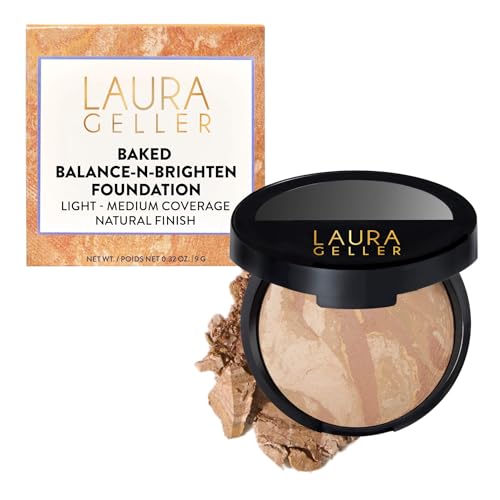
Laura Geller Balance-n-Brighten, Light stands apart for its color-correcting approach: multi-toned marbleized pigments are made to blend toward the skin tone and even the appearance of redness, dark spots and uneven tone. The powder has a natural finish and comes in Light, color 04, in a 0.32-ounce compact. The maker describes it as weightless and intended for mature skin. It suits someone who wants an everyday powder foundation with a natural-looking finish rather than a matte or luminous effect. Its main trade-off is that the coverage range and application method are not specified here, so choose another formula if those are your deciding criteria.
Bottom line: Choose this if a natural finish and color-correcting pigments matter most.
Laura Geller Double Take, Fair

Laura Geller Double Take, Fair is the coverage-focused choice: it builds from medium to full coverage and has a matte finish, unlike the natural finish of Laura Geller Balance-n-Brighten, Light or the satin glow of Laura Geller Balance-n-Glow, Fair. Its dual-sided sponge supports two application approaches: dry for everyday medium coverage or damp for maximum coverage, according to the maker. The shade is Fair, color 02, and the compact is 2 ounces. This suits someone who wants a more perfected matte look and the option to vary coverage. The limitation is the finish: choose a different formula if you specifically want a natural or luminous look.
Bottom line: Pick this for adjustable medium-to-full coverage and a matte finish.
Laura Geller Balance-n-Glow, Fair

Laura Geller Balance-n-Glow, Fair is the luminous option, with pearl-infused pigments for a satin glow rather than the matte finish of Laura Geller Double Take, Fair. Its coverage is sheer and buildable, making it a better match for someone who wants a lighter-looking base than a medium-to-full coverage powder. The shade is Fair, color 02, and the formula includes vitamin C, jojoba oil, centella asiatica and green tea extract, according to the maker. The compact size is 2.5 ounces. Its trade-off is the lighter coverage; choose Laura Geller Double Take, Fair if you want a fuller-coverage result instead of a sheer base.
Bottom line: Choose this for sheer, buildable coverage with a satin glow.
How to choose a baked powder foundation
Choose a baked powder foundation by the finish and coverage you want, because those differ more here than the shared baked format. Powder foundation can be applied with a brush or sponge; a denser tool generally deposits more product, while a fluffy brush tends to give a lighter layer. Add coverage gradually rather than loading the tool at once, especially around the nose and under-eye area where powder can collect. For a matte look, choose a matte formula; for a luminous look, choose a satin formula. If you are between shades, compare the color along your jaw in daylight and let it settle before judging the match.
| Desired result | What to look for | Match |
|---|---|---|
| Natural finish | Color-correcting pigments | Laura Geller Balance-n-Brighten, Light |
| Matte, fuller coverage | Wet-or-dry application | Laura Geller Double Take, Fair |
| Soft radiance | Sheer, buildable satin finish | Laura Geller Balance-n-Glow, Fair |
Coverage and finish differences
Coverage labels describe how much color a base is designed to add, not how much skin texture it can conceal. Sheer formulas leave more of the complexion visible, while buildable medium-to-full formulas let you layer more pigment for a more even-looking result. A matte finish reflects less light than a satin finish; satin can appear more luminous without being a glitter finish. These distinctions matter when choosing for daily wear: start with a thin layer, then add powder only where you want more coverage. If the desired effect is a subtle base, a full-coverage formula may feel like more makeup than needed.
How to apply powder foundation evenly
Apply powder foundation to clean, dry skin in light passes, using small amounts and blending outward from the center of the face. Allow moisturizer or sunscreen to settle before adding powder; a damp or tacky base can make powder grip unevenly. A sponge offers more concentrated placement than a broad, loose brush, while damp application can intensify coverage when a formula is made for wet use. Avoid repeatedly layering over oily patches without first blotting, since excess surface oil can make powder look uneven. Wash reusable brushes and sponges regularly and let them dry fully to reduce residue buildup.
Shade matching and makeup safety
Check a foundation shade along the jawline in natural daylight, where the face and neck meet, rather than relying on a hand swatch alone. Undertone and lighting can change how a shade appears, so compare the blended edge after it has had a few minutes to settle. Keep powder and applicators away from the eyes, and do not share makeup tools; sharing can transfer microbes. Stop using a cosmetic that causes irritation, and patch-test unfamiliar formulas on a small area before applying broadly. For sensitive skin or a history of reactions, review the full ingredient label and consult a qualified clinician about personal concerns.
Frequently Asked Questions
Can baked powder foundation be applied over liquid foundation?
Yes, a light layer of powder can be applied over liquid foundation after the liquid base has set. Use a small amount first, since layering two foundations can look heavier than either product alone.
How can I keep powder foundation from looking cakey?
Start with a thin layer and add coverage only where needed. Let skincare and sunscreen settle first, and use a clean brush or sponge so excess product does not build up.
Should I use a brush or sponge for powder foundation?
A brush generally spreads a lighter layer, while a sponge places powder more densely. Choose a sponge when you want concentrated coverage and a brush when you want a softer application.
How do I choose between matte and satin foundation?
Choose matte when you want less shine, and satin when you want a more luminous finish. A formula’s coverage is a separate choice, so check both finish and coverage before selecting.
How often should I clean powder foundation brushes?
Clean brushes at least weekly if you use them daily, and sooner if they look dirty or feel oily. Let them dry completely before putting them away so damp bristles do not collect residue.