
Le Marinier French Sea Salt: 4 Grinds Compared

For Le Marinier French sea salt, choose Le Marinier Dry Grey Coarse if you want coarse crystals for a grinder; its dry grey coarse grind is the clearest match for that use. Choose a fine or extra-fine option instead when you want smaller grains for baking or quick, even seasoning.
These are sea salts sold in different grinds, not products assessed through testing; the right choice depends mainly on how you dispense and use salt.
We earn a commission if you buy through links on this page. As an Amazon Associate I earn from qualifying purchases. Products are compared on manufacturer specifications, not hands-on testing.
- Best overall: Le Marinier Dry Grey Coarse – Its dry grey coarse crystals are specified for use with grinders.
- Best for fine seasoning: Le Marinier Extra Fine – The extra-fine grind suits recipes or seasoning where small grains are useful.
- Best for a smaller pack: Le Marinier Organic Grey Coarse – The coarse-grind option comes in an 8.81-ounce pack.
| Product | Best for | Grind | Pack size | Use noted | Shop |
|---|---|---|---|---|---|
| Le Marinier Dry Grey Coarse | Grinder use | Dry grey coarse | 18 oz | Grinders | Check Price on Amazon |
| Le Marinier Extra Fine | Extra-fine seasoning | Extra fine | 18 oz | Cooking | Check Price on Amazon |
| Le Marinier Fine Ground | Everyday cooking | Fine ground | 18 oz | Cooking, baking | Check Price on Amazon |
| Le Marinier Organic Grey Coarse | Smaller coarse pack | Grey coarse | 8.81 oz | Cooking | Check Price on Amazon |
Le Marinier French Sea Salt Grinds
Compare the grind and pack size first, then match the crystals to your grinder, recipe or finishing use.
Le Marinier Dry Grey Coarse

Le Marinier Dry Grey Coarse is the dry grey coarse option, and its grinder suitability is the distinction that makes it the most direct fit for cooks who want to grind salt at the table. The 18-ounce pack is also the largest size among these four choices. The product is described as hand harvested in French ocean marshes and unrefined, with minerals including magnesium, calcium, potassium and iron. Coarse crystals are less convenient when a recipe calls for a fine, quickly dispersing grain; choose a fine-ground option for that task instead.
Bottom line: Choose this if you want coarse salt intended for a grinder.
Le Marinier Extra Fine

Le Marinier Extra Fine has the smallest grind named among these choices, making it the one to consider when you want fine crystals rather than coarse grains. Its 18-ounce pack matches the larger options, and the product is described as unrefined, hand harvested French sea salt with minerals such as magnesium, calcium, potassium and iron. The extra-fine format can be easier to blend through a mixture than coarse crystals, but it is not the choice for someone specifically seeking a grinder-ready grain. Keep the container dry so the salt remains easy to dispense.
Bottom line: Pick this when extra-fine crystals matter more than grinder use.
Le Marinier Fine Ground
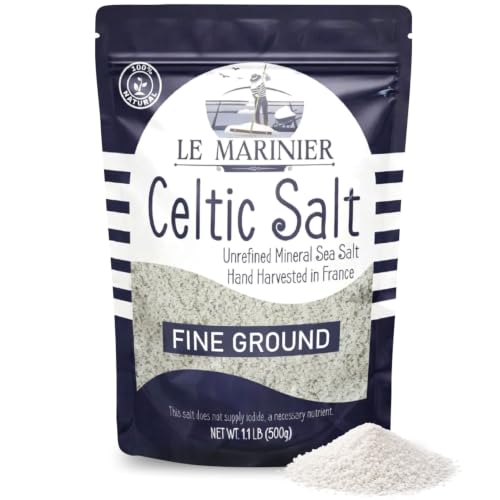
Le Marinier Fine Ground is the fine-ground choice with cooking and baking named among its intended uses, which sets it apart from the explicitly grinder-oriented coarse salt. It comes in an 18-ounce pack and is described as unrefined, hand harvested French sea salt. The product features also claim more than 82 minerals and micronutrients; that claim does not make it a substitute for measuring salt in a recipe. Fine grains may disperse more readily than coarse crystals, but they are not the right format if you want a crunchy finishing texture.
Bottom line: Choose this for a fine grain suited to cooking and baking.
Le Marinier Organic Grey Coarse

Le Marinier Organic Grey Coarse offers coarse grey crystals in an 8.81-ounce pack, making it the smaller-pack alternative to the 18-ounce coarse option. The product is described as hand harvested French sea salt and unrefined. Its features focus on those core characteristics rather than calling out grinder use, so choose it for coarse salt if the smaller pack size is the priority. Coarse crystals are slower to dissolve than fine grains, which can matter in smooth sauces or baking mixtures; for those recipes, the fine-ground formats are a more practical fit.
Bottom line: Pick this if you want coarse crystals in a smaller pack.
How to choose a sea salt grind
Choose a grind according to how quickly the salt should dissolve and how you plan to dispense it. Fine grains disperse through batters and sauces more readily; coarse crystals suit a grinder or a deliberate finishing pinch. Salt crystals do not make a recipe less salty by weight: a teaspoon of coarse salt can contain less salt than a teaspoon of fine salt because the larger crystals leave more empty space. For repeatable baking, measure by weight when a recipe provides grams; otherwise use the grind the recipe expects. If you are replacing one grind with another and only have a volume measure, start with less and adjust to taste.
Fine, extra-fine and coarse salt uses
Fine and extra-fine grains are useful when salt needs to spread through a mixture, while coarse grains work better in a mill or as a distinct finishing texture. Most household salt measures are volume-based, so crystal size changes how much fits in a teaspoon. This is why swapping coarse for fine one-for-one by volume can change a recipe’s saltiness. A practical rule: for dough, batter or a sauce that needs even seasoning, choose a fine grind; for a grinder, choose coarse crystals. These products specify grind categories but no crystal dimensions, so compare the named grind rather than assuming a particular mill setting.
Sea salt and sodium in recipes
Sea salt remains a source of sodium; an unrefined or mineral-rich description does not make it sodium-free. The Dietary Guidelines for Americans recommend adults limit sodium to less than 2,300 milligrams per day, and one teaspoon of table salt contains roughly that amount. The exact sodium in a spoonful of sea salt varies with grain size and how tightly the crystals pack, so a spoon-for-spoon substitution is imprecise. Use a smaller amount when seasoning packaged or prepared foods, which can already contribute substantial sodium. If a clinician has given you a sodium limit, count sea salt as part of that total.
What to know about sea salt and iodine
Sea salt and table salt are both primarily sodium chloride, but iodine content is the key label distinction for people relying on salt as an iodine source. Iodized salt is deliberately fortified; sea salt is not automatically iodized, and these specifications do not identify an iodine-fortification claim. Adults need 150 micrograms of iodine daily, while pregnancy and breastfeeding increase needs. A varied diet can provide iodine from foods such as dairy, seafood and eggs, but sources differ. Do not use extra salt to obtain iodine; choose foods or a specifically iodized salt if iodine intake is a concern.
Frequently Asked Questions
Is Le Marinier sea salt suitable for a grinder?
The dry grey coarse option, Le Marinier Dry Grey Coarse, is specifically described as working well with grinders. Coarse salt generally needs a mill with an opening that can accommodate its crystals.
Which grind works better for baking?
A fine grind is the more practical choice for baking because small grains disperse readily in batters and doughs. For accuracy, weigh salt in grams when the recipe gives a weight rather than swapping grinds by teaspoon.
Does unrefined sea salt have less sodium?
Unrefined sea salt is still primarily sodium chloride, so do not treat it as a low-sodium substitute. Adults are advised to keep total sodium below 2,300 milligrams per day.
Is sea salt always fortified with iodine?
No, sea salt is not automatically iodized. Adults need 150 micrograms of iodine daily, so check for an explicit iodized claim if you rely on salt for iodine.
How should sea salt be stored at home?
Keep sea salt in a tightly closed container in a cool, dry cupboard to limit moisture clumping. Use a dry spoon rather than introducing water into the container.